
1983 Harrods Bombing
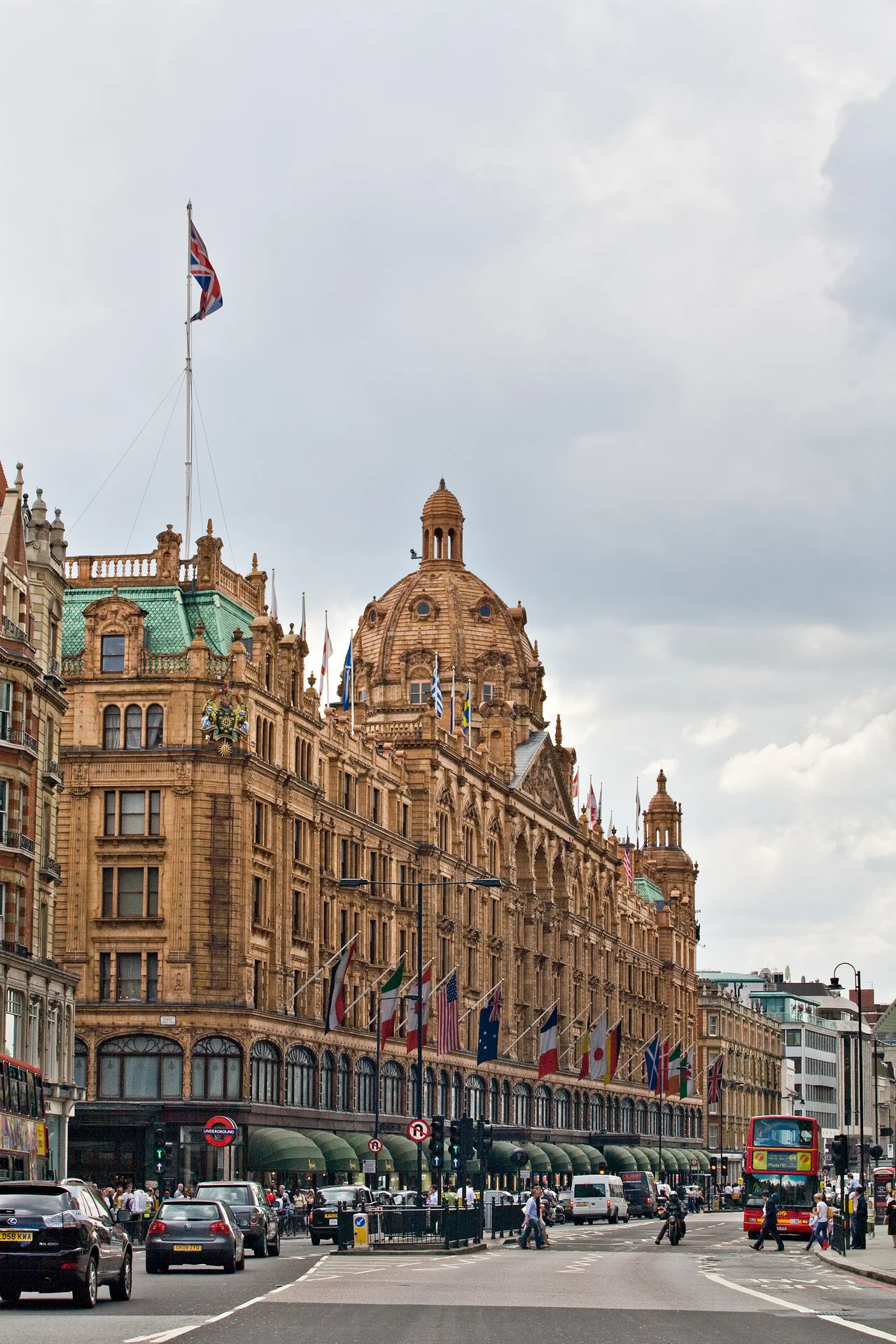
It was the last Saturday of Christmas shopping in 1983, the kind of London afternoon when Knightsbridge fills up with parents carrying parcels and children pressed against the windows of Harrods. At 12.44 pm, a man with an Irish accent called the Samaritans. He said a car bomb had been left outside the department store. The warning gave thirty-seven minutes. The car — a blue 1972 Austin 1300 GT — was parked on Hans Crescent, against the side entrance. The store was not evacuated. At 1.21 pm, the bomb detonated.
The People on the Street
Three Metropolitan Police officers died that afternoon. Sergeant Noel Lane was 28. Constable Jane Arbuthnot was 22. Inspector Stephen Dodd was 34; he survived the blast itself but died of his injuries in hospital on Christmas Eve. Constable Jon Gordon lived, but lost both legs and part of a hand. Three civilians also died, including the journalist Philip Geddes, a 24-year-old reporter for the Daily Express who had gone to Knightsbridge precisely because he wanted to be where news was happening. Ninety more people were wounded. The blast damaged twenty-four cars on the street. The dead and injured were people who had answered a call, gone shopping, or simply walked past at the wrong minute.
The 'Economic War'
The Provisional IRA had been bombing commercial targets in London and elsewhere in England since 1973, in a strategy its leadership called an "economic war." The reasoning was that damage to British commerce, disruption to British daily life, and the diplomatic embarrassment of attacks in London would force the British government toward withdrawal from Northern Ireland. Harrods, the most famous department store in the country, sitting in one of the wealthiest districts in Britain, was a target the organisation returned to repeatedly. Fire bombs in August 1973 caused minor damage. An incendiary device on the first floor in December 1974, planted by the Balcombe Street active service unit, was set off as the building was being evacuated. The car bomb of 17 December 1983 was a different order of attack.
Who Authorised the Bomb
Within days, the IRA Army Council issued a statement saying that the Harrods car bomb had not been authorised, and expressing regret for the civilian deaths. It was an unusual admission. The political cost was real: the deaths of two young constables and a young woman officer at Christmas, on a Saturday, in a place where children were buying presents, did serious damage to the IRA's already limited support in mainland Britain and among Irish-Americans. After Harrods, the organisation's strategy shifted noticeably. Subsequent campaigns focused more directly on military targets, Conservative politicians, and economic infrastructure — a tactical recalibration whose first event was the bombing of the Grand Hotel in Brighton ten months later, which targeted Margaret Thatcher and the Conservative Party conference.
The Store That Reopened
Harrods reopened three days later. The chairman, Aleck Craddock, declared that the store would not be "defeated by acts of terrorism." It was a small statement made into a large one by Christmas, by London, by the photographs of the shattered fronts of the cars still being cleared from Hans Crescent. Denis Thatcher, the Prime Minister's husband, was equally direct: "No damned Irishman will stop me," he told reporters as he went shopping at the store himself. Hundreds of extra police were drafted into the West End. Mobile bomb squads patrolled the shopping districts through Christmas week.
A Memorial and a Lecture
There is a memorial at the site of the blast. Every year, the University of Oxford awards the Philip Geddes Memorial Prizes to aspiring journalists, and a leading journalist delivers the Philip Geddes Memorial Lecture on the future of journalism — a small, deliberate act of keeping a young reporter's name attached to the craft he died practising. The Harrods bombing did not end the campaign. There would be another bomb at Harrods in January 1993, smaller, and many more attacks elsewhere before the Good Friday Agreement of 1998. But that Saturday in Knightsbridge marked a turning point. Six people died at Christmas. The argument that this was somehow incidental to a political project was one the IRA's own council could not quite make.
From the Air
Harrods stands at 51.50N, 0.16W in Knightsbridge, in the Royal Borough of Kensington and Chelsea, about half a mile southwest of Hyde Park Corner and a mile west of Buckingham Palace. From the air, the distinctive terracotta block of Harrods is recognisable along the Brompton Road. London Heathrow (EGLL) lies twelve miles west, London City (EGLC) eight miles east. Best viewed from 2,000 to 4,000 feet on a clear day; Hyde Park to the north and the Thames south of Chelsea provide easy navigation references.
Nearby Stories
- Battle of Britain, Northfleet 1.1 km away
- Bayham Old Abbey 5.4 km away
- Catharine Macaulay 6.4 km away
- Hatfield rail crash 8.8 km away
- Chequers 8.9 km away
- Chelmsford Cathedral 10 km away
- Queen Victoria Hospital 13 km away
- Fishbourne Roman Palace 36 km away