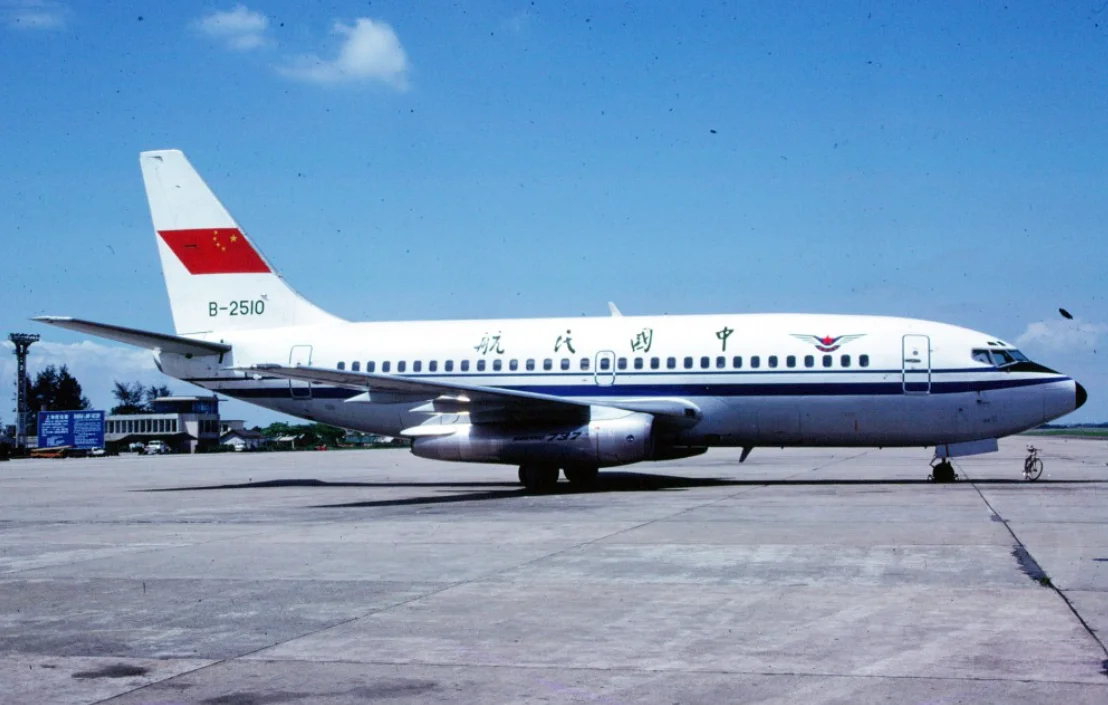

1990 Guangzhou Baiyun Airport Collisions
The morning of October 2, 1990 began as a routine travel day at Guangzhou's Baiyun Airport. Xiamen Airlines Flight 8301 had taken off at 6:57 a.m., bound for Guangzhou from Xiamen with 93 passengers and 9 crew members aboard. Around 7:20 a.m., a 21-year-old passenger named Jiang Xiaofeng left his seat, rushed to the cockpit door, and forced his way in. He claimed to be carrying seven kilograms of explosives. He demanded the aircraft be flown to Taiwan. What followed in the next several hours would cost 128 people their lives.
The Hijacking
Jiang Xiaofeng had no explosives. An autopsy later confirmed that the small black box he brandished — about the size of a cigarette pack, with wires visible — contained nothing dangerous. But Captain Cen Longyu, confronted with the threat and the uncertainty, could not know that. Jiang ordered the cockpit cleared of all crew except the captain, and Cen complied. The cockpit audio was transmitted to the Guangzhou control tower via open radio channels, so ground controllers were aware of the situation as it unfolded. The aircraft's registration — B-2510 — had its own grim history: it had been hijacked once before, on May 12, 1988, and diverted to Taiwan. It was, in that sense, a plane that had survived a hijacking. It would not survive this one.
Collision on the Apron
As Flight 8301 approached Guangzhou, the situation on the ground was already tense. China Southwest Airlines Flight 4305 — a Boeing 707 with 110 passengers and 12 crew already boarded — sat on the apron. CAAC Flight 3523, a Boeing 757, was preparing for departure, waiting on the taxiway with all crew and passengers aboard. When Flight 8301 made its landing attempt, something went catastrophically wrong. The 737 first struck Flight 4305, inflicting only minor damage. Then it hit Flight 3523 directly, flipping the Boeing 757 onto its back. The impact killed 75 of Flight 8301's 93 passengers and 7 of its 9 crew members. On Flight 3523, 46 of 110 passengers died — most of them instantly. Among those 46 were all ten members of a Taiwanese tour group. Jiang Xiaofeng and Captain Cen Longyu were both found dead in the cockpit wreckage.
128 People
The final count was 128 dead. Each of those 128 people had been, an hour or two earlier, an ordinary morning traveler — business passengers, families, the Taiwanese tour group that had only recently been allowed to visit the mainland as cross-strait relations cautiously thawed. The crew members of all three aircraft had done their jobs in extremely difficult circumstances: the crew of CAAC Flight 3523, having monitored the hijacking situation on radio from their cockpit, lost none of their twelve members in the collision. Five passengers from Flight 3523 who survived the initial impact died later in hospital. One surviving passenger was described as a Swedish businessman. Beyond that, the individuals who perished left no detailed record in the accounts that reached the international press. They deserve to be remembered as the 128 people they were, not as an abstraction.
Aftermath and Change
The disaster occurred on October 2, 1990 — the opening week of the Beijing Asian Games, a moment of intense national attention and pride. Chinese authorities moved quickly to tighten airport security across the country, concerned both about the optics and about the very real possibility of further incidents during the Games. The crash prompted a fundamental shift in how China's aviation authorities approached hijacking response: rather than encouraging crew and passengers to confront hijackers directly, the new protocol prioritized passenger safety and aircraft preservation above all. The destruction of CAAC Flight 3523 triggered an insurance payout of US$55.599 million. It was also the first hull loss and fatal accident involving a Boeing 757 anywhere in the world. The collision became a reference point in global aviation safety literature.
What Remains
The old Guangzhou Baiyun International Airport, where the collision occurred, was decommissioned in 2004 when the new airport opened. The apron where three aircraft came together on that October morning no longer functions as an operational airfield. Three pieces of Flight 3523 survived the crash intact: one engine, one tire, and the left landing gear. These components are preserved and displayed at an aviation museum east of the current Guangzhou Baiyun International Airport, where they serve as physical testimony to what happened. The airport itself reopened to normal operations the day after the disaster. Life went on. But for the families of 128 people, October 2, 1990 remains the day the morning flight didn't end the way any morning flight is supposed to end.
From the Air
The 1990 collision occurred at the former Guangzhou Baiyun Airport, near 23.187°N, 113.268°E — north of central Guangzhou. The old airport site has since been redeveloped; the current Guangzhou Baiyun International Airport (ZGGG) lies approximately 15 km to the north at 23.392°N, 113.299°E and serves as the nearest major aviation reference. At 3,000 feet over the former airport's coordinates, the urban fabric of northern Guangzhou spreads in all directions, with the Pearl River visible to the south. The aviation museum containing wreckage from Flight 3523 is located east of the current ZGGG terminal. Pilots approaching ZGGG from the south overfly the approximate location of the 1990 disaster site.
Nearby Stories
- Shunde 12 km away
- 2015 Shenzhen Landslide 15 km away
- Mount Luofu 23 km away
- Qingyuan Maglev Tourist Line 32 km away
- Kaiping 56 km away
- Heyuan 90 km away
- Chikan, Kaiping 92 km away
- Erlitou Site Museum of the Xia Capital 1257 km away