
1996 Docklands Bombing
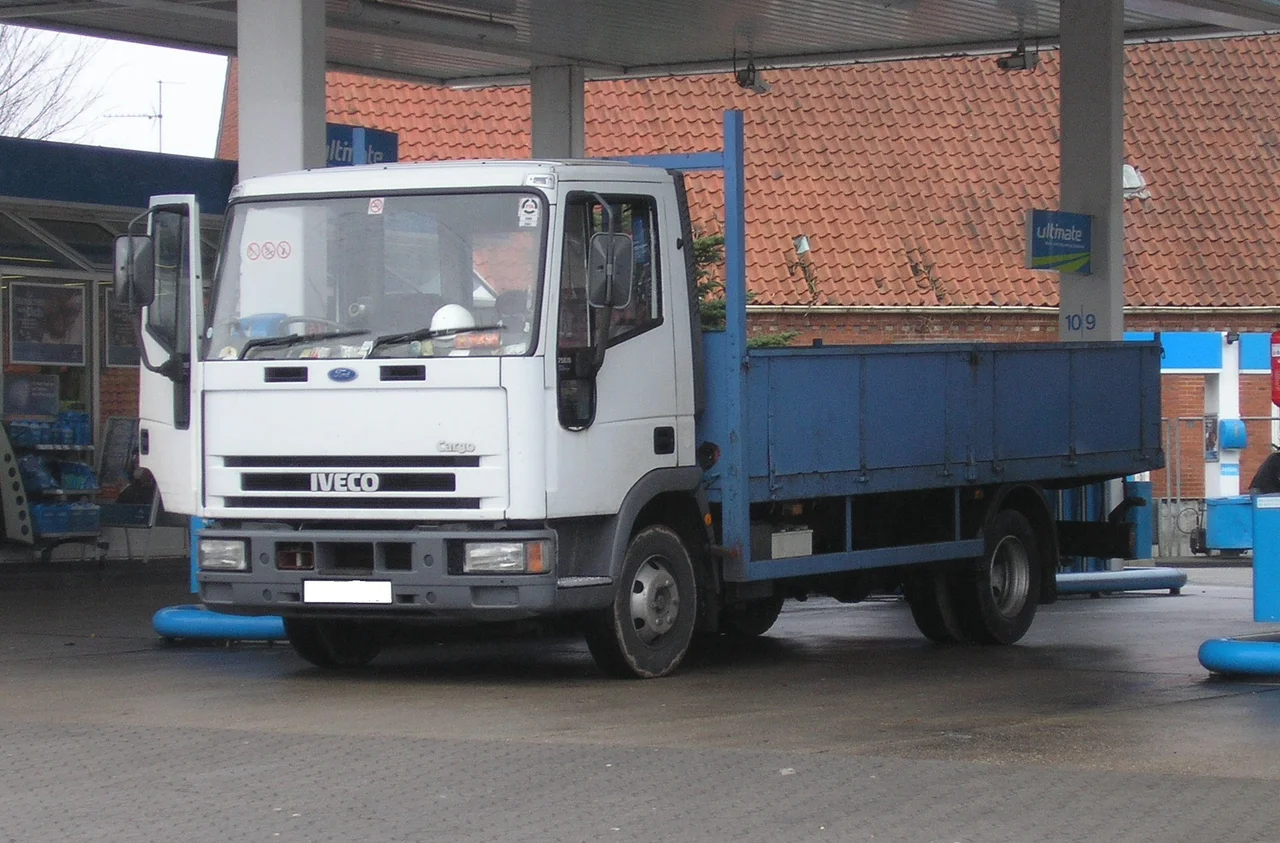
At 5:30 on the evening of Friday 9 February 1996, an IRA spokesman phoned Irish broadcaster RTÉ and announced, with great reluctance, that the seventeen-month ceasefire would end at six o'clock. The newsroom didn't believe him. They held the story. At 6:01 PM, in a small newsagent's shop on Marsh Wall in the South Quay area of London's Docklands, two men were finishing the day's work. Inam Bashir, the 29-year-old shop owner, and his employee John Jeffries, 31, were near the front of the premises. Outside, a 3,000-pound truck bomb hidden in the back of an Iveco Ford Cargo flatbed was counting down to detonation. When it went off, Bashir and Jeffries were killed outright, blown through two walls and buried in rubble. More than a hundred others were injured. The Northern Ireland peace process, which had seemed within reach for seventeen months, came apart in the same instant.
The Seventeen Months
In December 1993 the British and Irish governments had issued the Downing Street Declaration, which offered Sinn Féin a seat at all-party peace negotiations if the IRA called a ceasefire. The IRA called one on 31 August 1994. For seventeen months, the killing slowed in Northern Ireland. Talks crept forward. Then, by early 1996, John Major's government had lost its parliamentary majority and was depending on Ulster unionist votes to stay in power. Major began insisting that the IRA fully disarm before Sinn Féin could enter talks, a precondition the IRA called a demand for surrender. On 23 January 1996 an international commission recommended that the disarmament demand be dropped. The British government refused. Gerry Adams warned American diplomats that the ceasefire was in danger. The IRA had, by then, already been making the bomb.
The Truck
The device was built during the ceasefire. Plastic sacks of ammonium nitrate fertiliser mixed with sugar, around 3,000 pounds in total, were packed around metal scaffolding poles drilled with holes and stuffed with Semtex booster charges. The whole assembly went into the back of an Iveco Ford Cargo flatbed truck and was driven more than 300 miles south to Barking, in east London. There, the timer was connected and a mercury switch was wired in as an anti-handling device. On the afternoon of 9 February the truck was driven west into Docklands and parked outside the South Quay Plaza, a glassy office complex on the edge of Canary Wharf. The IRA's call to RTÉ came in at 5:30 PM. Police received warnings 90 minutes before detonation but did not manage to clear the area completely. South Quay was a Friday evening: cleaners going home, after-work drinkers, shop staff cashing up. Twenty officers were on the scene trying to evacuate.
Bashir and Jeffries
Inam Bashir was 29 years old, the proprietor of a newsagent shop. John Jeffries, 31, worked for him. They were in the front of the shop when the bomb detonated 80 yards away. The blast wave shoved them through two interior walls; their bodies were recovered from beneath the rubble. The damage extended over a quarter-mile in every direction. Glass blew out of office buildings as far as Canary Wharf itself, where steel cleaning poles were tossed through plate windows on upper floors. A woman in the area was blinded in one eye by flying glass and needed 300 stitches across her face and arms. Estimated property damage came to £150 million. The Metropolitan Police Commissioner, Sir Paul Condon, told reporters afterwards: 'It would be unfair to describe this as a failure of security. It was a failure of humanity.'
Bombed to the Table
On 28 February, less than three weeks after the bombing, John Major and the Irish Taoiseach John Bruton announced that all-party talks would resume in June. Major dropped his demand for prior IRA disarmament. The British press accused him of being 'bombed to the table.' American congressman Bruce Morrison, who had worked on the peace process, later put it bluntly: 'Canary Wharf got the Republicans to the table. The actions of the British said yes you can bomb your way to the conference table.' The IRA member James McArdle, a former South Armagh sniper, was eventually convicted of conspiracy to cause explosions at Woolwich Crown Court in June 1998 and sentenced to 25 years. The murder charges against him were dismissed when The Sun ran an article during the trial. McArdle was released in June 2000 under the terms of the Good Friday Agreement, with a royal prerogative of mercy from Queen Elizabeth II. The peace agreement he was freed under had been signed two years earlier; he served four years for two deaths.
South Quay Today
Walk along Marsh Wall today and there is no obvious mark left by the bomb. The South Quay Plaza was repaired and rebuilt. A small commemorative plaque marks the event. The Docklands Light Railway station at South Quay was eventually relocated 200 metres east, partly to accommodate later development. Canary Wharf has grown into a forest of towers that dwarfs anything that stood there in 1996. The two men who died were buried by their families. Inam Bashir's name appears on no public memorial in the area. The fact that the bombing ultimately accelerated a peace process is a fact that historians can record. It is not, for the people who knew them, an answer to anything.
From the Air
The South Quay area lies on the Isle of Dogs, immediately south of Canary Wharf's tower cluster. The bombing site is at the southern edge of the wharf, by the South Dock. The Docklands Light Railway runs east-west across the area. London City Airport (EGLC) is three miles east-south-east; commercial airliners on the Heathrow approach pass overhead at 5,000 to 7,000 feet. The Thames Barrier and the O2 Arena (formerly the Millennium Dome) are visible to the east.
From the Air
Located at 51.5004 N, 0.0180 W on the Isle of Dogs, east London. The South Quay area sits at the southern edge of Canary Wharf. London City Airport (EGLC) is approximately three miles east-south-east; airspace over Canary Wharf is restricted due to the LCY approach and the City of London Airspace Zone. View only at altitude during commercial overflights, typically 5,000 to 8,000 feet.
Nearby Stories
- Battle of Britain, Northfleet 1.1 km away
- Bayham Old Abbey 5.4 km away
- Catharine Macaulay 6.4 km away
- Hatfield rail crash 8.8 km away
- Chequers 8.9 km away
- Chelmsford Cathedral 10 km away
- Queen Victoria Hospital 13 km away
- Fishbourne Roman Palace 36 km away