.jpg)
1997 Lego Spill
Among the things you might find on a Cornish beach after a winter storm: kelp, mermaid's purses, the occasional dead gannet, broken pottery rounded by the tide, and, if you are very lucky, a small black plastic dragon. The dragon was made in 1997. It has been at sea for almost three decades. There were 33,427 of them in a single container that fell off a ship 20 miles off Land's End on a February morning when a rogue wave tipped the Tokio Express sixty degrees onto her side. Sixty-two containers went over the rail in that one moment. One of them held nearly five million Lego pieces, almost all from sea-themed sets. The sea got them back.
The Wave That Tipped a Ship
The German-registered container ship Tokio Express was running from Rotterdam to New York at around six o'clock on the morning of 13 February 1997 when she met a wave large enough to roll a fully laden container vessel sixty degrees from vertical. Sixty-two stacked containers tore from their lashings and slid into the Atlantic about 20 miles off Land's End. The container of Lego, manifest number unknown to history, carried 4,756,940 individual pieces with the kind of precise tally that exists only in shipping inventories. The inventory survived; the container did not. It ruptured on impact or shortly after, and the contents began their dispersal across the eastern Atlantic. The operator, Hapag-Lloyd, reported the loss. The cargo, classed as non-hazardous, was deemed unrecoverable. Lego eventually issued what amounted to a finders-keepers statement and asked beachcombers to wash any pieces they found.
The Inventory
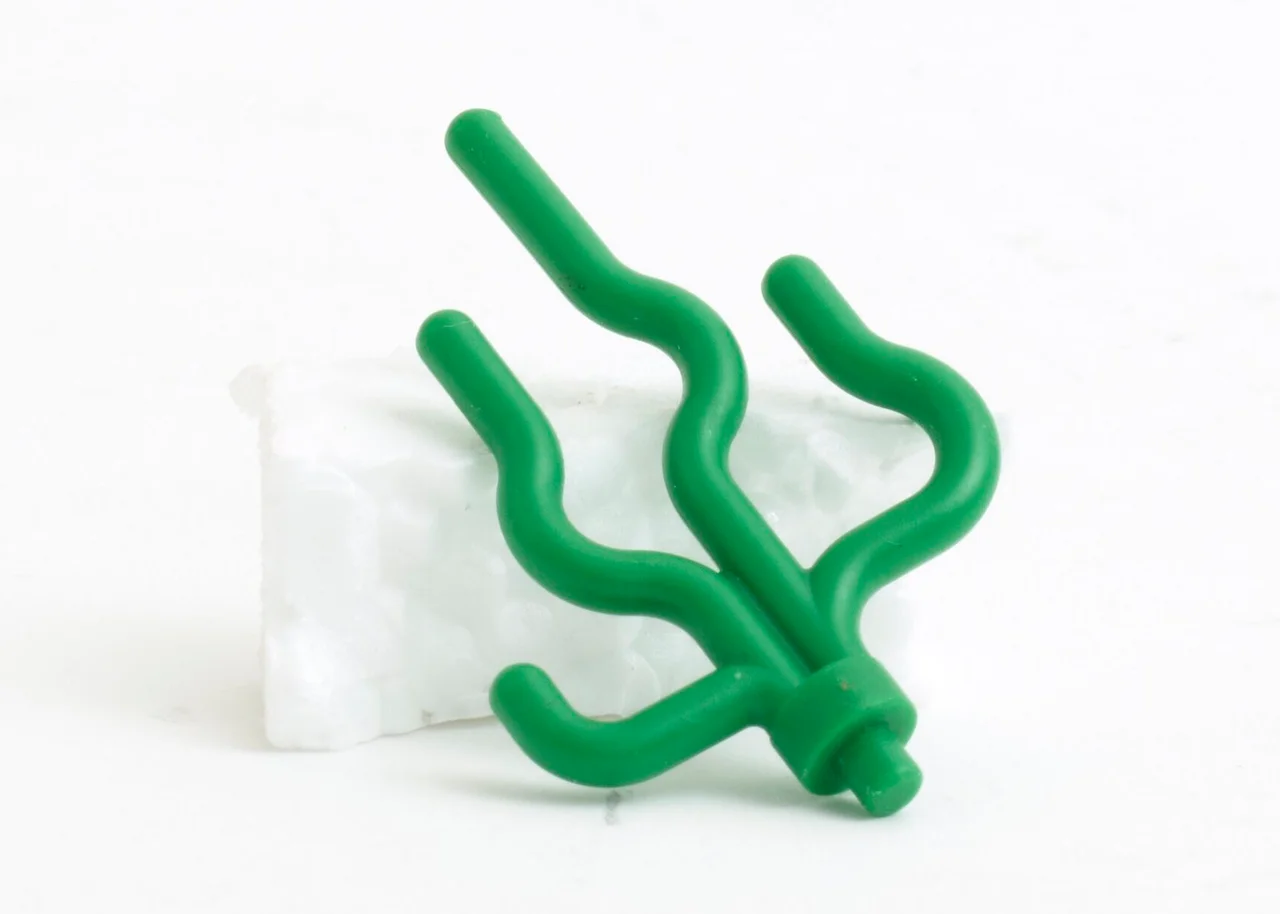
What makes the 1997 spill so distinctive among ocean cargo losses is the specificity. The container was packed for Lego's Aquazone, Pirates and Divers ranges, and the picking list reads like an inventory from an underwater fairy tale: 79,680 plastic spear guns, 33,427 black dragons, 50,000 brooms, 97,500 miniature scuba tanks. Octopuses, sharks, life rings, cutlasses, ship's masts, divers' flippers. Almost everything in the container was, by accident, designed to look like something you might find washed up on a beach. A child who picks up a green dragon at Perranporth in 2025 is holding a piece of plastic precisely engineered in Billund in 1996 to evoke shipwreck. The irony has not been lost on anyone.
The Beachcombers of Cornwall
In Cornwall and Devon, finding spill Lego has become a quiet folk pursuit. Tracey Williams, a writer based on the south Cornish coast, began cataloguing her finds in the 1990s and now runs a project called Lego Lost at Sea that records sightings from around the world. The 'holy grail' is the green or yellow octopus, of which only 4,200 were made and only a few dozen confirmed found. In April 2024 a teenager picking through tideline debris near Perranporth found one. There are pieces still buried in dune systems, embedded in cliff faces, lodged in the gravel above the strandline waiting for the next big swell to refloat them. Some have travelled astonishingly far: confirmed finds have been logged in Ireland, the Netherlands, Norway, Texas, and on a beach in Melbourne, Australia.
Plastic That Outlives You
Beneath the charm, there is a sobering science. In 2020 researchers published a study in Environmental Pollution that used X-ray fluorescence to analyse weathered Lego pieces collected from Cornish beaches. They compared them with mint-condition bricks from the same era and estimated that a piece of Lego, depending on conditions, could persist intact in the marine environment for anywhere from 100 to 1,300 years. Lego is acrylonitrile butadiene styrene, an exceptionally durable polymer, designed to survive children. It also survives saltwater, ultraviolet light and the slow grinding of waves on rock. The 1997 spill has therefore become an unintentional, decades-long experiment in plastic persistence, a case study cited in research on microplastics and shipping container losses generally.
A Story Still Washing Up
The spill keeps reappearing in the news because the Lego keeps reappearing on the sand. In October 2025, the BBC reported that pieces were still being found 28 years after the wave hit; the Royal Cornwall Museum had run a Lego Lost at Sea exhibition; the New York Times had written about dragons and sharks on a beach near you. What started as an industrial accident has become a kind of accidental folklore, a story that links Cornish surfers, marine biologists, environmental campaigners and curious children worldwide. The Tokio Express is long gone from the route. The wave is long past. But somewhere off Land's End, on every tide, the Atlantic is still slowly digesting a container and giving it back to the beaches one piece at a time.
From the Air
The spill site sits roughly 20 miles west-southwest of Land's End at approximately 49.97 degrees north, 5.72 degrees west, in the busy western approaches to the English Channel. Land's End Airport (EGHC) is the nearest field and a good waypoint for any approach from the north. The waters here are notorious for sudden heavy swell driven by Atlantic depressions and for the rogue waves that long-distance container ships still meet. Visual landmarks from cruise altitude include the Longships Lighthouse just offshore, the long granite ridge of the Penwith peninsula, and the Isles of Scilly about 28 nautical miles to the southwest.
Nearby Stories
- Mullion Cove 1.3 km away
- Great Wheal Charlotte 3.7 km away
- Castle Down 5.3 km away
- SS Georgia (1890) 30 km away
- Wheal Coates 41 km away
- 1979 Fastnet Race 55 km away
- HMS Affray 126 km away
- Routes of Santiago de Compostela: Camino Frances and Routes of Northern Spain 713 km away