
2007 Alderney UFO Sighting
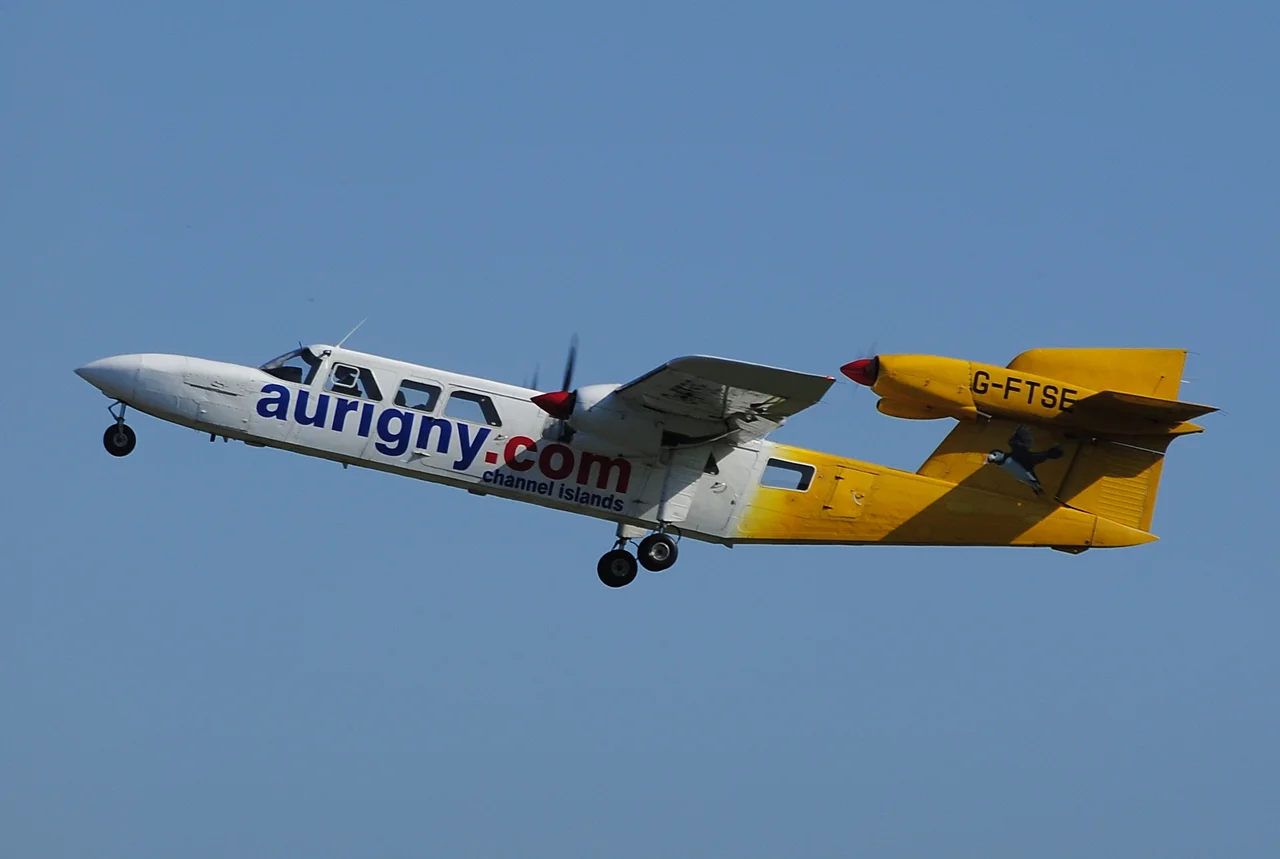
At first Ray Bowyer thought he was looking at sunlight bouncing off the greenhouses of Guernsey. He had eighteen years of flying behind him, the Channel Islands run was familiar territory, and pilots learn to identify glints, reflections, contrails - the optical mischief of a maritime sky. But the cigar-shaped brilliance hanging off his nose on the afternoon of 23 April 2007 did not behave like a reflection. It hung there, stationary, off the approach to Alderney, looking - he later said - like a CD balanced on its edge. Then he saw the second one. For roughly nine minutes, somewhere over the English Channel near the northernmost Channel Island, the most experienced flier in the cockpit could not name what was outside his windscreen.
Two Pilots, One Sky
Bowyer was fifty years old, flying for the regional carrier Aurigny Air Services, and methodical about what he reported. He pulled out binoculars and looked directly at the object - which, he noted with mild puzzlement, did not hurt his eyes. He estimated it first at the size of a Boeing 737, hovering around 2,000 feet some 10 miles ahead. Then the math grew stranger. As he continued his approach, the distance stretched to nearer 40 miles, and the size with it - he eventually described it as perhaps a mile across. Years later he would call it 'the size of five or six battleships,' a sharply defined yellow-gold form with shimmering black bands along its side. He radioed Jersey air traffic control. The controller picked up only a faint, weather-like primary contact on radar - and then mentioned that another pilot, Patrick Patterson with Blue Islands, had reported something similar in roughly the same patch of sky.
What the Passengers Saw
If Bowyer had been alone, the report would have stayed easier to dismiss. He was not alone. Two of his passengers spoke to the Evening Standard afterwards. One described an orange light shaped like an elongated oval. Another described it simply as sunlight-coloured. Patterson, in his own aircraft, reported an object behind him to his left, at 1,950 feet. Three independent vantage points, three accounts that broadly aligned. Bowyer landed at Alderney, filed a formal report to the Civil Aviation Authority labelling the incident a near-miss, and then flew the return leg back to Southampton without seeing anything more. He told the BBC, with the candour of someone still working through it, that he had been pretty shook-up and that the whole thing was pretty scary. The Times later called his testimony one of the most impressive and perplexing to land in Ministry of Defence files.
The Quiet Response
Within two days, the MoD had decided not to investigate. A week later, it clarified its reasoning: the sighting had taken place in French airspace, so it was not Britain's problem. Two weeks after that, it released the file anyway, including a statement from the second pilot. The bureaucratic shrug had a particular Channel Islands flavour to it - the islands sit in a jurisdictional crease where British, French, and local authorities all have partial claim and none has complete one. By 2008 the Daily Telegraph was citing the case as part of what it called a huge rise in UK UFO reports. Bowyer himself was careful. He rejected any suggestion that he had said the words 'alien vessel.' What he said, repeatedly, was that he had never seen anything like it before in all his years of flying.
The Possible Explanations
Two natural explanations followed the file out the door. A local astronomer, Michael Maunder, attributed the sighting to sun dogs - the optical effect where sunlight refracts through high-altitude ice crystals to produce bright spots at exactly 22 degrees from the sun. Maunder noted that the weather that afternoon had been just right for setting them up, and that Bowyer's lights would have sat at roughly the correct angle. Bowyer himself, interviewed by the BBC, allowed for another possibility: earthquake lights. The phenomenon is scientifically contested - flashes of light reported over zones of seismic stress - but on 28 April, five days after the sighting, a magnitude 4.3 earthquake shook southeastern England. The geology had been restless. Whether the lights were ice and angle, electromagnetic strangeness, or something else, the file remains open in the way that the best aviation puzzles do: documented, declassified, and quietly unsolved.
From the Air
The 2007 sighting occurred on approach to Alderney (49.7°N, 2.367°W), in the airspace southwest of the island over the English Channel near Les Casquets. Alderney Airport (EGJA) sits about a mile southeast of Saint Anne. Recommended viewing altitude for retracing the route: 2,000-4,000 ft, ideally on a clear afternoon with the sun behind you - the same conditions Maunder argued could produce sun dogs. Nearby airports: Guernsey (EGJB) 19 nm south, Jersey (EGJJ) 36 nm south, Cherbourg-Maupertus (LFRC) 22 nm east.
Nearby Stories
- 1993 Cherbourg Incident 6.2 km away
- Channel Islands 7.4 km away
- Abbey of Saint-Sauveur-le-Vicomte 17 km away
- German Submarine U-672 21 km away
- HMS Formidable (1898) 38 km away
- HMS Affray 57 km away
- Needles Lighthouse 83 km away
- HMS Brisk (1851) 251 km away