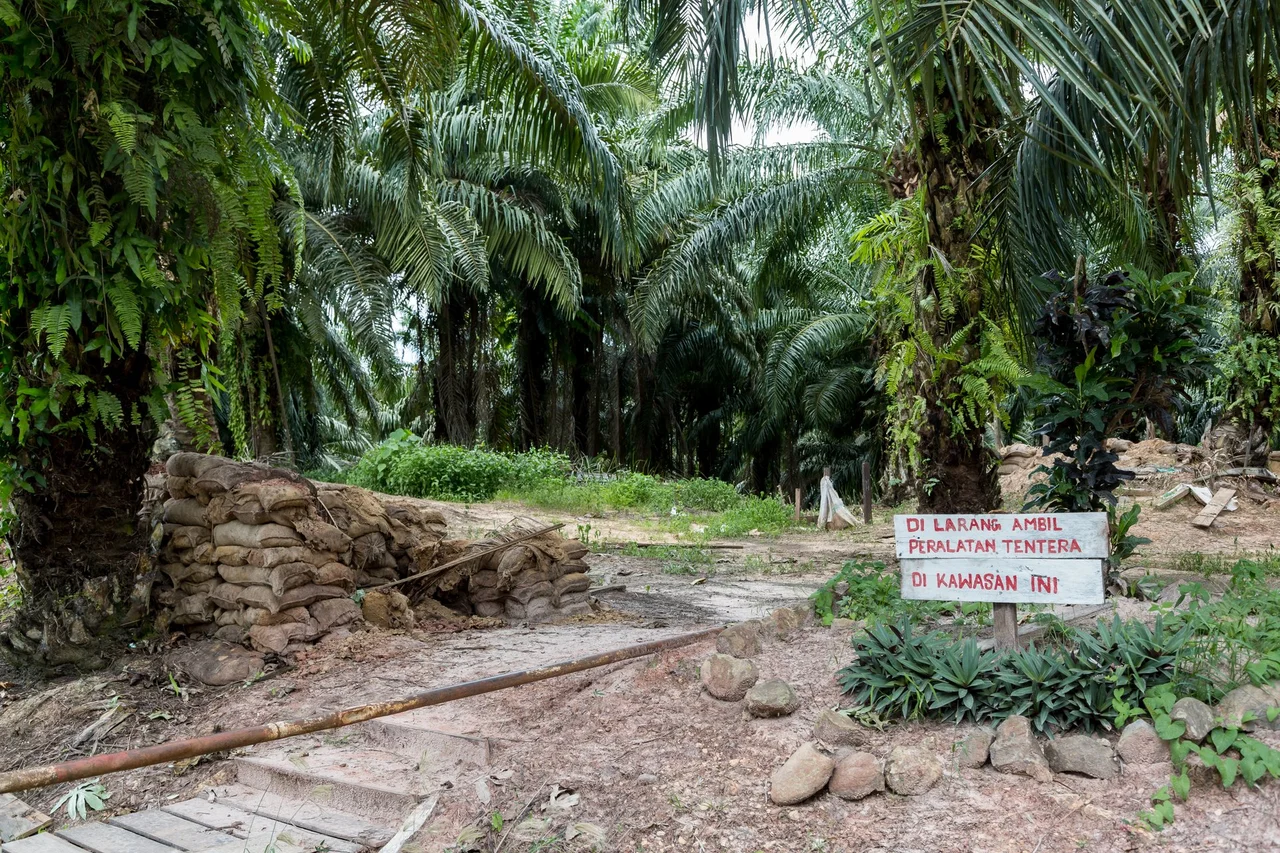

2013 Lahad Datu Standoff
On 11 February 2013, at least 101 armed followers of Jamalul Kiram III, a man who claimed to be the rightful Sultan of Sulu, landed in the village of Tanduo near Lahad Datu, Sabah. They called themselves the Royal Security Forces of the Sultanate of Sulu and North Borneo. They came from Simunul island in Tawi-Tawi, in the southern Philippines. They came to reclaim territory their leader insisted had never been legitimately ceded. What followed was weeks of negotiation, then bloodshed, then airstrikes, and finally a military operation that left 72 people dead, altered Malaysia-Philippines relations, and permanently changed how eastern Sabah thinks about its own security.
A Claim Centuries in the Making
The roots of the standoff reach back to 1878, when Sultan Jamalul Alam signed a treaty with Baron von Overbeck of the British North Borneo Company for the lease of the Sultan's lands in northern Borneo at an annual rent of 5,000 Mexican dollars. Whether that agreement constituted a lease or a cession has been debated by legal scholars, diplomats, and rival sultans ever since. The Philippines retained a territorial claim to eastern Sabah through the heritage of the Sultanate of Sulu, and Malaysia continued to pay an annual cession payment of roughly $1,000 to indirect heirs of the Sultan, honoring the 1878 agreement. Jamalul Kiram III, excluded from a 2012 peace deal between the Philippine government and the Moro Islamic Liberation Front, decided to press his claim by force. He appointed his brother Agbimuddin Kiram to lead the expedition.
Standoff and Breakdown
Malaysian security forces surrounded Tanduo. Police boats patrolled the waters. Filipino naval ships deployed to block further crossings from the south. On 26 February, Philippine President Benigno Aquino III publicly appealed to Kiram to recall his followers, warning that their presence endangered not just themselves but thousands of Filipinos living in Sabah. Kiram refused. His brother told him the group was firm. The 74-year-old claimant said he was ready to be jailed and could not understand what law he had broken by 'coming home to their homeland.' Deadlines passed. Negotiations stalled. On 1 March, three days after Malaysia's extended deadline, shots were exchanged between the militants and police. Two Malaysian commandos from the 69th unit died. Twelve of Kiram's followers were killed. The standoff was over. The violence was just beginning.
Operation Daulat
On 3 March, a separate group of gunmen claiming Sulu Sultanate ties ambushed police in Semporna, killing a special branch superintendent and four officers. On 5 March, Royal Malaysian Air Force jets bombed the Kiram hideout in Lahad Datu. Prime Minister Najib Razak announced the operation from a rally in Kuala Lumpur, declaring that the nation's sovereignty was non-negotiable. The military operation, codenamed Operation Daulat, meaning 'Operation Sovereignty,' swept through farmland and FELDA plantations. Tanduo village was declared secured on 11 March, with 22 militant bodies recovered. The broader clashes continued until 24 March. When it ended, 56 militants, 10 Malaysian security personnel, and 6 civilians had been killed. The surviving militants were captured or fled back across the sea.
Justice and Consequence
Nine captured Filipino militants were sentenced to death by Malaysia's Court of Appeal in 2017 for waging war against the Yang di-Pertuan Agong, the Malaysian king. The Federal Court upheld the sentences in 2018. Even after Malaysia abolished mandatory death penalties in 2023, seven of the nine saw their sentences confirmed in 2024; the other two had died in prison. Jamalul Kiram III himself died of multiple organ failure in Tawi-Tawi on 20 October 2013. His brother Agbimuddin died of cardiac arrest in hiding in January 2015. Malaysia suspended the annual cession payments. Thousands of Filipinos who had lived in Sabah for decades, some without documentation, were deported. The Eastern Sabah Security Command was established on 29 June 2013, permanently militarizing a coastline that had relied for too long on the assumption that the sea was wide enough to keep trouble away.
The Legal Aftershock
In 2019, eight Sulu heirs who insisted they had no connection to the standoff hired lawyers to pursue the original 1878 commercial agreement through European courts, seeking to seize roughly $14.9 billion in Malaysian foreign assets. The litigation spanned Spain, France, Luxembourg, and the Netherlands, with the claimants pursuing legal openings wherever they could find them. By November 2024, Malaysia had prevailed in all four jurisdictions, with seizure orders quashed in every court. The case continues in diminished form, a legal echo of a territorial dispute that began with a 19th-century treaty and erupted in a 21st-century village of palm oil workers and fishermen.
From the Air
The standoff centered on the village of Tanduo near Lahad Datu, at approximately 5.12N, 119.17E on the east coast of Sabah. Lahad Datu is visible as a coastal town on Darvel Bay. Nearest airport is Lahad Datu Airport (WBKD). The coastline faces the Sulu Sea, with the Philippine islands of Tawi-Tawi visible at altitude on clear days. The maritime corridor between Sabah and the southern Philippines, through which the militants traveled, is clearly apparent from higher altitudes. ESSCOM security zone covers the eastern coast from Kudat to Tawau.
Nearby Stories
- 1985 Lahad Datu Ambush 23 km away
- Sheikh Karimul Makhdum Mosque 35 km away
- Pom Pom Island 39 km away
- Madai Cave 43 km away
- Gomantong Caves 46 km away
- Tawi-Tawi 61 km away
- Sandakan Japanese Cemetery 107 km away
- Japanese Destroyer Tanikaze 131 km away