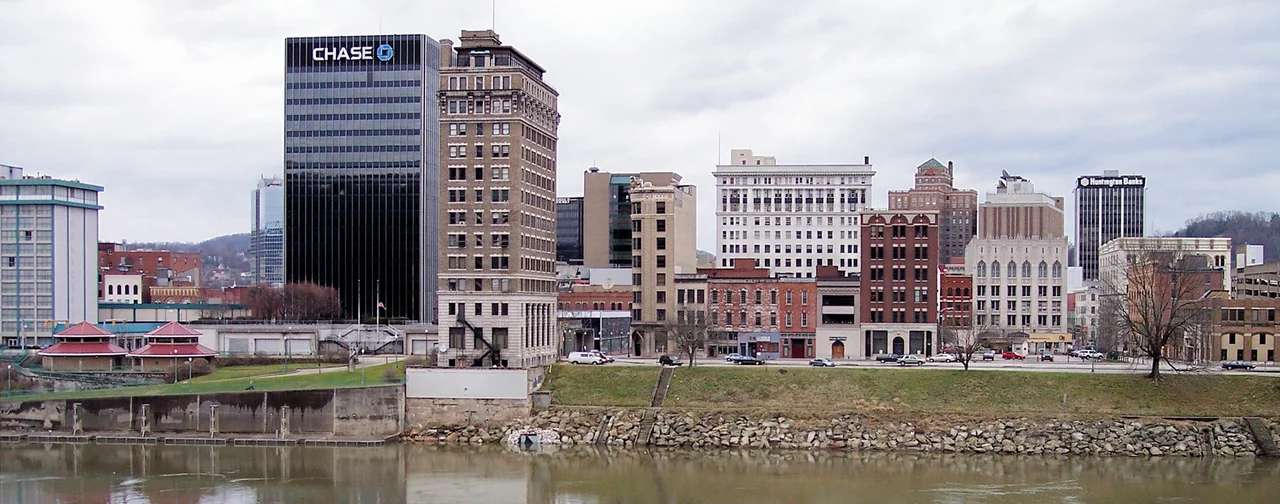

2014 Elk River chemical spill
Around 8:15 a.m. on January 9, 2014, a state inspector pulled into the Freedom Industries chemical storage site on the banks of the Elk River in Charleston, West Virginia and smelled licorice in the air. The smell was MCHM - 4-methylcyclohexanemethanol, a chemical used in coal washing - and it was pouring out of a corroded steel tank, through a hole in a cinderblock containment wall, into the Elk River about one mile upstream of the intake for West Virginia American Water's regional treatment plant. By the time anyone realized what was happening, the chemical was already in the pipes that served roughly 300,000 people in nine counties. The do-not-use order that followed lasted four to ten days depending on the neighborhood. It remains one of the largest drinking-water contamination events in modern American history.
The Spill
Freedom Industries was a small Charleston company that stored bulk chemicals for the coal industry. Tank 396 at the company's Etowah River Terminal had been used to hold Crude MCHM, a mixture whose primary component is 4-methylcyclohexanemethanol - a chemical reagent used to separate coal from rock during processing. The tank was old, set in a deteriorating cinderblock containment area, and the company had not inspected it recently. On the morning of January 9, the bottom failed. Some 10,000 gallons of MCHM escaped. The chemical flowed across the gravel, through a crack in the containment wall, and into the Elk River. From there, it traveled 1 mile downstream to the water utility's intake. The treatment plant's activated carbon filters were not designed for the compound. The MCHM passed through into the distribution system.
Do Not Use
By that evening, Governor Earl Ray Tomblin had declared a state of emergency. West Virginia American Water issued a 'do not use' advisory for tap water - not just 'do not drink,' but do not bathe in it, do not wash dishes with it, do not cook with it. Customers were told they could flush toilets and put out fires. That was it. Roughly 300,000 people across nine counties were affected: Boone, Cabell, Clay, Jackson, Kanawha, Lincoln, Logan, Putnam, and Roane. Schools and restaurants closed. The Federal Emergency Management Agency rushed in 75 truckloads of bottled water. People drove to neighboring states to bathe. Sales of disposable plates and plastic cutlery surged in convenience stores. The do-not-use order began to lift in zones over the following week, but residents widely reported that the licorice smell continued to come from their taps long after the all-clear was issued.
The Independent Scientists
On January 16, an engineering team from the University of South Alabama drove eight hundred miles from Mobile, Alabama to Charleston on their own dime to help. Dr. Andrew Whelton and Dr. Kevin White, along with graduate students Keven Kelley, Matt Connell, Jeff Gill, and Lakia McMillan, came to study how the contamination interacted with household plumbing - the pipes, valves, gaskets, and rubber seals inside ordinary homes. What they found was alarming. Many residents had not flushed their plumbing as the utility had instructed, fearing that the flushing odor would itself cause harm. Contaminated water was sitting in pipes, leaching the MCHM into plumbing materials. The Whelton group rewrote the flushing protocol, briefed the governor's communications director, and ultimately published a peer-reviewed paper in Environmental Science and Technology in December 2014 documenting the chemistry of what had actually happened inside people's homes. Their work was reported by CBS News, the New York Times, and the Huffington Post. They were funded by no one.
Aftermath, and a Question About Regulation
Freedom Industries filed for bankruptcy eight days after the spill. Federal prosecutors eventually charged six of the company's executives and employees with environmental crimes; all six pleaded guilty. The U.S. House Transportation and Infrastructure Committee held a field hearing in Charleston on February 10, 2014. The Charleston Gazette and others reported that the tank had not been subject to meaningful state inspection, in part because the storage facility was upstream of a drinking-water intake but had been classified as a low-risk site. West Virginia's legislature subsequently passed Senate Bill 373, the Aboveground Storage Tank Act, requiring inventory and inspection of tanks like Tank 396. In the years that followed, much of that legislation was rolled back or weakened. The Elk River still runs past the old Freedom Industries site, which sits empty now. The smell of licorice is the thing residents say they cannot quite forget.
From the Air
The 2014 Elk River chemical spill originated at the former Freedom Industries site in Charleston, West Virginia at 38.37 degrees north, 81.61 degrees west, on the east bank of the Elk River just north of its confluence with the Kanawha River. Best viewed at 3,000 to 5,000 feet AGL: look for the Elk River winding south through downtown Charleston before joining the Kanawha. The West Virginia American Water treatment plant is downstream of the site. Yeager Airport (KCRW) is on the ridge just east of downtown - a striking flat-topped runway visible from miles away.
Nearby Stories
- Mystery Hole 6.5 km away
- West Virginia Colored Children's Home 9.4 km away
- Clay, West Virginia 13 km away
- Staats Mill Covered Bridge 14 km away
- Hobet Coal Mine 23 km away
- Appalachia 23 km away
- Fred M. Vinson Museum and Welcome Center 30 km away
- Ponn Humpback Covered Bridge 43 km away