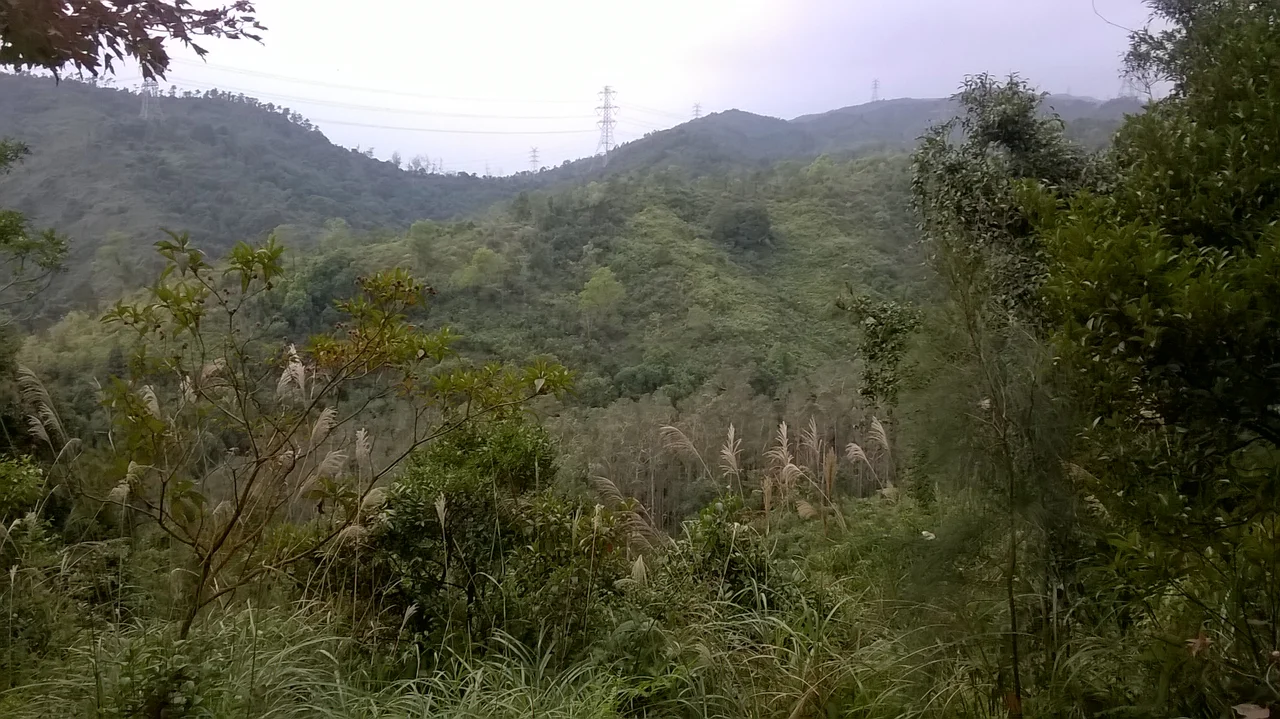

2020 Hong Kong Garrison Helicopter Crash
At 4:48 pm on 30 March 2020, a voltage dip registered on a 400-kilovolt overhead line running between Lung Kwu Tan and Sha Tin. The dip lasted less than a tenth of a second. Within fifteen minutes, the city's fire service had received 42 reports of lifts malfunctioning across Hong Kong. In the village of Chuen Lung, residents heard a noise stop — the distinctive chop of a military helicopter, which did not resume. No smoke rose from the hills of Tai Lam Country Park. No fire was visible through the afternoon haze.
Fog and Silence in the Hills
Villagers in Chuen Lung described heavy fog when the crash occurred. The helicopter — believed to be a Harbin Z-9, tail number 6202, assigned to the Hong Kong Garrison of the People's Liberation Army — appears to have struck an electricity transmission tower during what the garrison later described as a routine flight training operation. The explosion was heard; the wreckage was not immediately visible. Hikers and nearby residents were the first to notice that military vehicles had begun moving toward the hills. By that evening, a dozen military vehicles and a large number of soldiers had appeared near Lui Kung Tin. CLP Group, the power utility, confirmed the voltage incident and dispatched repair crews to the damaged line.
A Cordon and a Cover Story
At 7 am the next morning, more than a hundred military personnel entered Tai Lam Country Park via Lui Kung Tin. Some carried shovels. A senior soldier on the scene told witnesses it was a military exercise. By 9 am, police and garrison forces had sealed the site. Officials stayed through the afternoon. The garrison notified the Hong Kong government of the crash — but did so a full day after the event. When lawmakers and journalists asked about the crew, no information was provided. The helicopter's registration number and the names of those aboard were not released. Eddie Chu, one of the first public figures to break the news, formally demanded that the Security Bureau reveal casualty details and clarify whether the garrison had given proper advance notice of the training flight, as required under garrison law.
The Debris and the Men Who Carried It Away
Journalists who searched the area near Tsing Tam reservoir found what appeared to be crash debris: crushed vegetation, electrical cable, fragments of a flight control panel, pieces that appeared to match the Z-9's markings. A day after journalists located the site, a group of men arrived and removed material from the hillside. None identified themselves. None said what they were taking. In the days that followed, a flight manual cover was found at the suspected crash site by reporters, along with further wreckage. The people who had come to collect debris were gone.
Transparency and Its Limits
Hong Kong, under its Basic Law, maintains a largely autonomous civilian government alongside a PLA garrison whose activities have historically operated with considerable independence from public scrutiny. The 2020 crash made visible the gap between those two systems. Pro-democracy legislators called for a formal inquiry. The Security Bureau offered no independent accounting of what had happened. Whether the four reported fatalities were ever officially confirmed by the garrison remains unclear in public record — the garrison's own statement acknowledged the crash but released no names, no rank, and no further detail. That absence became, in its own way, a kind of answer about how such events would be handled.
From the Air
The crash site in Tai Lam Country Park lies at approximately 22.41°N, 114.10°E, in the western New Territories of Hong Kong, roughly 15 km northeast of Hong Kong International Airport (VHHH) at Chek Lap Kok. The park's forested ridgeline rises to around 500 metres and is easily identified from the air by its steep terrain immediately east of the Tuen Mun corridor. The Tsing Tam reservoir sits within the park and is visible from the air in clear conditions. Prevailing winds in late March can bring low cloud and fog down the hillsides from the northeast, reducing visibility significantly at lower altitudes — conditions consistent with what witnesses described on the day of the crash.
Nearby Stories
- Chapel of St. Francis Xavier 3.5 km away
- Cuiheng 4.1 km away
- 2015 Shenzhen Landslide 16 km away
- Shunde 31 km away
- Wanshan Archipelago 37 km away
- Nanxiong Formation 96 km away
- Heyuan 149 km away
- Checheng Fu'an Temple 629 km away