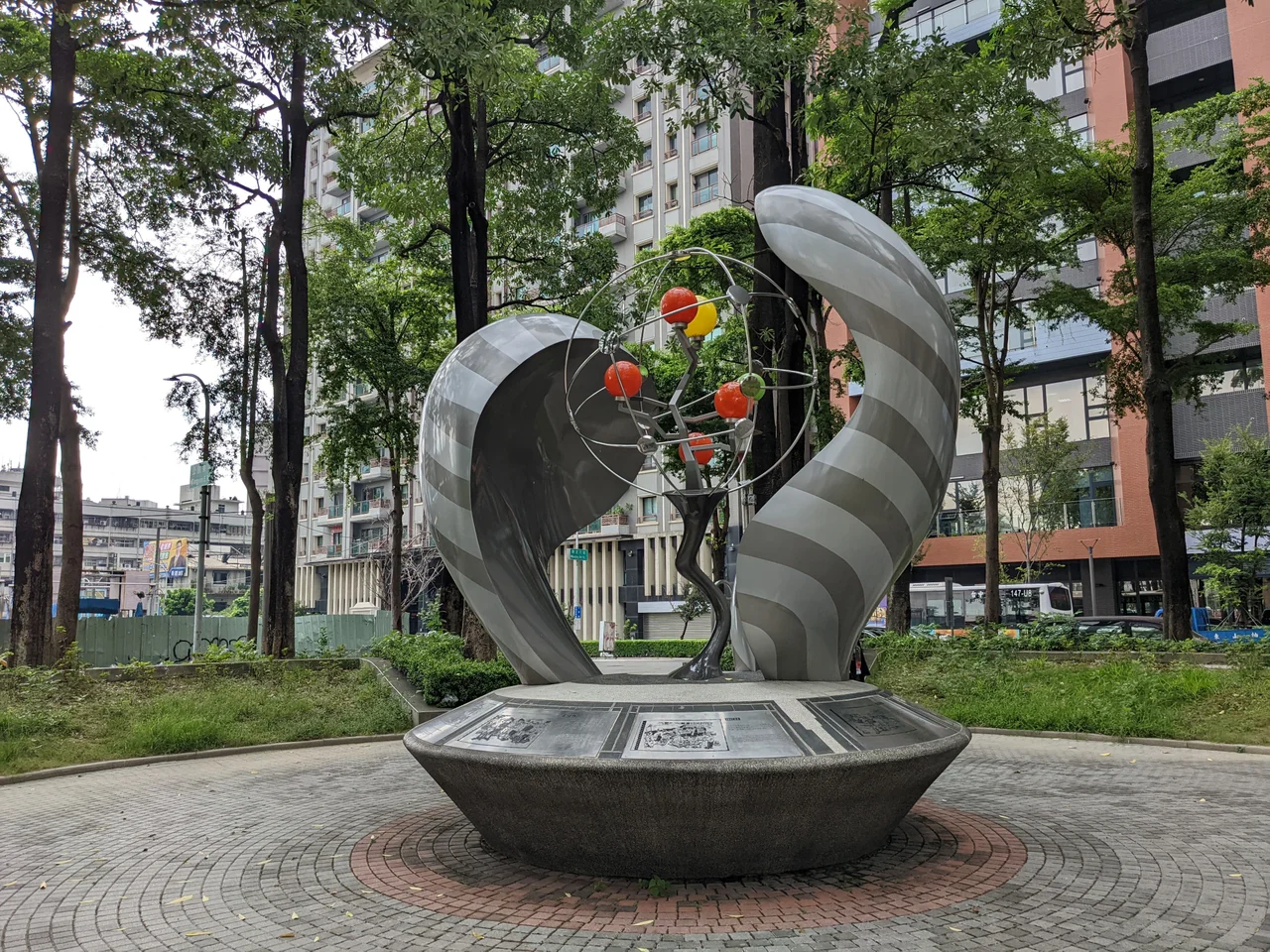

27 Brigade
They were, most of them, very young. Students who had studied under Japanese rule. Workers who had apprenticed in factories and workshops. Former soldiers who had survived World War II fighting in the Imperial Japanese Army, only to return home to a Taiwan that was changing faster than anyone could manage. When the February 28 Incident erupted across Taiwan in late February 1947 — sparked by a brutal beating of a widow and the killing of bystanders by Nationalist agents in Taipei — the people of Taichung did not wait to see what would happen next. They organized.
February 28 and the World It Made
To understand the 27 Brigade, you have to understand what February 28, 1947 meant for Taiwan. Japan had ruled the island for fifty years; the generation that came of age under that rule had been educated in Japanese schools, served in Japanese institutions, and in many cases fought in Japan's wars. When Japan surrendered in 1945, Taiwan was transferred to the Republic of China government under Chiang Kai-shek's Kuomintang (KMT). The early years of that handover were turbulent. Mainlander officials were widely seen as corrupt and dismissive. Tensions over economic hardship, political exclusion, and cultural contempt had been building for nearly two years.
On the evening of February 27, 1947, agents of the Taiwan Monopoly Bureau beat a widow selling untaxed cigarettes on a Taipei street. When a crowd gathered in protest, agents fired into the crowd, killing a bystander. The next morning, Taipei erupted. Within days, the unrest had spread island-wide. Taiwanese people across the island — not just political activists, but teachers, merchants, doctors, farmers — began seizing local government offices and attempting to maintain order in the vacuum left by the retreating KMT administration. In Taichung, that impulse coalesced into an armed force.
Who They Were
The force that became known as the 27 Brigade was organized under the influence of Xie Xuehong, a prominent figure of the Taiwanese Communist Party during the Japanese period and one of the few people in Taichung with any experience in political organizing. But the rank and file were not ideologues. They were young men — the precise numbers remain disputed, with estimates ranging from 30 to 4,000 — drawn primarily from the student population and from the pool of discharged soldiers who had served in World War II under the Japanese flag and knew how to use a weapon.
They had, reportedly, more weapons than they expected. One account holds that the brigade discovered a cache of weapons and ammunition left behind by the Japanese military, enough to arm three divisions, though that figure has never been confirmed. What is not disputed is that they were outgunned, outmanned, and operating without institutional backing, supply lines, or any realistic path to a negotiated outcome. They were defending their city, in the only way that seemed available to them, in the absence of any other option.
Fifteen Days
The brigade's active life was short. On March 15, 1947 — roughly two weeks after the uprising began — Kuomintang reinforcements arrived in Taichung from the mainland. The brigade sent out detachments to engage the incoming troops. They succeeded in forcing the KMT units back, but at a cost: heavy casualties and a critical shortage of ammunition.
The following day, the Nationalist forces — now reinforced and equipped with heavy weaponry — assaulted positions held by the 27 Brigade. More men fell. The remaining defenders were forced to retreat. That night, the brigade's leaders convened and made a decision: disband. Members hid their weapons, dispersed, and returned home before midnight.
What followed was not peace. In the weeks and months after the uprising was crushed, the KMT carried out a widespread campaign of violence and arrest across Taiwan — targeting not only the participants in the February 28 Incident but intellectuals, lawyers, physicians, and local leaders of any kind. The killing and imprisonment that followed, which historians call the White Terror, would continue in various forms for decades. Many who had taken part in the 27 Brigade, or were suspected of having done so, were among those killed or imprisoned.
What Remains
For decades, the February 28 Incident was not spoken of in Taiwan. The KMT government that had carried out the crackdown remained in power, and the events of 1947 were effectively erased from public life. Survivors and their families kept silence, often out of fear.
The recovery of this history has been slow and incomplete, and it is still contested. In 2017, seven decades after the brigade disbanded under cover of darkness, a monument was erected in Taichung to commemorate their actions. A documentary — called The 27 Brigade Documentary — was produced the same year, gathering what testimony and records survived. The monument stands near Taichung Railway Station, in a city that has grown beyond recognition from the one those young men tried to defend.
They were not heroes in any simple sense. They were people caught inside a catastrophe not of their making, who tried to act and were destroyed for it. The sober thing — the honest thing — is to remember them in that complexity, without glorification and without erasure.
Taichung Today
The city where the 27 Brigade formed is now Taiwan's third-largest metropolitan area, a sprawling center of industry, culture, and education. The National Museum of Natural Science, one of Taiwan's most visited, sits in a city that has remade itself many times over since 1947. The physical traces of that March are almost entirely gone.
But memory, where it has been allowed to grow, is tenacious. The 228 Incident Memorial Foundation continues to document individual stories — the students, the workers, the former soldiers — many of whom were killed before they had a chance to become anything more than young men who made a choice in an impossible moment. To pass over Taichung today is to pass over a city carrying history it once was not allowed to speak.
From the Air
The 27 Brigade formed and fought in Taichung, located at approximately 24.15°N, 120.67°E in central western Taiwan. The monument commemorating the brigade stands near Taichung Railway Station in the heart of the city. From altitude, Taichung is visible as a dense urban grid spreading across the Taichung Basin, flanked by Bagua Mountain to the southwest and the Central Mountain Range to the east. The nearest major airport is Taichung International Airport (RCMQ), approximately 10 km south-southwest of central Taichung. Approach from the Taiwan Strait provides a sweeping view of the coastal plain where the 1947 conflict unfolded.
Nearby Stories
- Huwei, Yunlin 2.8 km away
- Geographic Center of Taiwan 4.2 km away
- Gaomei Wetlands 15 km away
- China Airlines Flight 611 21 km away
- Shei-Pa National Park 25 km away
- Yushan Weather Station 27 km away
- TransAsia Airways Flight 222 30 km away
- Battle of Xiapi 1136 km away