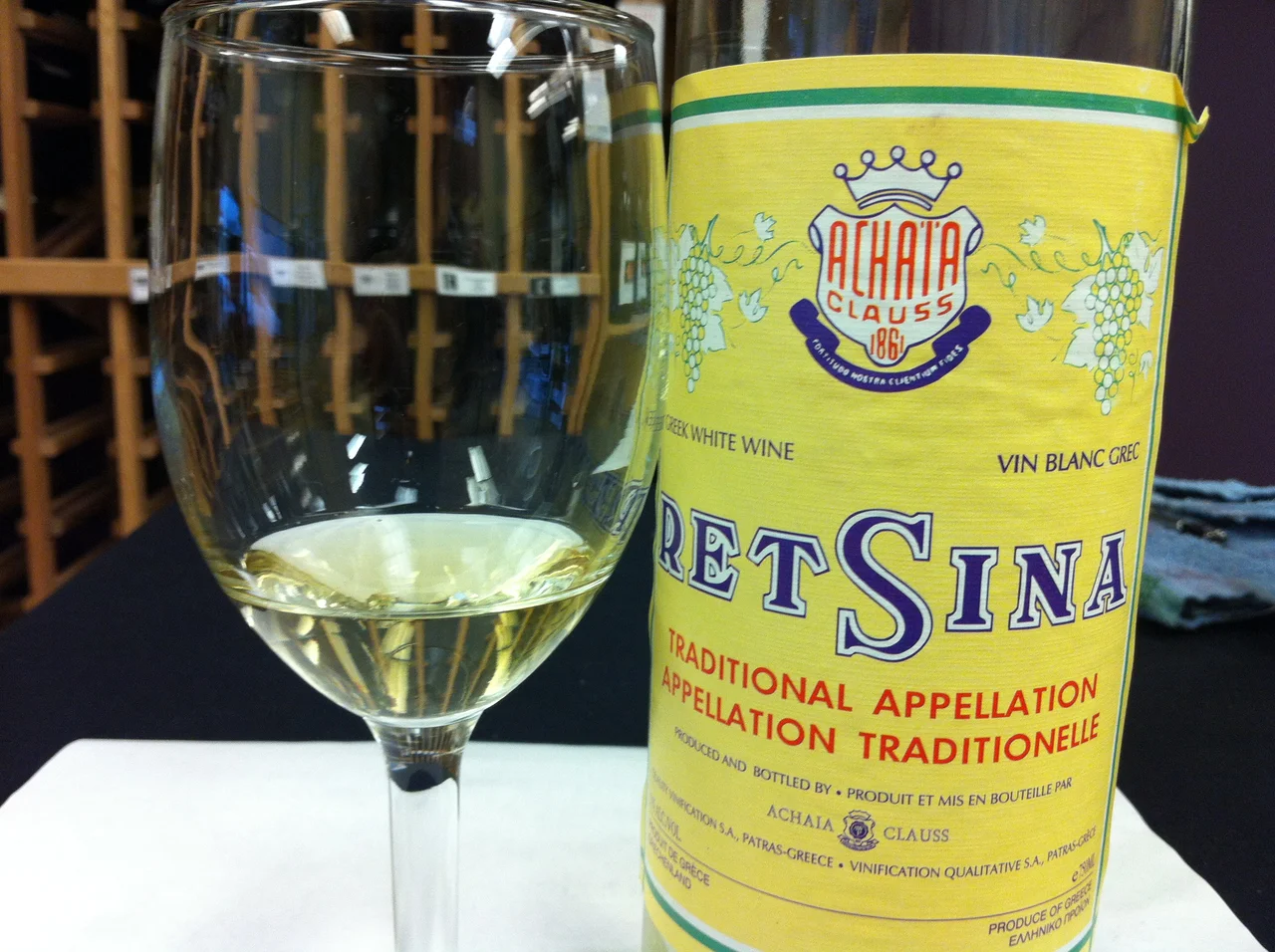

Achaia Clauss
Gustav Clauss came to Patras in 1859 with no intention of making wine. He was a representative of a Bavarian trading company, Fels and Co., and his business was blackcurrants — the raisins that made the Peloponnese rich in the nineteenth century. He bought sixty acres on a hillside called Riganokampos, five hundred meters above the city, built a summer residence, and planted a few vines almost as an afterthought. Two years later, in 1861, those vines had become a winery. More than a century and a half after that, Achaia Clauss is still there — and so is the wine.
A Hobby That Became a Legend
The early years were rougher than any hobby should be. Gangs of brigands attacked the property almost daily, and the fledgling winery survived as much through political connections as through quality — its ties to the central government of Bavaria's King Otto, who then sat on the Greek throne, helped keep order on the hillside. Despite the chaos, Clauss persisted. By 1872, he and the owners of Fels and Co. had formally incorporated the Achaia Wine Company with a partner named Theodor Harburger. The operation changed hands and managers several times over the following decades, but from 1883 Clauss ran it himself. By 1908 the winery had fixed on the two wines that would define it: Mavrodaphne and Demestica.
The Wine That Made the Name
Mavrodaphne — the name means 'black laurel' in Greek — is a fortified dessert wine, deep ruby in color, made from dried red grapes grown in the Patras area. Rich and sweet, with notes of dried fig and dark fruit, it is one of the great appellations of Greek winemaking, and Achaia Clauss is its most celebrated producer. The winery's storage is built around the wine: the main cellars hold aging Mavrodaphne alongside table wines, subterranean tanks, and the historic Danielis storage room. The total capacity reaches approximately 7,500 tonnes — an operation far removed from Gustav Clauss's hobbyist vines, though it still sits on the same hillside he chose for his summer house.
Wars, Confiscation, and Comeback
Clauss died not long after taking personal control of the winery. Ownership passed to a German named Gudert — and then, when World War I broke out, the Greek government confiscated the property as an enemy alien asset. In 1920 it passed to Vlassis Antonopoulos, beginning a period of Greek ownership that, with only a pause for the German occupation in World War II, saw the winery grow steadily. A significant modernization came in 1955, when Konstantinos Antonopoulos joined the company, brought in new equipment, and assembled a team of specialists. The bottling plant followed in 1983. Through all of it, the visitors kept coming.
A Guest List Like No Other
Achaia Clauss has always been a destination as much as a producer. The roster of those who have made the climb to Riganokampos reads like an improbable convergence of history: Empress Elisabeth of Austria — Sisi herself — came, as did General Montgomery, Alexander Fleming, Aristotle Onassis, Omar Sharif, and Nadia Comaneci. Greek royalty arrived repeatedly: Kings George I, Constantine I, and George II, along with Queens Olga and Sofia, visited the cellars. Statesman Eleutherios Venizelos and actress Melina Merkouri both made the trip. The Ecumenical Patriarch Bartholomew came. The list goes on, a century and a half of the celebrated and the curious drawn to this hilltop winery and its singular wine.
The Hillside Today
Perched above Patras at 500 meters, the estate remains open to visitors — as it has been, without interruption, since Gustav Clauss first opened his gates. The vineyards look west and south toward the Gulf of Corinth, with the mountains of Aetolia-Acarnania visible across the water on clear days. The setting that attracted a Bavarian merchant looking for a summer residence has lost none of its appeal. What began as a hobby on a raisin trader's land became one of the enduring institutions of Greek wine, and the Mavrodaphne that pours from those old cellars carries the full weight of that unlikely origin.
From the Air
Achaia Clauss sits at approximately 38.197°N, 21.770°E on the hillside east of Patras, at an elevation of around 500 meters. Flying in from the west, the Gulf of Corinth spreads below with the Rio-Antirrio Bridge visible at the narrows; the winery estate is tucked into the forested slopes above the city grid. Nearest major airport is LGRX (Araxos), roughly 30 km to the southeast along the Achaea coast. Approach from the north at 2,000–3,000 feet provides a clear view of the terraced hillside and the gulf beyond. Morning light catches the western-facing slopes particularly well.
Nearby Stories
- Thermos (Aetolia) 8.2 km away
- 1861 Eliki Earthquake 9.6 km away
- Pheneus 14 km away
- Battle of the Echinades (1427) 15 km away
- HMS Perseus (N36) 19 km away
- Amfissa 20 km away
- Astras 21 km away
- Acarnania 28 km away