
Attack on Sydney Harbour
Just after midnight on the 1st of June, 1942, a torpedo ran the wrong way through Sydney Harbour. It had been aimed at the heavy cruiser USS Chicago, fired from a Japanese midget submarine barely fifteen metres long. It missed the warship entirely, passed beneath a Dutch submarine, and struck the seawall beneath an old converted ferry tied up at Garden Island. HMAS Kuttabul was no fighting ship — just a floating barracks where sailors slept between postings. The explosion broke her in two. Twenty-one young men, nineteen Australian and two British, died in their bunks. It was the only time in history that Sydney came under attack, and for a city that had believed the war was something happening to other people, the harbour would never feel quite so safe again.
Through the Net
The plan was audacious and built on a hard lesson. Japanese midget submarines had failed completely at Pearl Harbor, so the navy tried again with a better-defended target and crews trained to slip in unseen. On the night of 31 May, three Ko-hyoteki midgets — M-14, M-21, and M-24, each crewed by two men — were launched from larger submarines waiting offshore and made for the harbour mouth. Sydney's defences were a patchwork. The anti-submarine boom net stretched across the harbour but stood unfinished, with four-hundred-metre gaps still open on either side for want of materials. The outer detection loops were switched off or broken. M-24 crossed the inner loop undetected and simply followed a Manly ferry through the gap in the net, riding in the wake of ordinary harbour traffic into the heart of the anchorage.
A Night of Disbelief
What followed was less a battle than a slow, costly failure to believe what was happening. When a searchlight on Chicago caught M-24 close alongside, the cruiser opened fire, but its guns could not depress low enough; shells skipped off the water and slammed into Fort Denison's old tower. The first midget, M-14, fouled the net and its crew scuttled it. M-21 was depth-charged but survived, settling on the harbour floor to wait. Through it all, the senior officers ashore were slow to act. Rear Admiral Muirhead-Gould had been hosting a dinner party, and when he finally went aboard the patrol boat Lolita near midnight he scolded its crew for their reports, asking sarcastically whether the enemy captain had a black beard so he might meet him. The floodlights at Garden Island stayed lit, silhouetting the very ships the midgets had come to kill. Only when Kuttabul broke apart did the disbelief end.
The Shells of the 8th
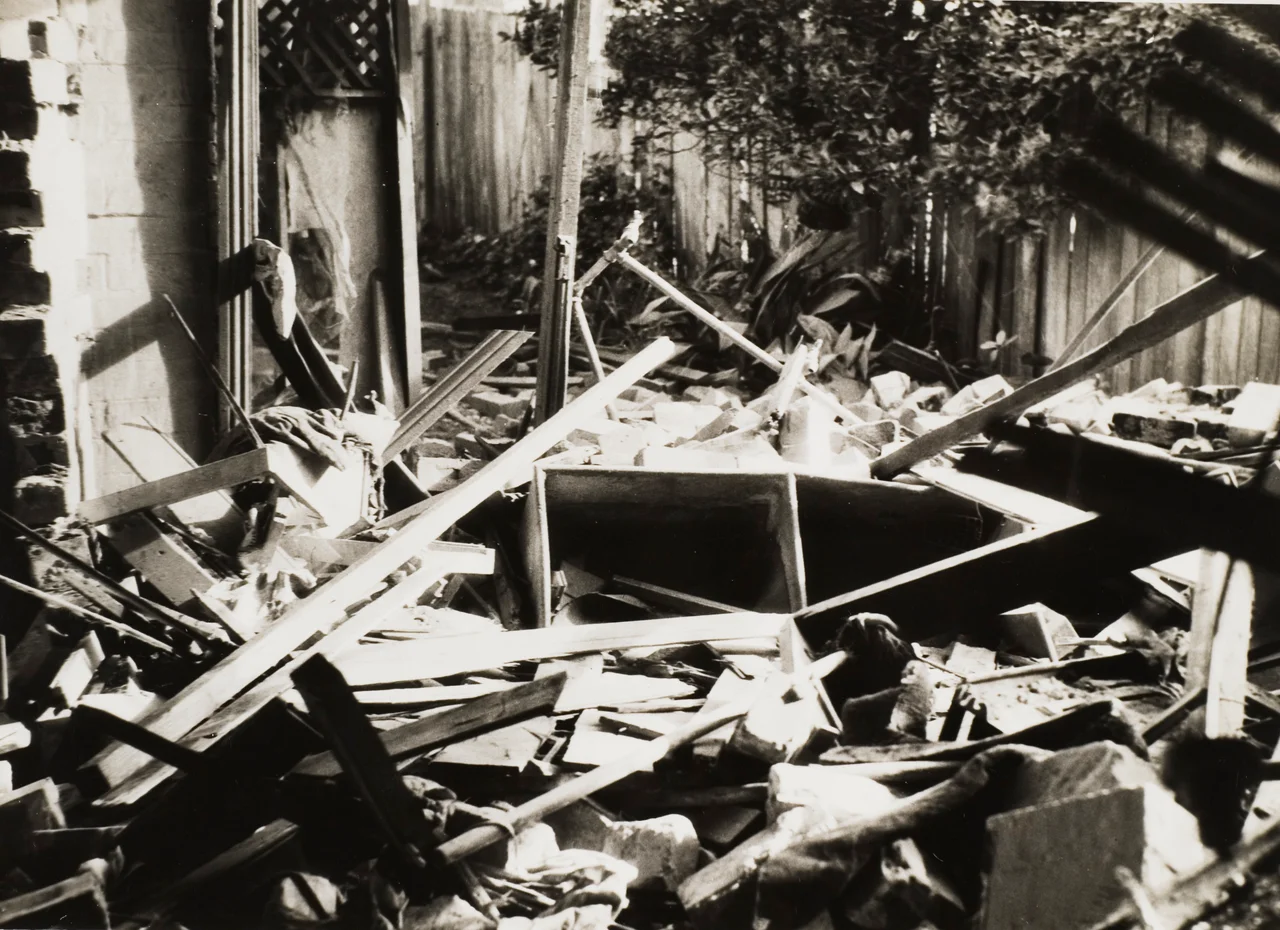
A week later the harbour's attackers struck from the sea. In the small hours of 8 June, two of the large Japanese submarines that had carried the midgets surfaced off the coast and opened fire. I-24 lobbed ten shells toward the Harbour Bridge; most fell into the Eastern Suburbs, and most failed to explode — many were armour-piercing rounds meant for steel hulls, useless against brick, some so old they turned out to be surplus British shells from the First World War. I-21 then shelled Newcastle to the north, aiming for the BHP steelworks, scattering thirty-four rounds with little effect. From Newcastle, Fort Scratchley fired back — the only time an Australian shore fortification has ever fired on an enemy warship in war. One death came of that night's defence: a young American pilot, Lieutenant George Cantello of the 41st Pursuit Squadron, disobeyed orders, took off from Bankstown to hunt the raider, and was killed when his Airacobra crashed at Hammondville. He was 27.
Honour Among Enemies
The damage was slight; the fear was not. Sydney families fled west, and house prices fell in the Eastern Suburbs while rising beyond the Blue Mountains. But the most striking thing the attack left behind was a gesture of grace. When the bodies of the four Japanese midget crewmen were recovered, Muirhead-Gould — the same officer mocked for his slowness — ordered them cremated with full naval honours, their coffins draped in the Japanese flag. He was criticised for it and defended himself simply: he respected the courage of the four men, whatever flag they served. Their ashes were returned to Japan, where thousands gathered to receive them. The midget M-24 vanished after the attack and stayed lost for sixty-four years, until amateur scuba divers found her wreck off the northern beaches in 2006, her two-man crew still aboard. Today a submarine rebuilt from the recovered midgets sits in the Australian War Memorial, beside the salvaged wheelhouse of the little ferry that took the worst of that night.
From the Air
The attack unfolded across Sydney Harbour at approximately 33.85 degrees south, 151.23 degrees east, with the harbour mouth (the Heads) opening to the Pacific to the east. From the air the key sites cluster tightly: Garden Island (where Kuttabul sank, now a naval base) east of the Harbour Bridge, Fort Denison on its small island mid-harbour, and the Heads at North and South where the boom net once ran. Bradleys Head and Middle Head mark the net's anchor points. To the north, the shelling reached Newcastle (Fort Scratchley) about 120 kilometres up the coast. Sydney's Kingsford Smith Airport (ICAO YSSY) sits on Botany Bay just south; this is dense controlled airspace over a major city, so observe all restrictions. Clear days give a commanding view of the harbour's branching geometry and the narrow gap of the Heads that three submarines once slipped through.
Nearby Stories
- Royal National Park 28 km away
- Jervis Bay 107 km away
- Hive shipwreck 149 km away
- Apsley Falls 283 km away
- Smoky Cape Lighthouse 316 km away
- South West Rocks Pilot Station Complex 346 km away
- Roxy Theatre and Peters Greek Cafe Complex 413 km away
- 2003 Fiordland Earthquake 1774 km away