
Ballintemple
George Boole walked three miles to work in a rainstorm, gave his lecture in soaked clothes, and was dead within weeks. The man who invented Boolean algebra - the logic that runs every computer on Earth - died of pneumonia in a quiet Cork suburb called Ballintemple in December 1864. He had been a professor at University College Cork; the walk between his home and the university was a routine he kept even when the weather argued otherwise. Today the streets he crossed are lined with terraced houses and the buses of the 202 route, but Ballintemple's curious habit of attracting consequential lives reaches further back than Boole, and further forward.
A Hill With the Wrong Name
Temple Hill and Churchyard Lane took their names from a graveyard at the top of the hill that locals once believed had belonged to the Knights Templar. Modern historians say no - the association is incorrect. The 'temple' in Ballintemple more likely refers to land belonging to the church rather than a Templar foundation. What survives at the top of the hill is the graveyard itself, mossy headstones tilted at slow angles, the earliest dated burials reaching back only to the early 18th century. The strangest interment in its records belongs to Henry FitzRoy, 1st Duke of Grafton, killed at the 1690 Siege of Cork. His intestines were buried here so the rest of him could survive the journey home to England for proper burial - a practical, gruesome custom of the era.
Chased for a Grave Robber
In the early 1800s the folklorist and antiquary Thomas Crofton Croker climbed Temple Hill to survey the graveyard. He took down a marker for a Lieutenant Henry Richard Temple, who had died alongside his young wife while travelling from the Caribbean to England via Ireland. He noted a folksong locals sang about the burying ground. And he was chased off by villagers who mistook his careful note-taking for grave robbery. Croker survived the misunderstanding and went on to publish his Cork folklore widely. The graveyard remains accessible today, though closed to new burials except for a few families with ancestral rights - a small Cork suburb's small accommodation with its own dead.
Departures from Dundanion
Down by the River Lee, near where Páirc Uí Chaoimh stadium now stands, the ruins of Dundanion Castle keep their own secret. William Penn - founder of Pennsylvania - is said to have departed from here in 1682 on his journey to the American colonies. Some decades earlier, Sir Walter Raleigh spent time at Dundanion before setting out on his final voyage to the West Indies in August 1617, the doomed expedition that would end with his execution in London. A Cork suburb, with a quiet ruin by the river, sits in the founding stories of an American state and the last chapter of an English courtier-explorer's life.
Stadium Saturdays and Quiet Streets
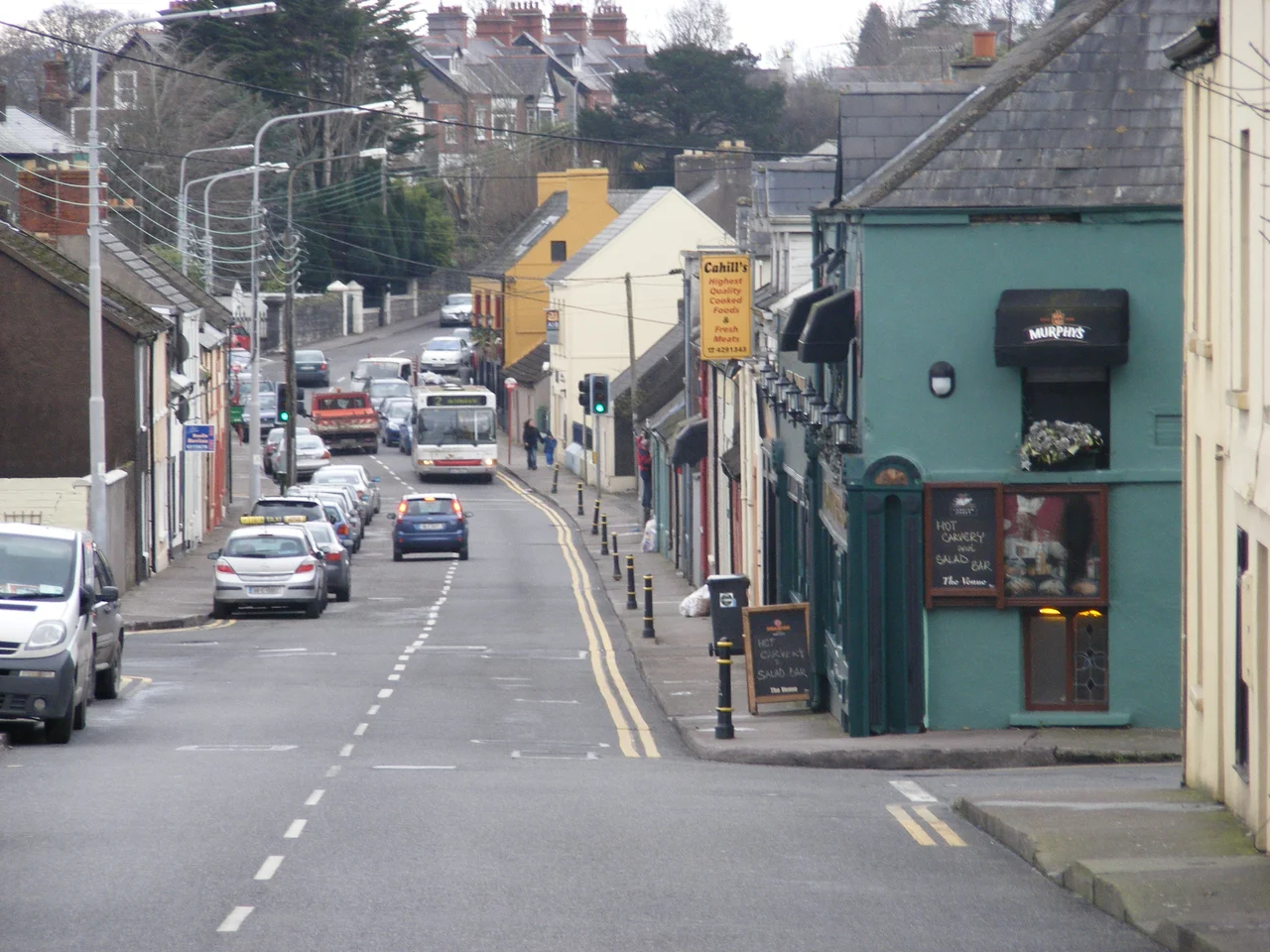
Walk Blackrock Road today and Ballintemple feels like what it is - a comfortable inner suburb of Cork, two pubs called The Venue and The Temple Inn (locally known as Longboats), a post office, small shops. Then Páirc Uí Rinn or Páirc Uí Chaoimh hosts a hurling match and the streets fill with red and white jerseys. Both Gaelic Athletic Association grounds anchor the area, and on match days the bus routes 202 and 212 - which usually trundle peacefully through the village - become tributaries to a sporting flood. Cork Constitution Football Club has its grounds nearby. The Atlantic Pond, drained from old marshland next to the River Lee, draws walkers and runners on quieter days.
A Suburb of Consequential Lives
Boole is the most famous of Ballintemple's residents, but the list is unusual for any small district. Mary Elmes, the humanitarian dubbed the Irish Oskar Schindler, who saved hundreds of Jewish children from Vichy France, grew up here. Ethel Voynich, the novelist whose The Gadfly became a global classic, lived here. William Baylor Hartland, the horticulturist whose nurseries supplied Cork City's great gardens, worked his market garden plots in these fields. Maurice Healy, MP and lawyer, called Ballintemple home. So did the actress Alison Oliver and the rugby player Simon Zebo. For a village now folded into a city, that's a remarkable density of stories per acre.
From the Air
Located at 51.90°N, 8.43°W on the east side of Cork city, between the River Lee and Blackrock. From altitude, the area reads as suburban Cork - terraces and church spires - but the two GAA stadiums, Páirc Uí Chaoimh and Páirc Uí Rinn, are distinctive landmarks near the river. The Atlantic Pond is visible just east of Páirc Uí Chaoimh. Cork Airport (EICK) is about 6 km south-west; the harbour is immediately east.
Nearby Stories
- St. Declan's Monastery 0.8 km away
- Aghavrin House 2.4 km away
- Mitchelstown Castle 7.4 km away
- Clonakilty 9.5 km away
- Inislounaght Abbey 16 km away
- Walter Siepmann 23 km away
- Newcastle West 33 km away
- SM U-27 110 km away