
Battle of Keren
Subadar Richhpal Ram of the Rajputana Rifles had both feet on the crest of Acqua Col when the mine took one of them off. He kept giving orders from the rocks, directing his men, and died soon after. He would be awarded the Victoria Cross posthumously, and an Indian Army barracks in Delhi would bear his name. But in February 1941, on a nameless saddle in the Eritrean highlands, Richhpal Ram was simply one more soldier trying to dislodge the Savoia Grenadiers from granite positions that had been designed by geology to be unbreakable.
Why Keren Mattered
Keren is a small town in the Eritrean highlands at about 15.78 north, 38.45 east. In 1941 it sat astride the only road and railway from the Sudanese border to Asmara and the Red Sea port of Massawa. Whoever held Keren controlled whether Italy could supply its colony of Italian Eritrea - and whether Britain could reopen the Red Sea to American merchant shipping. President Roosevelt had closed the Red Sea to US-flagged vessels under the Neutrality Acts while Italian submarines operated from Massawa. He would not reopen it until the Italians were gone.
The Gorge
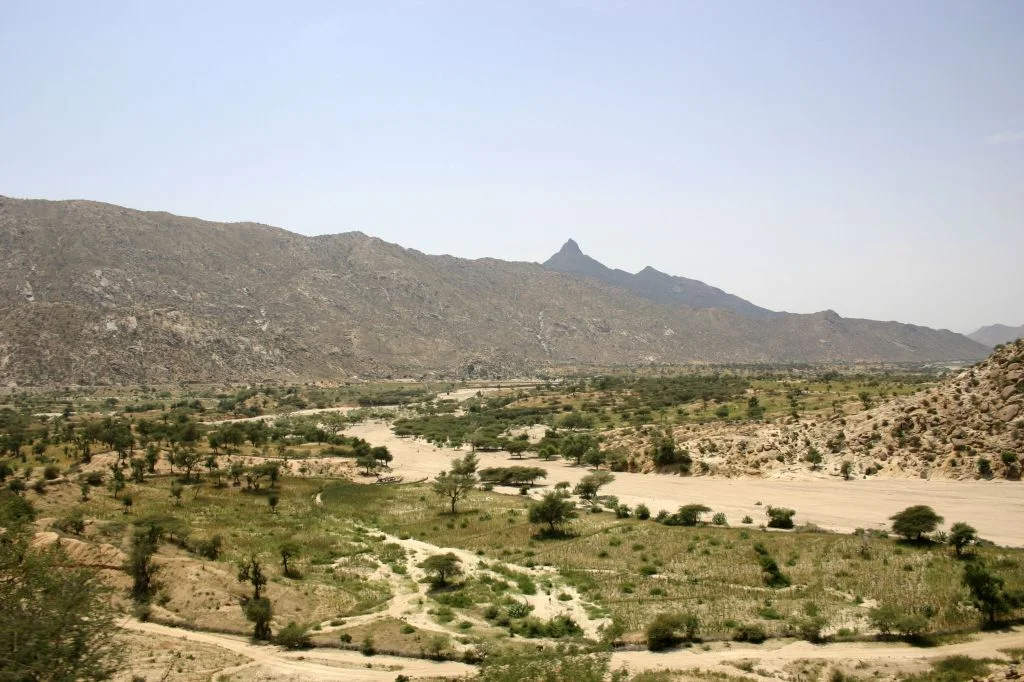
The Dongolaas Gorge admits a single road through a funnel of cliffs. Looking up at it from below, the British saw Mount Sanchil on the left with its saddle of secondary peaks - Brig's Peak, Hog's Back, Flat Top - and on the right the massif of Mount Zeban and Mount Falestoh crowned by Fort Dologorodoc. The Italians had blasted the overhanging crags into the gorge to fill the road with boulders. Before the British could move a truck past, they had to take the heights on both sides. The heights were held by 25,000 men, including the elite 65th Infantry Division Granatieri di Savoia, which had just completed a three-day nonstop truck convoy from Addis Ababa.
First Assault, 5 to 13 February
The 4th Indian Division came up the gorge on 5 February. The 2nd Queen's Own Cameron Highlanders clawed their way to the top of feature 1616 - Cameron Ridge - and the 3/14th Punjab Regiment advanced onto Brig's Peak. A Savoia Grenadiers counter-attack drove them back. The Cameron Highlanders and Rajputana Rifles held the ridge through days of shelling, carrying water and ammunition up hill under fire. On 11 February the 3/1st Punjabs briefly took Sanchil before being thrown off by another counter-attack. On 12 February Richhpal Ram lost his foot and his life on Acqua Col. By 13 February the British had taken nothing they could keep.
Who Was There
The attacking force was extraordinary in its composition. Most of the infantry were Indian: Punjabis, Sikhs, Rajputs, Mahrattas, Pathans, Baluchis. Among them fought Scottish Highlanders and Yorkshire regiments. The artillery included Sudanese gunners. And from the north, Briggsforce included Marching Battalion no. 3 of the Free French Orient Brigade - the first French unit to fight Axis forces since the fall of France in 1940, a distinction made possible because a brigade of men who had refused the armistice had walked out of Syria, Chad, and Equatorial Africa to keep fighting. The defenders included Italian veterans and regiments of Eritrean ascari - Eritrean colonial soldiers whose graves now line a cemetery in Keren alongside those of their attackers.
Dologorodoc, 15 March
Platt paused, regrouped, and attacked again on 15 March. The 2nd Highland Light Infantry made no ground in daylight under fire from Sanchil. That night, the 3/5th Mahratta Light Infantry took the lower feature called Pinnacle under Lieutenant-Colonel Denys Reid. The 2nd West Yorkshire Regiment, attacking before dawn on 16 March, found a narrow knife-edge ridge that the defenders had considered impassable and surprised the garrison of Fort Dologorodoc from above. By 6:30 a.m. the fort was British. For the next ten days the 5th Indian Division held it under relentless counter-attacks while, across the gorge, the 4th Indian Division bled itself white trying to take Sanchil.
The Railway Tunnel
Heath changed tack. If Sanchil was impossible, he would send the attack up the railway line through the tunnel below Cameron Ridge, under the noses of defenders looking the wrong way. On the night of 24 March the West Yorkshires and Mahrattas took three small hills overlooking the gorge. At 3 a.m. on 25 March the Highland Light Infantry and 4/10th Baluch Regiment came out of the railway tunnel, supported by a hundred-gun barrage on Sanchil that masked the real attack. By 5:30 a.m. the Railway Bumps were taken and the Italian guns above the road were silenced. Sappers worked under fire for two days to clear the boulders. On 27 March the 29th Brigade passed through unopposed - the defenders had withdrawn in the night. The Savoia Grenadiers and Bersaglieri on Sanchil were cut off with nowhere to go. By 10:30 Fletcher Force was in Keren, chasing the Italians up the road to Asmara.
What Followed
Massawa surrendered on 8 April after the Italians tried and failed to scuttle their Red Sea Flotilla in the harbour mouth. The 13th French Foreign Legion Demi-Brigade took the Italian Admiralty building. On 11 April Roosevelt declared the Red Sea no longer a combat zone. American merchant ships began supplying the Middle East. The Keren War Cemetery, maintained by the Commonwealth War Graves Commission, holds both the British and Commonwealth dead and, in a separate plot, the graves of the Eritrean ascari who had fought for Italy - remembered now not as enemies or colonial troops but as soldiers of their own country caught between two empires.
From the Air
Keren sits at 15.78N, 38.45E at about 1,400m (4,600 ft) elevation in the Eritrean highlands. The Dongolaas Gorge runs roughly east-west through the town. Recommended viewing altitude 8,000-10,000 ft AGL for the full ridge complex around Mount Sanchil and Fort Dologorodoc. Nearest major airport is Asmara (HHAS/ASM), 90 km southeast. Eritrea's airspace has historically been restricted and flight planning requires current notam and clearance review.
Nearby Stories
- Battle of Agordat (1941) 22 km away
- Massawa 46 km away
- Asmara 48 km away
- Italian Eritrea 48 km away
- Anseba region 53 km away
- Gash-Barka Region 56 km away
- First and second battles of El Teb 292 km away
- Emirate of Asir 404 km away