
Italian Eritrea
The Italians called it 'Colonia Primogenita' - First-Born Colony - as if it were a child they had raised from nothing. Italian Eritrea existed for fifty-one years, from the official proclamation of the colony in 1890 to the final surrender of Italian forces in 1941. In that time, Italy built Asmara into one of the architectural marvels of 20th-century Africa, conscripted tens of thousands of Eritreans into the Ascari colonial regiments, imposed racial laws that fractured families, launched an invasion of Ethiopia from Eritrean territory, and eventually lost everything. The contradictions ran deep. Most still do.
How It Began
Giuseppe Sapeto, a former Italian monk who had done missionary work in Abyssinia in the 1830s, became the advocate for an Italian foothold on the Red Sea. With the Suez Canal opening, a coaling station along the shipping route to India seemed strategically essential. In autumn 1869, Sapeto traveled to Assab Bay and paid a small deposit to Danakil chiefs for the right to purchase the land. The Rubattino Shipping Company bought the territory on behalf of the Italian government. In 1882, Italy formally took possession of the colony from its commercial owners. Massawa fell without a shot in February 1885, taken from a demoralized Egyptian garrison with British encouragement. By 1889, Italian troops had occupied the highlands. The next year, General Oreste Baratieri proclaimed the Colony of Eritrea with Asmara as its capital. The name came from the Greek 'Erythraean,' the ancient term for the Red Sea.
Asmara, the Italian City
The story of Italian Eritrea is largely the story of Asmara. By the 1939 Italian census, the city had 98,000 residents of whom 53,000 - 54 percent - were Italians. The total Italian population in all of Eritrea reached 75,000 that year. Asmara's architecture reflected the fascist preoccupation with modernism and futurism: the Fiat Tagliero Building, completed in 1938, was shaped like an airplane with 15-meter concrete cantilevers extending outward. The Cinema Impero, also 1938, remains one of the finest examples of art deco cinema design anywhere in the world. The Asmara President's Office was built in 1940 as the residence of the Italian governor. By 1940, more than 2,000 small and medium industrial companies operated in the Asmara area - construction, mechanics, textiles, food processing, electricity. Italian historian Gian Luca Podesta wrote simply that Asmara had become 'an Italian city.' The standard of living in Eritrea by 1939 was considered among the best in Africa, for both Italians and Eritreans - though 'best' is a relative term in an ecosystem of structural inequality.
The Ascari and the Racial Laws
Italy depended heavily on Eritrean soldiers. The Ascari - native colonial troops who had fought for Italy since the 1880s - were considered the best units in the Italian colonial army. Marshal Rodolfo Graziani said so explicitly. Legendary Italian officer Amedeo Guillet led Ascari cavalry. During the 1935-36 invasion of Ethiopia, 40 percent of eligible Eritrean men were enrolled in the colonial forces. After World War I, service with the Ascari had become the main source of paid employment for Eritrean men. The fascist racial laws imposed in 1938, formally known as the Leggi Razziali, banned mixed marriages, segregated schools, and barred most Eritreans from professional positions. Many Eritrean children fathered by Italian soldiers were abandoned; many mothers were cast aside. Italian colonists lived in separate neighborhoods, attended separate schools, and held nearly all administrative positions. Catholicism was aggressively promoted. By the early 1940s, around 28 percent of the colony's population was Catholic, though Orthodox Christianity, Islam, and traditional faiths remained more widespread.
A Colony as a Military Staging Ground
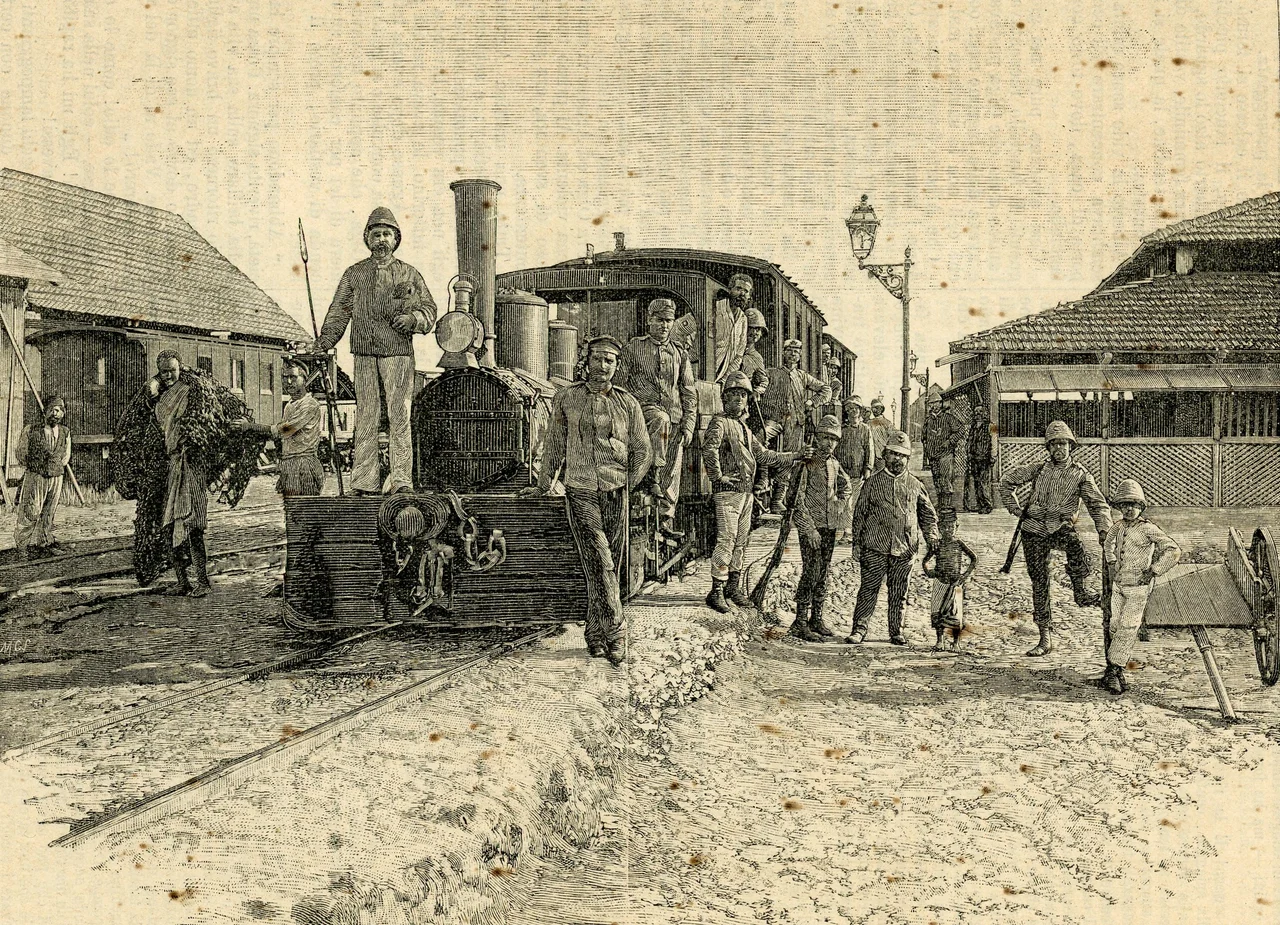
Mussolini saw Eritrea as a base. The 1935-36 invasion of Ethiopia staged from Eritrean territory, using the railway completed from Massawa to Asmara in 1911 and the Asmara-Massawa Cableway, at its time the longest aerial tramway in the world. During World War II, Italian forces based in Eritrea attacked Anglo-Egyptian Sudan, occupying Kassala in July 1940. But the strategic balance reversed quickly. In 1941, British and Commonwealth forces - including many Indian, South African, and Sudanese troops - advanced from Sudan into Eritrea. The Battle of Keren, fought from February to March 1941 in the mountains north of Asmara, was one of the hardest-fought engagements of the East African Campaign. When Italy surrendered in Eritrea in April 1941, much of the colonial infrastructure was destroyed or damaged. The British dismantled the Asmara-Massawa Cableway as war reparations and shipped it to India and Kenya.
The Italians Who Stayed, and the Ones Who Left
After 1941, Eritrea came under British military administration. Some 70,000 Italian settlers remained at the end of World War II. A few, like Vincenzo Di Meglio, advocated continued Italian influence and helped found the Partito Nuova Eritrea Pro Italia in September 1947, which briefly attracted more than 200,000 members - most of them former Italian soldiers and Eritrean Ascari veterans. The party sought Eritrean independence but wanted Italy to govern the country for fifteen years first. With the 1947 peace treaty, the new Italian Republic formally renounced its colonies. The Italian community began to shrink. In 1952, the UN federated Eritrea with Ethiopia, and most of the remaining Italians left over the following decade. The buildings they left behind, particularly in Asmara, became a UNESCO World Heritage Site in 2017 - preserved as architecture while Eritreans continued to negotiate the complex inheritance of what it means that these buildings were built and for whom.
From the Air
Italian Eritrea covered the present-day borders of Eritrea, roughly from 12.36°N to 18.05°N along the western Red Sea. Asmara, the colonial capital, lies at 15.32°N, 38.93°E at 2,325 meters elevation. Massawa, the primary port, is at 15.61°N, 39.45°E at sea level. Primary airports today: Asmara International (ICAO: HHAS, IATA: ASM) and Massawa International (HHMS). From cruising altitude, the most dramatic feature is the escarpment dropping 2,000+ meters from Asmara's highlands to the coastal desert at Massawa - the former route of both the Italian railway and the Asmara-Massawa Cableway. The Dahlak Archipelago scatters offshore from Massawa. Airspace is tightly controlled.
Nearby Stories
- Arkiko 19 km away
- Southern region (Eritrea) 39 km away
- Northern Red Sea region 43 km away
- Battle of Agordat (1941) 50 km away
- Anseba region 52 km away
- Nokra Naval Base 61 km away
- Eritrean-Ethiopian War 76 km away
- Danakil Depression 139 km away