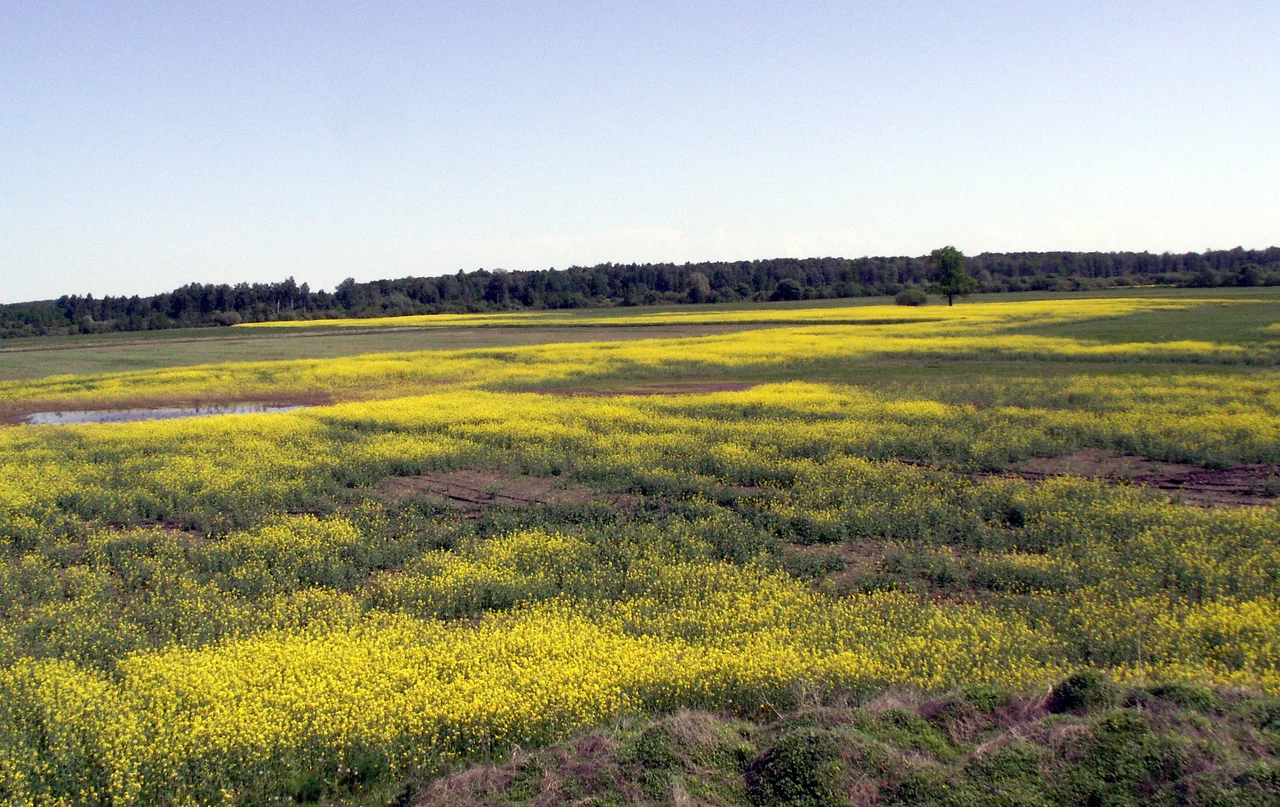

Battle of Saule
Saule means "the sun" in both Lithuanian and Latvian, and the goddess of the sun was a central figure in the pagan religion of the Baltic peoples. On 22 September 1236, on a swampy field somewhere south of the Daugava River, an army of pagan Samogitian and Semigallian warriors destroyed the Livonian Brothers of the Sword - the first Catholic military order established in the Baltic - and killed their grand master, Volkwin, along with somewhere between forty-eight and sixty knights. The order never recovered. Its remnants were absorbed into the Teutonic Order the next year. And the pagan Lithuanians who fought at Saule went on to build a state that would remain officially pagan for another hundred and fifty years, the last in Europe.
The order that came north
The Livonian Brothers of the Sword had been founded in Riga in 1202, with papal blessing, to convert the pagan Baltic tribes by force - a smaller and less prestigious cousin to the Teutonic Knights and the Hospitallers. By the 1230s the order was struggling. Its finances were strained, its manpower was shrinking, and its reputation - including for murders, looting, and kidnappings of converts - was bad enough that Rome was beginning to take notice. Master Volkwin knew his men were not strong enough to fight the Lithuanians. He had been at constant odds with the Bishopric of Riga over jurisdictions and revenues, and he had alienated the local Livonians, Latgallians, Curonians, and Estonians who had once been forced to fight for him. When Pope Gregory IX issued a papal bull on 19 February 1236 declaring a crusade against Lithuania, Volkwin pleaded that he had no army to wage it. Volunteer crusaders from Holstein arrived anyway. He had no choice but to march.
Caught in the marsh
The Livonian Rhymed Chronicle, written within a few decades of the battle by a knight of the Teutonic Order, gave an account that has stayed remarkably honest about what happened. "More heathens arrived," it begins, in the moment when the crusader army had hoped to slip away in the morning. "The next day the Christians thought to ride away early, but they had to fight the pagans though they did not want to. In the swamp, they could offer but weak resistance, and they were cut down like women. I lament the deaths of so many heroes who were so easily slain. The Master and his Brothers put up a heroic defense until their horses were slain and even then fought on foot and felled many men before they were vanquished. Finally, and with great difficulty, the Lithuanians felled them with long spears." Only one in ten of the crusaders, the chronicler wrote, made it back to Riga.
Where, and what it broke
Where Saule actually was is still debated. The medieval chronicler Hermann de Wartberge said only that it took place "in the land of Saule." The traditional candidates are Siauliai in northern Lithuania and the small town of Vecsaule near Bauska in southern Latvia - both have plausible claims based on the name. In 1965 the German historian Friedrich Benninghoven proposed Jauniunai, a village in Joniskis district, Lithuania, and the Lithuanian government built a memorial there in 2010 - a twenty-nine meter sundial, a pond, and a park of oak trees. The village of Pamusis, ten kilometers east, also claims the site. What is not in doubt is what the battle did. The Sword Brothers ceased to exist as an independent order. Curonians, Semigallians, Selonians, and Oeselians - tribes that had been forcibly Christianized - rose in rebellion across the eastern Baltic. Thirty years of crusader conquests on the left bank of the Daugava were reversed. The Teutonic Order absorbed the survivors and would press the conquest of Prussia and Livonia for another century, but Lithuania itself - the heart of pagan resistance - had bought its survival at Saule.
Pagan kings, Christian neighbors
Lithuania remained a pagan state until 1387, when Grand Duke Jogaila accepted Christianity in exchange for the Polish crown. For a century and a half after Saule, while the rest of Europe was Christian and the rest of pagan Europe had been crushed or converted, Lithuanian rulers presided over an officially polytheist court that worshipped Perkunas the thunder god, Saule the sun goddess, and a pantheon of forest spirits. They built one of the largest territorial empires in medieval Europe - stretching from the Baltic to the Black Sea - while still keeping their old gods. None of that would have been possible if the Sword Brothers had won at Saule. In 2000 the Lithuanian and Latvian parliaments declared 22 September Baltic Unity Day, in commemoration of the battle. The men who died there - both the crusaders and the spear-bearing warriors who killed them - were not abstractions. They had families, villages, and gods of their own. Saule was the day those gods, briefly, stopped retreating.
From the Air
The likely battlefield region lies around 56.12 N, 23.51 E in northern Lithuania near the Latvian border, in flat country dotted with lakes, peat bogs, and old-growth forest. From altitude in clear weather, the broad valley of the Musa River and the network of small lakes between Siauliai and Bauska are visible. Closest controlled airport is EYSA Siauliai, about 30 km south; EVRA Riga lies 130 km north; EYVI Vilnius is 200 km southeast.
Nearby Stories
- Mežotne Palace 9.1 km away
- Dobele Castle 23 km away
- Rundāle Palace 29 km away
- Lost Shtetl Museum 30 km away
- Kuldiga Castle 81 km away
- Vytautas the Great War Museum 111 km away
- Grobina Castle 112 km away
- Osowiec Fortress 271 km away