Battle of Selburg
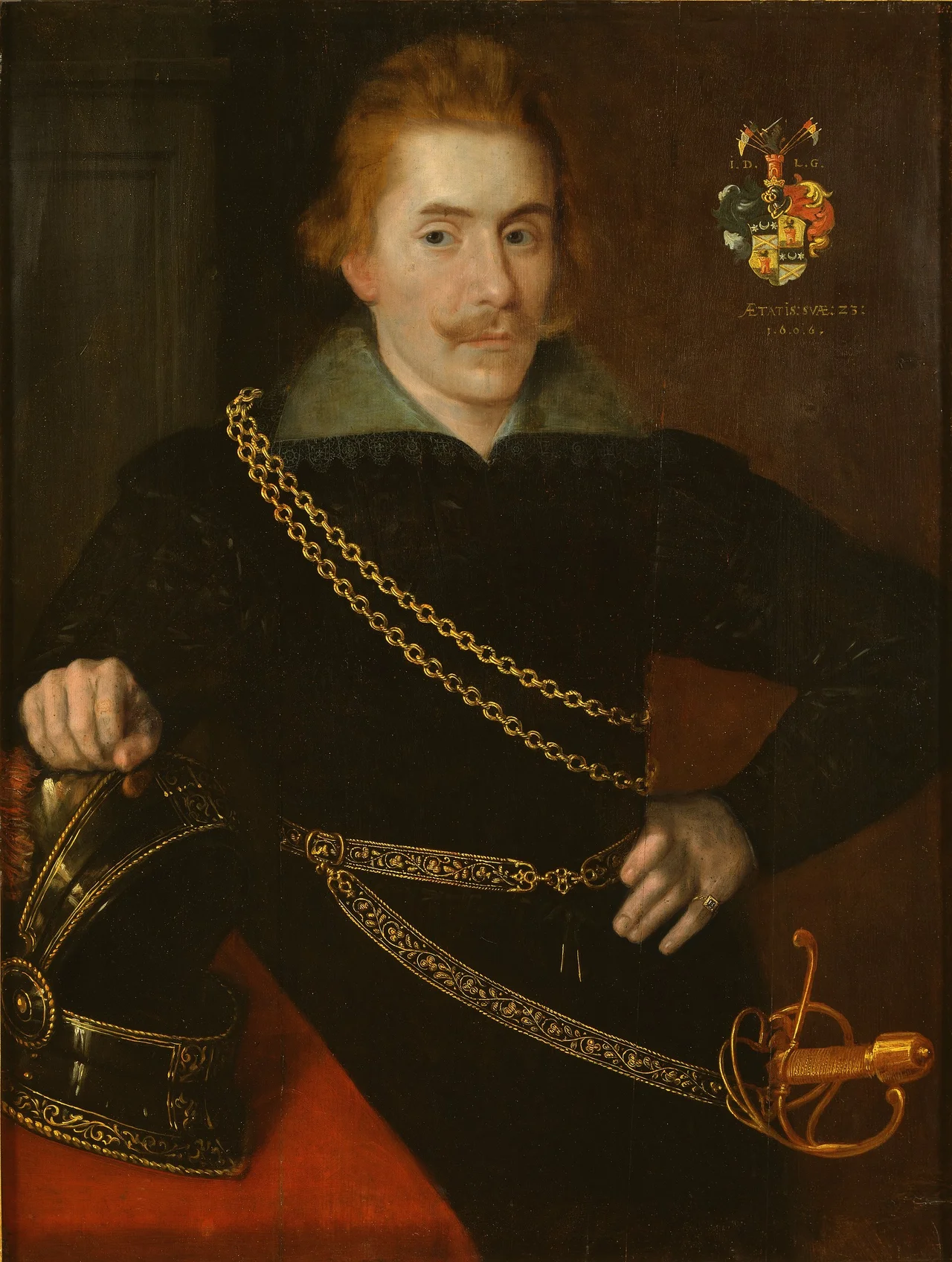
Two twelve-pounder guns changed everything. Sometime in September 1626, on a hill above the Daugava River, Swedish gunners under Jacob De la Gardie ranged in on a Polish encampment around Selburg castle and opened fire. The shells fell into a sleeping camp of roughly two thousand men, and within minutes a riot was running through the Polish lines. By the next morning, when the Polish artillery finally answered, the battle was already lost.
A River Worth Fighting For
The Daugava is the spine of eastern Latvia, a slow brown river that drains a quarter of a million square kilometers down to the Gulf of Riga. In the seventeenth century it was something more — a highway, a frontier, and a gun barrel pointed straight at the warehouses of Riga. Whoever controlled its banks controlled trade, troop movements, and the salt and grain that fed entire campaigns. King Gustavus Adolphus of Sweden understood this. In 1625 he swept through Livonia with his royal army, taking Kokenhausen and Selburg as forward locks on the river. Then he left for Prussia, handing De la Gardie the unenviable job of holding what he had taken. The Poles, watching from across the water, knew exactly which dominoes to push first.
Without Water
Selburg fell back into Polish hands earlier in 1626 not to a brilliant assault but to a much older enemy. Aleksander Gosiewski, the Polish commander in Livonia, brought his men up to the castle walls and waited. The garrison's wells went dry. After only a few days the Swedes inside surrendered — thirsty soldiers do not hold castles long. Gosiewski installed his troops in the captured fortress and dug entrenchments around it, expecting De la Gardie's response. He got it. The Swedish commander knew that without Selburg, his entire upriver position at Kokenhausen was indefensible, and he marched with what he had: two cannons, a column of men, and a clear sense that the river road had to be reopened.
Two Guns, One Morning
What followed was less a battle than an artillery ambush. De la Gardie placed his twelve-pounders where they could rake the Polish camp and began firing without warning. The Polish soldiers, caught between sleep and breakfast, stampeded through their own lines. Officers tried to rally; commands were lost in the noise; a riot — the contemporary Swedish word — broke out among men who could not see the gunners killing them. By the time Polish artillerymen worked their cannons into position the next morning, the Swedish guns had been firing all night. The shots barely reached De la Gardie's lines. Surrounded by chaos and short of options, the Poles asked for a ceasefire. De la Gardie refused. There was nothing left to negotiate.
What the Walls Could Not Save
Before retreating toward Bauske, the Polish forces did what defeated armies often did in the seventeenth century — they wrecked what they could not keep. Selburg's city walls came down stone by stone, denied to the next garrison. Swedish sources counted about three hundred Polish soldiers killed or captured or deserting during the brief engagement, though such numbers from this era are best treated as estimates from the winning side. On the same day, far to the north near Wenden, a separate Swedish force under Gustav Horn was fighting and winning its own engagement against an outnumbered Polish detachment. Two victories in one day, both small, both decisive enough to keep the Daugava line in Swedish hands for the rest of the campaign season. The truce of Altmark in 1629 would eventually freeze these gains in place.
The Ground Today
Selburg is now Sēlpils, a quiet village in Jēkabpils Municipality on the south bank of the Daugava, surrounded by the rolling forests and lakes of historic Selonia. The medieval castle whose walls the Poles tore down stands today only as low ruins on a hill — and even those have been altered by the rising waters of the Pļaviņas hydroelectric reservoir, which since the 1960s has flooded much of the original riverbank battlefield. From above, the river bends in long lazy curves through wooded country, and only the geometry of farm fields hints at where seventeenth-century armies camped, fired, and ran. Like much of inland Latvia, the landscape has absorbed its battles without monuments.
From the Air
56.59°N, 25.64°E, in the Sēlija (Selonia) region of southern Latvia along the Daugava River. Cruise at 8,000–12,000 ft for the best view of the river's wide curves and the patchwork of forest and farmland. Nearest major airport is Riga International (EVRA) about 130 km west-northwest. Vilnius (EYVI) lies roughly 200 km south. The Daugava is a strong north-south visual landmark; follow it upstream from Riga and Selburg sits on its south bank near Jēkabpils.
Nearby Stories
- Biržai Castle 14 km away
- Lielvārde Castle 23 km away
- Latvian War of Independence 25 km away
- Daugavpils Fortress 50 km away
- Sigulda Castle 58 km away
- Daugavpils Ghetto 77 km away
- Dinaburga Castle 80 km away
- Gaujiena Castle 85 km away