
Battle of the Heligoland Bight (1939)
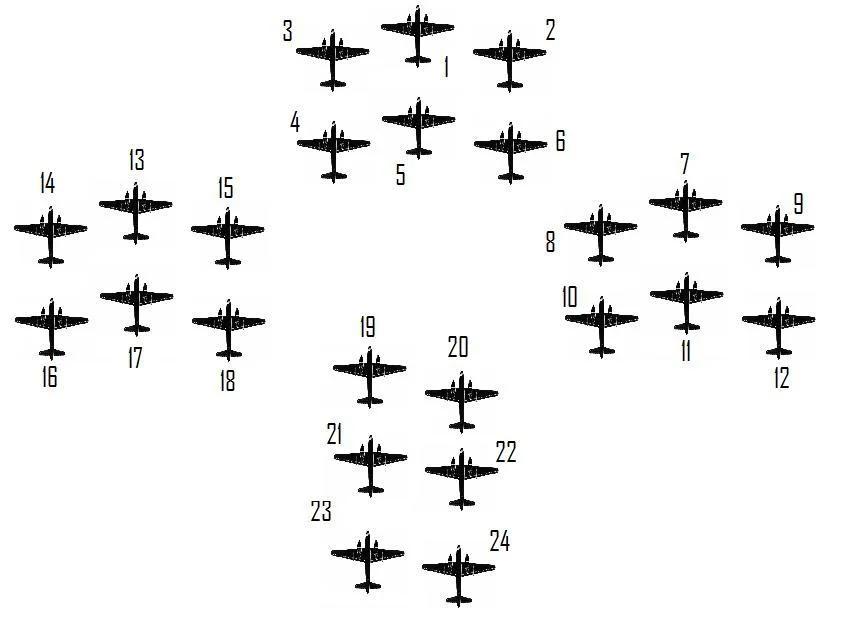
On the morning of 18 December 1939, twenty-four Vickers Wellington bombers of RAF Bomber Command lifted off from East Anglia and turned east across the North Sea. Two turned back early with engine trouble. The remaining twenty-two flew on in tight formation toward Wilhelmshaven, where German capital ships lay at anchor. The crews believed, because their commanders believed, that 'the bomber will always get through' - that disciplined formation flying and the Wellington's powered gun turrets would be enough. By that afternoon, twelve of those bombers had been shot out of the sky over the Heligoland Bight. Of the men aboard, fifty-seven were dead. The Royal Air Force never sent unescorted heavy bombers across Germany in daylight again.
An Article of Faith
The doctrine the crews carried into the air that day was older than the war. Stanley Baldwin had said it in the Commons in 1932: the bomber will always get through. Bomber Command built its prewar planning around the idea that a tight box of bombers, all guns trained outward, could fight off enemy fighters without escort. The Wellington's geodesic airframe was tough. Its powered turrets in nose and tail were modern. What it lacked - and what nobody in Bomber Command yet quite admitted - was any protection from a fighter attacking from the side. A Wellington's beam was a blind spot. So were its fuel tanks, which were not yet self-sealing. Hit the wing, and the bomber burned.
Freya Sees Them
The Germans saw the Wellingtons coming. A Freya radar set on the island of Wangerooge tracked the formation eighty kilometers out and passed the warning along, though command confusion meant fighters were not scrambled until the bombers were almost over Wilhelmshaven. Then they came up fast - Messerschmitt Bf 109s and the heavier twin-engined Bf 110s of JG 1, JG 77, and ZG 76, perhaps eighty to a hundred aircraft in total, of which forty-four made contact. Their commander, Oberstleutnant Carl-August Schumacher, was a former naval officer who had fought at Jutland as a cadet. The men he sent up had been told exactly what to do: attack from the beam, never from the stern.
Twenty Minutes
The fighting was brutal and short. As the Wellingtons came off their bombing run over Wilhelmshaven - 149 Squadron managed six 500-pound bombs into the harbor, results unknown - the German fighters caught them in the clear winter air. Oberleutnant Johannes Steinhoff claimed two. Wolfgang Falck's Bf 110s claimed four more, though Falck himself was shot up so badly he glided back to base with a dead engine. Helmut Lent, later to become one of the Luftwaffe's most decorated night-fighter aces, killed most of the crew of Herbie Ruse's Wellington and then chased Thompson's down to crash off Borkum. Squadron Leader Guthrie of 9 Squadron was killed when his bomber went down. Squadron Leader Hue-Williams of 37 Squadron, racing ahead and breaking the defensive box, was killed too. By 13:45 the German fighters were at the limit of their fuel and turning home. By 14:05 the surviving Wellingtons were beyond reach, smoking, holed, alone.
The Sea Below
Behind the statistics are the men. Most of the fifty-seven dead were in their twenties. Some were career RAF officers; many were reservists who had been clerks and schoolteachers a few months earlier. They went down in winter water - the North Sea in December is a few degrees above freezing - and most have no grave but the bight itself. The Commonwealth War Graves Commission lists them on the Runnymede Memorial, which records by name the airmen lost over sea or unknown ground. Two German pilots died too: Johann Fuhrmann, who tried a stern attack against orders and was shot down by a Wellington gunner, then drowned trying to swim ashore from a few hundred yards off Spiekeroog; and Roman Stiegler, who flew his fighter into the sea pursuing a fleeing bomber. They were all young. They were all someone's son.
What the Battle Taught
The two air forces drew opposite lessons from the same afternoon. Bomber Command, after a fortnight of denial - an initial report still insisted that a tight Wellington formation could survive a long fighter attack - quietly began to plan the night-bombing campaign that would define the rest of its war. The day-bomber doctrine was finished. The Luftwaffe, by contrast, looked at twelve burning Wellingtons and concluded that Germany was invulnerable from the air. They underinvested in day-fighter defense and in radar coordination. Three years later, when American B-17s came across in their thousands and the Allies broke that complacency open, the cost would be measured in burned German cities. The historian Horst Boog called the engagement one of the most consequential air battles of the entire war. It was fought, on the RAF side, by men who took off believing their formation would protect them, and who were almost certainly already condemned the moment the Freya operator on Wangerooge marked their bearing on his plot.
From the Air
Located at 54.03 N, 8.26 E - the airspace over the Heligoland Bight between Wilhelmshaven and the island of Heligoland. The German naval base at Wilhelmshaven (now home to Marinestützpunkt Heinrich) lies thirty-five kilometers south. The Frisian islands of Spiekeroog, Wangerooge, and Borkum, where several Wellingtons came down, stretch in an east-west chain to the south and west. Cruising altitude of 8,000-10,000 feet matches the height the Wellingtons attacked from. Nearest airports: Wilhelmshaven-Mariensiel (EDWI), Wangerooge (EDWG), and the larger Bremen (EDDW) inland. Heligoland's own airfield (EDXH) sits on the smaller Düne island a kilometer from the main rock. Winter visibility here can be sharp and cold; the air on 18 December 1939 was reported clear and bright, which was part of the problem.
Nearby Stories
- Spiekeroog 3.1 km away
- Hohe Weg Lighthouse 9.8 km away
- SM UC-45 15 km away
- Amrumbank West 23 km away
- MV Pallas 25 km away
- Stalag X-B 48 km away
- Teufelsmoor 86 km away
- Lilleø 186 km away