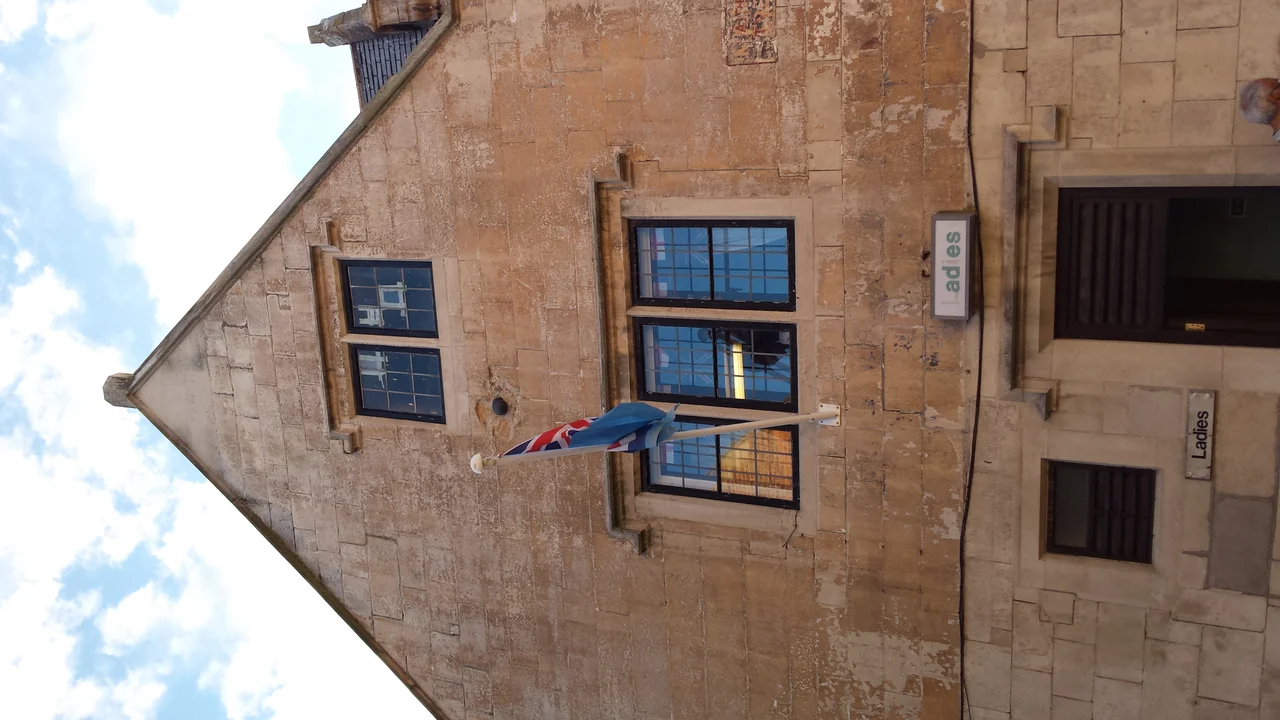

Battle of Weymouth
The password was Crabchurch. White handkerchiefs tied around the upper arm. At midnight on 9 February 1645, with the Parliamentarian garrison of Weymouth half asleep and the watch worried mostly about the cleanliness of the streets, a small force of Royalist soldiers crossed the narrow strait from Portland Castle in boats. Their accomplices inside the town let them in. By dawn they held both forts that defended the harbor, and the governor's brother was dead.
A Quiet Garrison Town
Dorset's loyalties were split. The larger southern towns leaned Parliamentarian, the rural north tilted Royalist. Sir Walter Erle, a Calvinist member of Parliament, had secured Weymouth, Lyme Regis, Wareham, and Portland Castle for the Roundheads at the war's outbreak in 1642. Weymouth changed hands once already, taken by the Royalists in August 1643 and recovered by the Earl of Essex the following year. Colonel William Sydenham was appointed governor, brought his Regiment of Foot to garrison the place, and threw up Nothe Fort, Chapel Fort, and earthworks around the streets. By early 1645 the regimental preacher Peter Ince could describe the town as in as sweet a quiet and security as any garrison in the kingdom. The biggest item on the council agenda at the end of January was that the dirt in the streets should be piled up and removed.
The Crabchurch Conspiracy
Fabian Hodder ran the plot. He was a Royalist sympathizer inside Weymouth who had been quietly recruiting other townsmen to his cause, paying five pounds a head. When the time came, he had his wife Anne write a letter to Sir Lewis Dyve at Sherborne, the local Royalist commander. The widow Elizabeth Wall carried the letter. Dyve made the arrangements. At midnight on 9 February, soldiers from Portland Castle crossed the narrow strait, found the conspirators waiting with their white handkerchief armbands, exchanged the password Crabchurch, and slipped into both forts before the garrison knew anything had happened. The Parliamentarians rallied and counter-attacked, but the stone forts held against their own troops. The next day Dyve and William Hastings, governor of Portland Castle, arrived with fifteen hundred men to mop up. They tried to assassinate Sydenham and failed, but his brother Francis was killed in the initial assault. The conspirators had their town, briefly.
Bombardment Across a Lake
Weymouth and Melcombe were twin towns, separated by the harbor and a tidal channel, joined only by a drawbridge. Sydenham retreated to Melcombe with the surviving Parliamentarian troops and held the north bank. The two sides began bombarding each other across the water that is now Radipole Lake and the old harbor. Parliament rushed help: the warship Constant Reformation under William Batten with two hundred sailors from Poole, plus a hundred cavalry under James Heane who slipped through the Royalist lines to reach Melcombe. Twelve hundred Parliamentarians faced fifteen hundred Royalists, with a much larger Royalist army of forty-five hundred under Lord Goring sitting in Dorchester just to the north and refusing, for reasons that remain disputed, to intervene. The bombardment continued for three weeks.
Across the Bridge
Sydenham took his chance on 27 February. A Royalist supply convoy was making its way from Dorchester to Weymouth, and his troops captured it. When Dyve pulled men out of the town to recover the convoy, Sydenham sent a hundred and fifty musketeers across the drawbridge in a rush. The bridge taken, the streets followed, and then the forts. Goring finally moved from Dorchester to retake the town with six and a half thousand men. Sydenham and Batten repulsed the attack. Most of the Crabchurch conspirators were captured. Most were hanged, in the manner of the war, as traitors against the Parliament that had governed Weymouth at the time the plot was hatched. The Royalists never threatened Weymouth again. Within fifteen months Naseby had broken the king's main field army, and within four years Charles I would be dead.
What the Town Keeps
Nothe Fort is still there, rebuilt and expanded in the Victorian era and now a museum. The drawbridge across the harbor has been replaced several times and is now a swing bridge. Radipole Lake, formed when the old harbor was partially dammed, has become a wetland nature reserve at the edge of town. There is no monument to the Crabchurch conspirators, who lost, but the local historian Mark Vine wrote a detailed account of the affair in 1989 that has since become the standard local reference. Both sides at Weymouth were Englishmen fighting Englishmen for an idea of who should govern England. Both sides took casualties. Both sides included men who believed they were defending lawful authority. The footprint of the war on the south coast was small and bloody and intimate, neighbors against neighbors, and Weymouth's three weeks of bombardment from across a tidal lake is one of its sharpest illustrations.
From the Air
The Battle of Weymouth took place across the linked harbor of Weymouth and Melcombe at 50.61 deg N, 2.46 deg W, on the Dorset coast. The tidal channel that Sydenham crossed is now bridged in the same place. Nothe Fort is visible on the headland south of the harbor. Bournemouth Airport (EGHH) lies forty-five kilometers east. The Isle of Portland, the limestone tied-island connected by Chesil Beach, is unmistakable to the south. The Jurassic Coast cliffs run east toward Lulworth and west toward Bridport.
Nearby Stories
- Needles Lighthouse 18 km away
- Lyme Bay Canoeing Disaster 19 km away
- HMS Formidable (1898) 19 km away
- National Motor Museum, Beaulieu 22 km away
- Sherborne Castle 22 km away
- Muchelney Abbey 24 km away
- German Submarine U-672 29 km away
- Battle of Cherbourg (1864) 58 km away