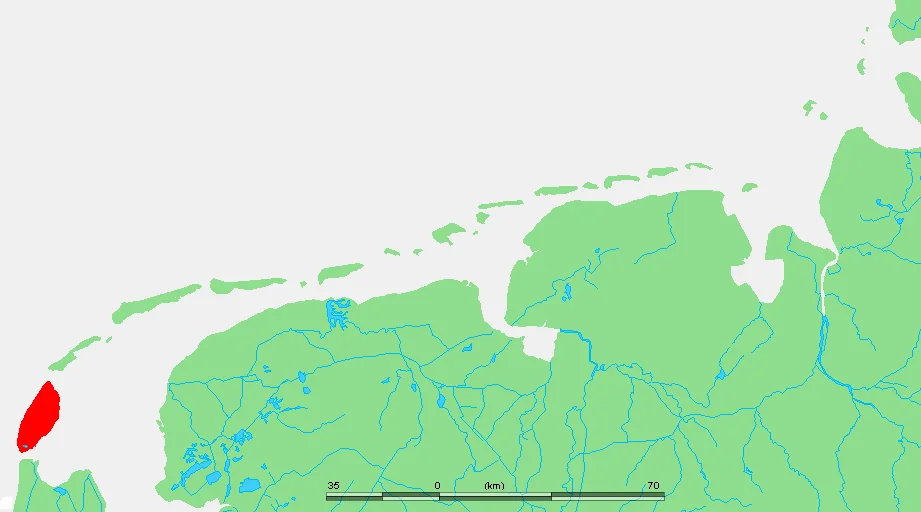

Battle off Texel
At 13:50 on 17 October 1914, southwest of the Dutch island of Texel, Korvettenkapitän Georg Thiele's four old torpedo boats sailed serenely toward what they took for friendly ships. They were the remaining vessels of the German 7th Half Flotilla, on their way around the British coast to mine the mouth of the Thames. The vessels they were closing on were the brand-new British light cruiser Undaunted and four Laforey-class destroyers - Lance, Lennox, Legion, and Loyal. By the time the misidentification was realised, the British were inside gun range, and Thiele's day had a single hour left in it.
The Emden Patrol
The Battle off Texel grew out of a quiet bookkeeping change in the North Sea. After the German High Seas Fleet was humiliated in August at the Battle of Heligoland Bight, the Kaiser's ships were told to avoid larger Royal Navy forces; raids and minelaying by light units were what was left. On 16 October 1914 British intelligence picked up movement in the Heligoland Bight and the 1st Division of the 3rd Destroyer Flotilla - cruiser HMS Undaunted under Captain Cecil Fox, and her four destroyers - was sent to investigate. The German flotilla had been ordered out of the Ems River as part of the Emden Patrol to mine the southern English coast, including the mouth of the Thames. They never got within sight of England.
Match-Up
On paper this should not even have been a contest. Undaunted was an Arethusa-class light cruiser carrying two 6-inch and seven 4-inch guns - most without shields - plus eight torpedo tubes and a pair of experimental 2-pounder anti-aircraft mounts that her sisters did not have. Her four Laforey-class destroyers were almost as fast as she was, with three 4-inch guns and four torpedo tubes each. The Germans had four boats of the ageing Großes Torpedoboot 1898 class completed in 1904, armed with three small guns each and a punishing five torpedoes apiece. Speed was about even. The real disparity was reach - the British guns out-ranged and out-weighed the German guns by a large margin. Thiele's only real threat was his torpedoes, and he had to live long enough to use them.
Eighty Minutes
When the Germans realised what they had wandered into, they scattered. Fox split his force - Lance and Lennox after S115 and S119, Legion and Loyal after S117 and S118 - to clear Undaunted's torpedo arcs and finish the business quickly. S118 took fire from three ships at once; her bridge was lifted clear off the deck and she went down at 15:17. Lance and Lennox shredded S115's steering, then Lennox put the bridge of that boat into the sea as well; S115 still refused to strike her colours and turned in helpless circles. The flotilla leader S119 and S117 made a try at Undaunted; the British cruiser dodged the torpedoes. Legion turned on S117, which had fired her last three torpedoes and was fighting with her guns until her steering was wrecked and she sank at 15:30. Lance joined Loyal on S119; one of S119's torpedoes hit Lance amidships and failed to detonate. S119 went under at 15:35, taking Thiele with her. S115 stayed afloat under fire until Lennox sent a boarding party at 16:30 - they found only one German aboard, who surrendered with visible relief. Undaunted's guns finished the abandoned hulk.
The Sealed Chest
Thirty-one German sailors were pulled out of the water and taken prisoner; one died of his wounds. Two more were rescued later by a neutral ship. Over two hundred German sailors had been killed, Thiele among them. The British had four men wounded - one on Legion by machine-gun fire, three or four on Loyal by gun hits - and three of their destroyers had minor damage. The hospital ship Ophelia, sent out to retrieve survivors, was seized by the British for what they considered violations of Hague Convention rules on the use of hospital ships. And then, on 30 November - six weeks later - a British trawler hauling its nets across the action site pulled up a sealed chest that S119's captain had thrown overboard at the last minute. Inside was the German light forces' codebook. Together with material recovered earlier from SMS Magdeburg, it gave Room 40's cryptographers a long open window into the Kaiserliche Marine's wireless traffic.
Morale and Doctrine
The action was a small one by the scale of the war that was just beginning, but the timing mattered. Two days before, on 15 October, the elderly British cruiser HMS Hawke had been torpedoed by U-9 - Otto Weddigen's submarine again - with the loss of more than five hundred lives. Texel briefly steadied British nerves; it appeared even in a young-adult novel of 1915, The Boy Allies Under Two Flags. The German torpedo boat arm took the lesson harder. Fewer sorties into the Channel followed; the flotillas were relegated to coastal patrol and the rescue of downed airmen. Thiele's flotilla had fought to the last and refused to strike their colours - a fact noted respectfully even in British accounts. But the cost was four boats and a codebook, and the German staff would never again think of those old boats as instruments fit to cross the southern North Sea alone.
From the Air
The action took place southwest of Texel near 53.29 N, 3.47 E, off the Dutch Wadden coast. Cruise at FL060-FL090 for the cleanest view of the long shallow shelf. Den Helder (EHKD) lies just east on the Dutch mainland; Amsterdam Schiphol (EHAM) is the nearest international airport. Watch for restricted areas around the Den Helder naval base.
Nearby Stories
- Action of 22 September 1914 29 km away
- Battle of Camperdown 44 km away
- Battle of Texel 54 km away
- Caister-on-Sea 87 km away
- HMS Vortigern 101 km away
- West Sole Gas Field 110 km away
- SMS Blucher 145 km away
- MS Piłsudski 171 km away