
Beinan, Taitung
The township's name is not a Chinese invention. Beinan — or Peinan — carries its meaning in the Puyuma language, honoring a chief called Pinara who gave shape to this corner of southeastern Taiwan long before any colonial power drew a map of it. The Dutch, who arrived in the seventeenth century, called the place Pimala. The Qing, who followed, simply forbade entry to the area for many years. Neither name, neither prohibition, changed what the land already was: Puyuma territory, rooted in the Huatung Valley between the mountains and the sea.
Land That Carries a Name Forward
Southeast Taiwan is mountain-backed and coast-facing, and Beinan sits in the narrow corridor where the Central Mountain Range releases its grip and the Huatung Valley opens southward toward Taitung City. The township's northeastern portion is part of that valley — a wide, agricultural expanse that feels unhurried even as the rest of Taiwan accelerates. Thirteen villages make up the township today: Binlang, Chulu, Fushan, Fuyuan, Jiafong, Liji, Lijia, Meinong, Mingfong, Taian, Taiping, Tunghsing, and Wenkuan. Each name layered onto a landscape the Puyuma already knew by different ones. In 1875, the Qing government established the Pi-lam Subprefecture here, a bureaucratic acknowledgment of a place that had functioned without bureaucracy for generations. During Japanese rule, it became Pinan Village within Taitō Prefecture. In 1945, when Taiwan passed to the Republic of China, it became Beinan Township — and the Puyuma name, reshaped by each ruling hand, persisted through all of them.
The Puyuma and Rukai: Still Here
Two indigenous peoples call Beinan home: the Puyuma and the Rukai. The Puyuma, whose language gave the township its name, are an Austronesian people whose presence in this part of Taiwan predates recorded history. Their oral traditions, ceremonial life, and community structures have survived Dutch colonization, Qing restriction, Japanese assimilation policies, and the pressures of the postwar era. The Rukai, known for their elaborate ceremonial dress and the artistry of their weaving and woodcarving, share this landscape from their community at Taromak — a gathering site that remains a living center of Rukai cultural life, marked today by a monument within the township. These are not peoples of the past. They are communities with languages, festivals, political voices, and — in the case of one of Beinan's most famous daughters — a place in the popular culture of the entire Chinese-speaking world.
A Voice From These Hills
Beinan Township's most celebrated native is the singer known as A-mei — her Puyuma name Kulilay Amit, her Chinese stage name Chang Huei-mei. Born in Taitung County to a Puyuma family, she became one of the most successful Mandopop artists of her generation, known for a voice of extraordinary power and range. Her success brought visibility to the Puyuma people at a time when indigenous Taiwanese identities were gaining new recognition after decades of marginalization. She is not an anomaly in a culture that had no place for her — she is evidence of what was always there. The activist Lin Shu-ling is also from Beinan, adding another thread to a township that has produced people who shape the broader Taiwan conversation.
Hot Springs, Forest, and the Valley's Rhythms
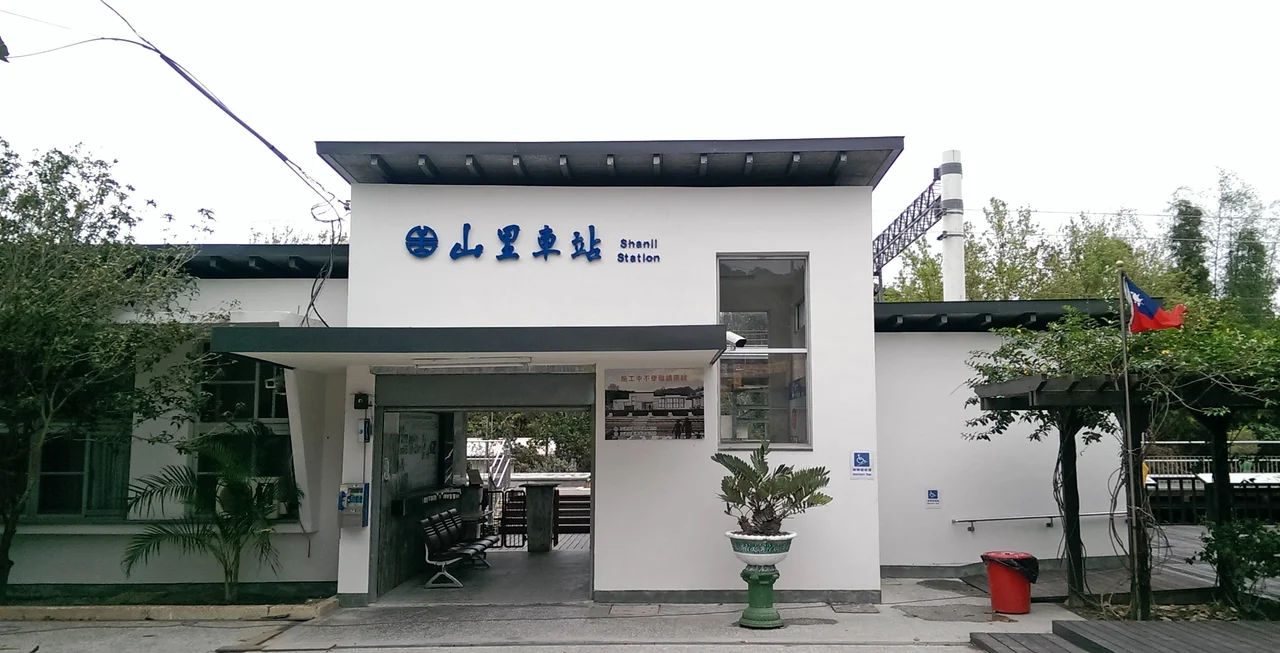
Visitors to Beinan encounter a landscape generous with natural gifts. Jhihben Hot Spring, one of Taiwan's most celebrated hot spring areas, sits within the township's reach, its sodium bicarbonate waters prized for their clarity and skin-softening properties. The Jhihben National Forest Recreation Area offers old-growth forest trails under a canopy that shuts out the lowland heat. Baiyu Waterfall drops white water through forested gorge. Chu Lu Ranch opens the valley's agricultural character — horses, grasslands, mountain backdrops. The Yuan Sen Applied Botanical Garden catalogs the native flora of southeastern Taiwan. And the Cingjue Temple anchors the township's spiritual life in a setting framed by green hills. Taiwan Railway's Shanli Station connects Beinan to the island's rail network, a modest stop in a township that has never needed grandeur to hold something worth finding.
The Weight of a Puyuma Name
Every ruling power that touched Beinan reshaped its name slightly — Pimala, Pi-lam, Pinan, Beinan — but the root always traces back to the Puyuma chief Pinara. That persistence is not accidental. It reflects the depth of Puyuma presence in this land, a presence that outlasted the Dutch East India Company, the Qing prohibition, Japanese imperial administration, and the postwar transition. With a population of 16,798 as of February 2023, Beinan remains one of the quieter corners of Taitung County. But quiet is not the same as empty, and a name that carries a people's memory across four centuries of colonial overlays is anything but ordinary.
From the Air
Beinan Township lies at approximately 22.78°N, 121.12°E in southeastern Taiwan, immediately southwest of Taitung City. From the air, the Huatung Valley is visible running north-south between the Central Mountain Range to the west and the coastal range to the east — a long green corridor. The nearest airport is RCFN (Taitung Airport), approximately 5 km to the northeast. Approach from the north along the valley floor reveals the patchwork of farmland and village settlement that defines the township. Recommended viewing altitude: 3,000–5,000 feet for valley detail. The Central Mountain Range peaks to the west rise dramatically above 10,000 feet in places, providing an unmistakable geographic anchor.
Nearby Stories
- Jiadong 8.7 km away
- Bunun Cultural Museum 10 km away
- Liudui Hakka Cultural Park 12 km away
- Yujing District 16 km away
- Shouka Mountain Pass 40 km away
- 1951 East Rift Valley Earthquakes 97 km away
- Mavulis Island 157 km away
- 2021 Hualien Train Derailment 162 km away