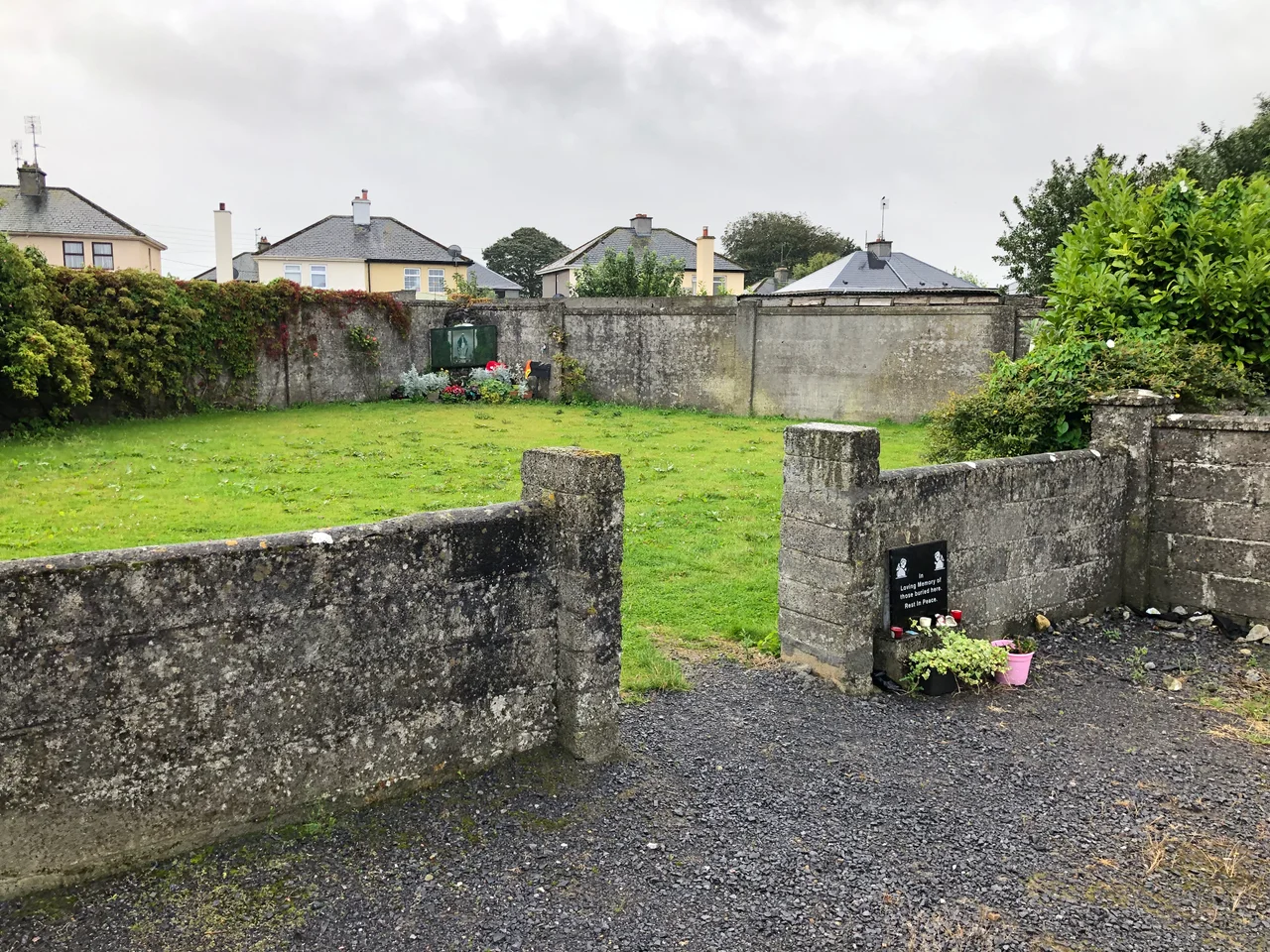

Bessborough Mother and Baby Home
On arrival the women were given new names. They were told not to speak of their pasts. They were set to washing laundry for local businesses and scrubbing the floors of the building they could not leave. Between 1922 and 1998, 9,768 women and 8,938 children passed through Bessborough Mother and Baby Home in Blackrock, County Cork. More than 900 of the children died there. Their bodies were buried in unmarked graves. The Irish state's Commission of Investigation into Mother and Baby Homes, whose final report ran to thousands of pages, gave Bessborough a chapter of its own.
What Bessborough Was
Bessborough House had been the home of the Pike family before the Sisters of the Sacred Hearts of Jesus and Mary took it over in 1922 - the year the Irish Free State came into being. For most of the next seven and a half decades, the order ran the building as an institution for unmarried pregnant women and their children. The 'shame' Bessborough was designed to manage was not the women's. It was the shame Irish society - Catholic, conservative, deeply patriarchal - attached to any pregnancy outside marriage. Families committed daughters. Parish priests arranged transfers. The state inspected and approved. The structure that ran Bessborough was much larger than the order of nuns who lived inside its walls.
The Children Who Did Not Survive
In the 1920s and 1930s, the infant mortality rate at Bessborough often exceeded 30 percent - more than three times the national average. In 1943 it spiked to 75 percent. Three of every four babies admitted that year died there. The reasons were not mysterious. Crowded wards, poor nutrition, inadequate medical care, and a culture that treated these particular children as less worthy of saving combined to kill them in numbers that should have stopped the institution. They did not. By the 1960s, mortality rates had come down to roughly the national average. By 1998, Bessborough closed. The babies who died are commemorated now. The unmarked graves remain, in places that the official investigation could not always definitively locate.
Adoptions Across an Ocean
Some of the children who survived Bessborough did not stay in Ireland. The Commission's report documents forced adoptions - mothers pressured or denied any meaningful choice - and adoptions of Irish children to American families in exchange for cash donations to the religious order. Money changed hands. Children crossed the Atlantic. The mothers, often barely out of girlhood themselves, signed papers they did not always understand or were not allowed to refuse. Some spent the rest of their lives searching for the children who had been taken. Some of those adopted children, now in late middle age, are still trying to find their birth mothers. The paperwork is sparse, sometimes contradictory, occasionally falsified.
The Lives Inside
Survivors who spoke to the Commission described daily life in detail. The new names. The order not to speak of fathers or families. The hard labour - laundry, often, for businesses that paid the home for the work the women did unpaid. By the 1980s, the work had diversified to pottery and hairdressing, some of it paid; some women were allowed to study for their Leaving Certificate. The institution evolved. It did not stop being what it was. Average stays in the 1950s were under six months - shorter than at some other homes, where women could remain for up to three years. The shortness was sometimes a mercy, sometimes a function of how quickly a baby could be separated from its mother and placed elsewhere.
Reckoning
Bessborough became a national story after the bodies of children were discovered in a former septic tank at the Bon Secours Mother and Baby Home in Tuam, County Galway. The 2014 revelation triggered the Commission of Investigation. Its 2021 final report covered eighteen institutions and ran to volumes. The Irish state apologised. A redress scheme followed. Survivors continue to campaign for full access to their own records, for proper memorialisation, for the rest of the truth. Bessborough House still stands. The land around it has been sold and developed. The women and the children who passed through, the more than 900 who never left, deserve to be remembered as what they were - real people, often very young, who came to Bessborough not because they had done anything wrong, but because Ireland had not yet learned how to let them be who they were.
From the Air
Located at 51.88°N, 8.41°W in Blackrock, on the south-east edge of Cork city, roughly 2 km from the city centre. From altitude the former Bessborough estate reads as a mature wooded property surrounded by modern suburban development. Cork Airport (EICK) lies about 4 km south-west. The site sits inland of the River Lee and Cork Harbour. This is not a tourist destination - it is a place of historical memory.
Nearby Stories
- St. Declan's Monastery 0.8 km away
- Aghavrin House 2.4 km away
- Mitchelstown Castle 7.4 km away
- Clonakilty 9.5 km away
- Inislounaght Abbey 16 km away
- Walter Siepmann 23 km away
- Newcastle West 33 km away
- SM U-27 110 km away