.jpg)
BUTEC
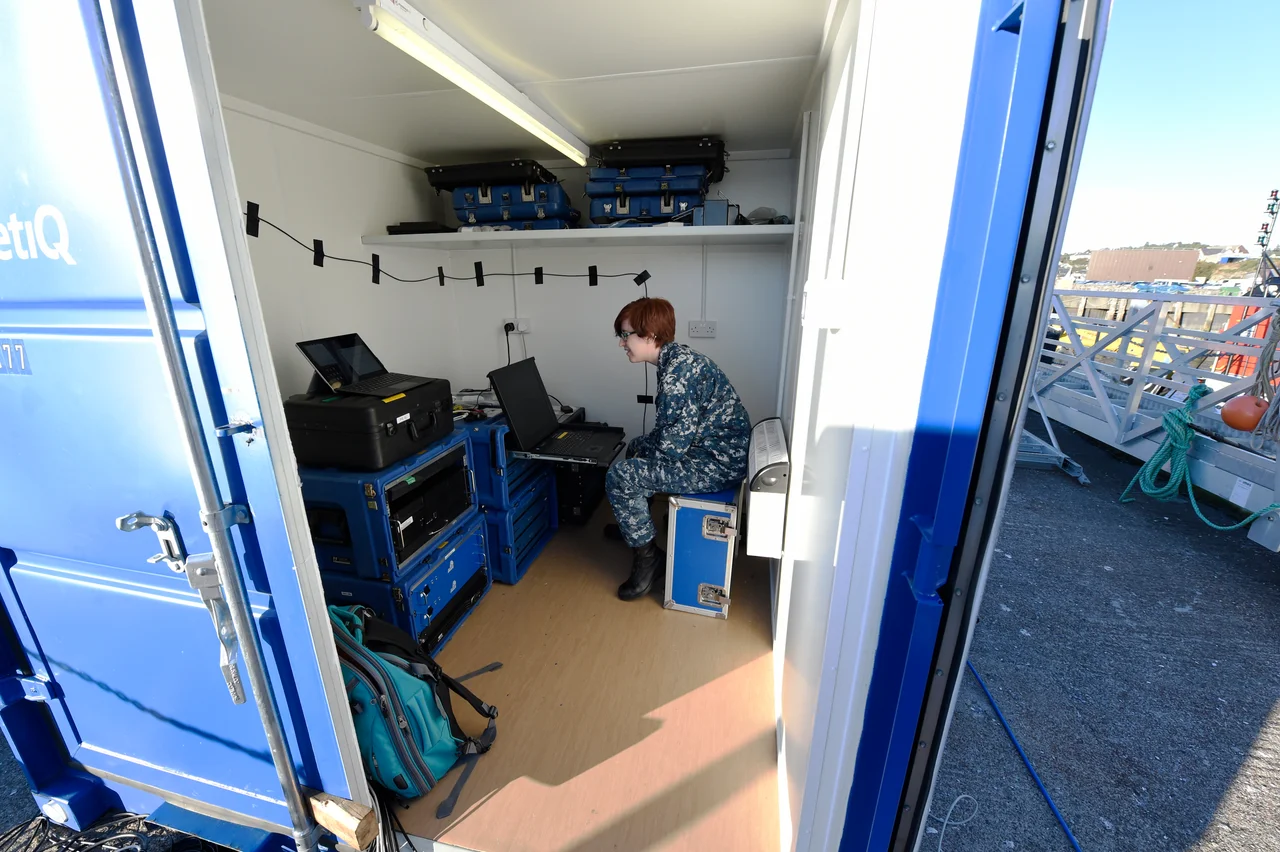
Before a Royal Navy submarine can begin an active patrol, it has to be quiet enough. The way the Navy checks is to send the boat through a narrow rectangle of water in the Inner Sound, between South Rona and the Applecross peninsula, lined with hydrophones, and listen. The range is called BUTEC - the British Underwater Test and Evaluation Centre. The water is 175 to 200 metres deep, the sea bed is soft, the surrounding mountains shelter the strait from weather, and almost no commercial shipping comes through. For acoustic engineers, this is one of the quietest stretches of sea in northwestern Europe. For a passing yachtsman, it looks like ordinary Hebridean water. For a submarine that fails the test, it is the end of the road.
Why Here
The Ministry of Defence established BUTEC in the Inner Sound in the early 1970s after a search for a suitable range in British waters. The list of requirements was demanding: deep water for the largest submarines; sheltered location to keep surface noise down; soft sea bed to avoid acoustic reflections; low ambient noise from shipping and weather; and reasonable proximity to a Royal Navy base. The Inner Sound between Raasay, Rona and Applecross fit all of them. The British Underwater Test and Evaluation Byelaws 1975 came into force on 1 September that year, prohibiting public access to specified areas of land at all times and to the sea range when active. The byelaws were revised in 1984 and again in 2016. Today BUTEC is operated by the defence contractor QinetiQ on behalf of the MoD and the Royal Navy, with daily operations directed from the Shore Support Base at Kyle of Lochalsh.
The Range
The active range is roughly 10 kilometres long and 6 kilometres wide. It is divided into two main functions. The noise range, east of South Rona, is about a mile long and a thousand yards wide, marked off into lettered blocks A to Z. Sensors are arrayed across the central blocks M and N. A submarine being tested makes repeated runs along the centreline while the shore-based scientific team on Rona analyses its sound signature in real time. If the boat does not achieve the expected aural signature - if it leaks too much noise from a pump, a shaft, a loose fitting - it is sent back to fix the problem before it can start active patrols. The second function is the torpedo testing range, in the centre of the Inner Sound between Raasay and the Applecross mainland. Torpedoes here are fitted with acoustic tracking and measuring gear in place of warheads, then dropped from submarines, helicopters, aircraft, or surface vessels. The Stingray torpedo was extensively tested at BUTEC in 1982 and 1983 before entering Royal Navy service in September 1983, and a sample of every fifty-torpedo production batch was tested here for years afterward, with a Britten-Norman Trislander aircraft acting as the drop vehicle.
Operations and Sounds
The Range Terminal Control Building, with its jetty and heliport, stands at the eastern edge of the range, near the Sand archaeological site about four miles north of Applecross village. The outlying installations for the noise range sit on South Rona itself, where MoD-owned land occupies 57.5 hectares at the north end of that island. When firings are taking place, safety vessels deploy around the range area and an Air Danger Area is activated to keep aircraft clear. Upcoming activities are published in the West Highland Free Press, the local weekly that serves Skye, Lochalsh and the Outer Hebrides. The torpedo testing range is closed to fishing under bylaws, and trawling is banned across the entire Inner Sound. Minehunters also exercise here from time to time, sweeping practice mines from the soft bottom.
Controversies and Compromises
Living next to a military testing range carries real complications. In 2002 BUTEC tested a high-powered active sonar device that had been blamed for cetacean strandings elsewhere and had been banned in United States waters. The decision drew protest from environmental groups concerned about the populations of minke whales, harbour porpoises and bottlenose dolphins that frequent the Inner Sound. The Inner Sound is also home to important commercial creel fisheries and to one of the densest concentrations of seabird breeding colonies in Britain. The 2016 byelaw revision was preceded by an economic impact assessment that tried to balance the MoD's operational needs against the interests of local fishermen, ferries and ecotourism operators. The compromise is the one the British state has used in this part of Scotland for a long time: the bases bring jobs, the bylaws limit access, and the local communities live with both.
From the Air
BUTEC occupies the Inner Sound between Skye (Trotternish to the west) and the Applecross peninsula (to the east), with the noise range east of South Rona (57.53N, 5.98W) and the torpedo range centred near 57.47N, 5.87W. Water depth 175-200 m. An Air Danger Area can be activated to cover the entire range up to specified altitudes when firings are in progress; airmen must check NOTAMs before crossing the Inner Sound. The Range Terminal Control Building (with jetty and heliport) is at the eastern edge near Sand, Applecross. The Shore Support Base is at Kyle of Lochalsh (no public airport). Nearest ICAO airports: Inverness (EGPE) 70 nm east, Plockton airstrip (EGEC) 20 nm southeast, Stornoway (EGPO) 75 nm northwest. Recommended cruise altitude when Air Danger Area is inactive: 3000-4000 ft AGL, with awareness of the surrounding terrain rising to over 600 m on both shores.
Nearby Stories
- Duntulm Castle 3.3 km away
- Sabhal Mòr Ostaig 6.3 km away
- Fairy Lochs 7.6 km away
- Talisker distillery 10 km away
- Rùm 14 km away
- An Teallach 17 km away
- Glen Affric 22 km away
- Stand-off at the Fords of Arkaig 26 km away