
The Nonprofit That Saved Marin's Movie Palaces
Mark Fishkin had a problem with the way Americans watched movies. In 1978, when multiplexes were swallowing independent theaters whole and studio blockbusters dominated every screen, Fishkin launched a film festival in Mill Valley -- a small Marin County town better known for its redwoods and hiking trails than its cinematic ambitions. Nearly five decades later, the California Film Institute he founded has become one of the most respected nonprofit film organizations on the West Coast, operating two historic theaters, running a documentary festival, and hosting a film festival that screens over 200 films each October to more than 60,000 attendees. The story of CFI is not just about movies. It is about what happens when a community decides that the experience of watching a film in a real theater, surrounded by strangers in the dark, is worth fighting for.
October in Mill Valley
The Mill Valley Film Festival is the engine that drives everything else. Founded in 1978, it has grown from a modest local event into an 11-day celebration that draws filmmakers, industry figures, and audiences from around the world. The festival screens American and international features, documentaries, and shorts, and its programming has developed a reputation for catching Oscar-worthy films early. Industry publications have noted its quiet influence on the awards race -- a festival that lacks the red-carpet spectacle of Sundance or Toronto but carries real weight with voters and distributors. What sets Mill Valley apart is its intimacy. Filmmakers introduce their own work. Audiences ask questions. Conversations continue in the lobby, on the sidewalk, at the café next door. For a festival that attracts 70,000 participants, it still feels like something the town owns rather than something imposed on it.
A Cathedral on Fourth Street
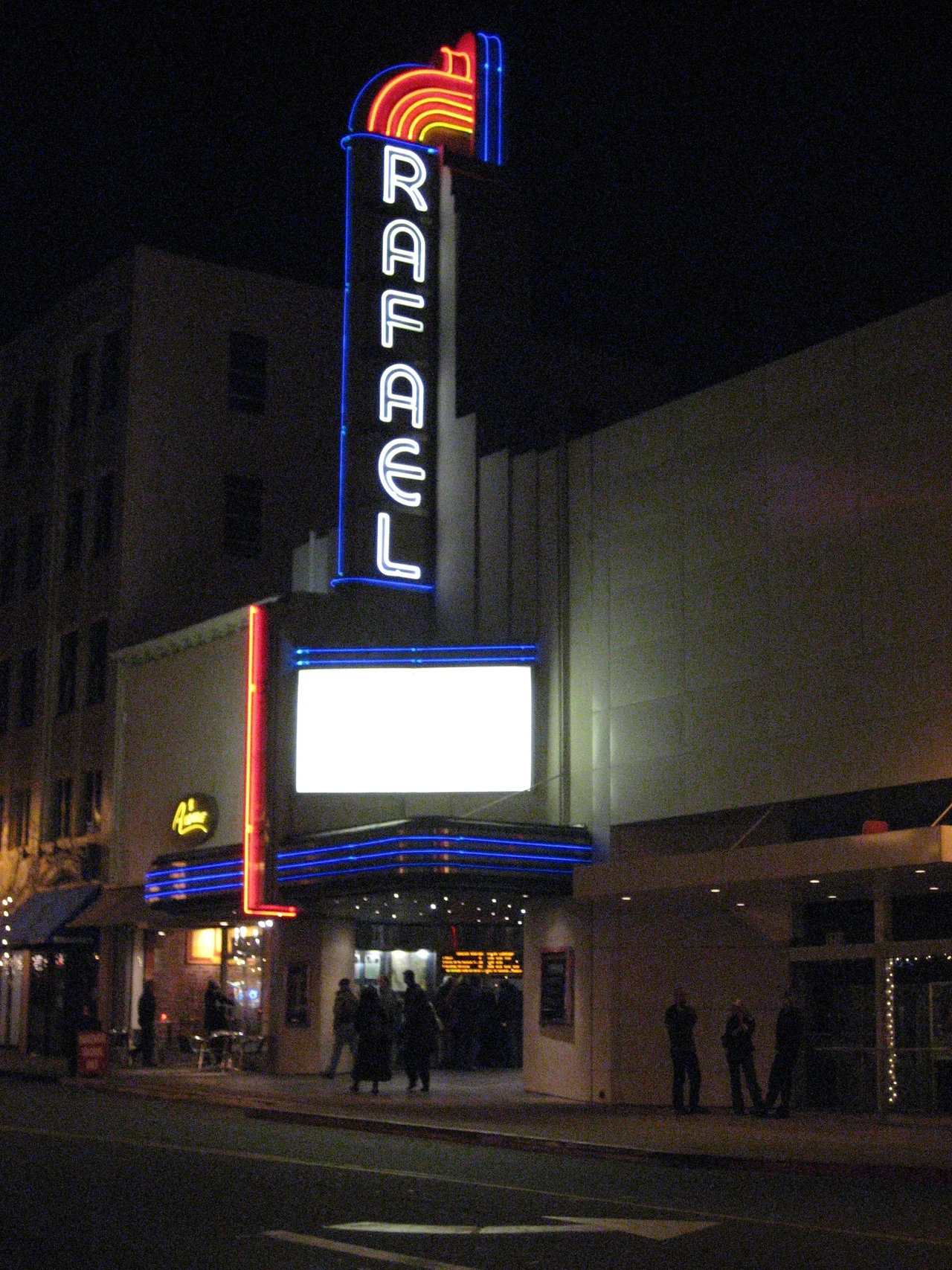
In 1999, CFI took over a three-screen arthouse theater in downtown San Rafael and renamed it the Christopher B. Smith Rafael Film Center. The venue became CFI's year-round home, a place where the festival's ethos -- independent voices, global perspectives, direct engagement with filmmakers -- could live twelve months a year instead of just eleven days. The Rafael Film Center programs first-run independent and studio films alongside documentaries, classics, and retrospectives. It hosts events with Bay Area filmmakers and visiting directors from around the world. The theater serves approximately 200,000 attendees annually, a remarkable number for a three-screen nonprofit venue in a city of 60,000. What makes the Rafael Film Center work is not its size but its curation. Every screening feels chosen rather than distributed, a film someone believed in enough to put on the schedule.
Rescuing the Sequoia
The Sequoia Theatre in Mill Valley was built in 1929, during the golden age when every American town of any ambition had a movie palace. By the 2010s, it was being run by the Cinemark chain, leased from the heirs of the Blumenfeld Theaters family, and showing the same wide-release films you could see anywhere. In 2018, CFI paid $2.5 million to buy the theater outright, adding a second historic venue to its portfolio. The acquisition was an act of preservation as much as expansion. A chain-operated theater can close when the lease math stops working. A community-owned theater answers to different priorities. CFI announced plans in 2022 to add additional screening rooms below ground level, though that renovation has not yet begun. The Sequoia officially reopened on May 20, 2024, after renovations, with a week of classic films at one dollar admission -- a gesture that said more about CFI's values than any mission statement could.
The Education of a Film Town
Beyond festivals and theaters, CFI runs an education program that brings film literacy to schools and young audiences across Marin County. The program reflects Fishkin's original conviction that cinema is not merely entertainment but a form of communication worth teaching. Students learn to read films the way they learn to read books -- with attention to structure, point of view, and the choices a storyteller makes. DOCLANDS, CFI's documentary film festival, extends this mission into nonfiction storytelling, creating a dedicated space for films that explore the real world with the rigor and craft of the best journalism. Together, these programs form an ecosystem: the festivals discover films, the theaters show them, and the education programs teach audiences how to think about what they have seen. It is a model that treats moviegoing not as a transaction but as a cultural practice worth sustaining.
From the Air
The California Film Institute's primary venues are located in downtown San Rafael (37.97N, 122.53W) and Mill Valley, Marin County. The nearest airport is Gnoss Field (KDVO) in Novato, about 10 nautical miles north. San Francisco International (KSFO) lies roughly 25 nautical miles to the southeast. From 3,000-5,000 feet AGL, the downtown San Rafael grid along Fourth Street is visible, nestled between the hills of Marin and the shore of San Pablo Bay. The Sequoia Theatre sits in Mill Valley's small downtown, tucked into the canyon where Cascade Creek meets the broader valley floor.
Nearby Stories
- Lands End (San Francisco) 1.4 km away
- The House That Burned Before He Could Live in It 3.9 km away
- Sonoma Coast State Park 5.9 km away
- The Roadside Stand That Fed a Queen 6.1 km away
- From Ammunition Bunkers to Cattle Country 7 km away
- Niles Canyon Railway 24 km away
- The Hole in the Head 28 km away
- ʻAkaka Falls State Park 3681 km away