
The House That Burned Before He Could Live in It
On August 22, 1913, Jack London received word that his house was on fire. Not just any house. The Wolf House was a 15,000-square-foot stone mansion on his ranch near Glen Ellen, California, three years in the making and more than $80,000 deep -- a staggering sum in pre-World War I dollars. Custom furniture. A reflection pool stocked with bass. By the time Jack and his wife Charmian reached the property, the building was fully engulfed. He never rebuilt it. Three years later, at the age of forty, London died on the sunporch of the modest cottage he had been living in all along. Today, both structures are part of Jack London State Historic Park, and the contrast between them tells you everything you need to know about the man.
The Author Who Wanted to Be a Rancher
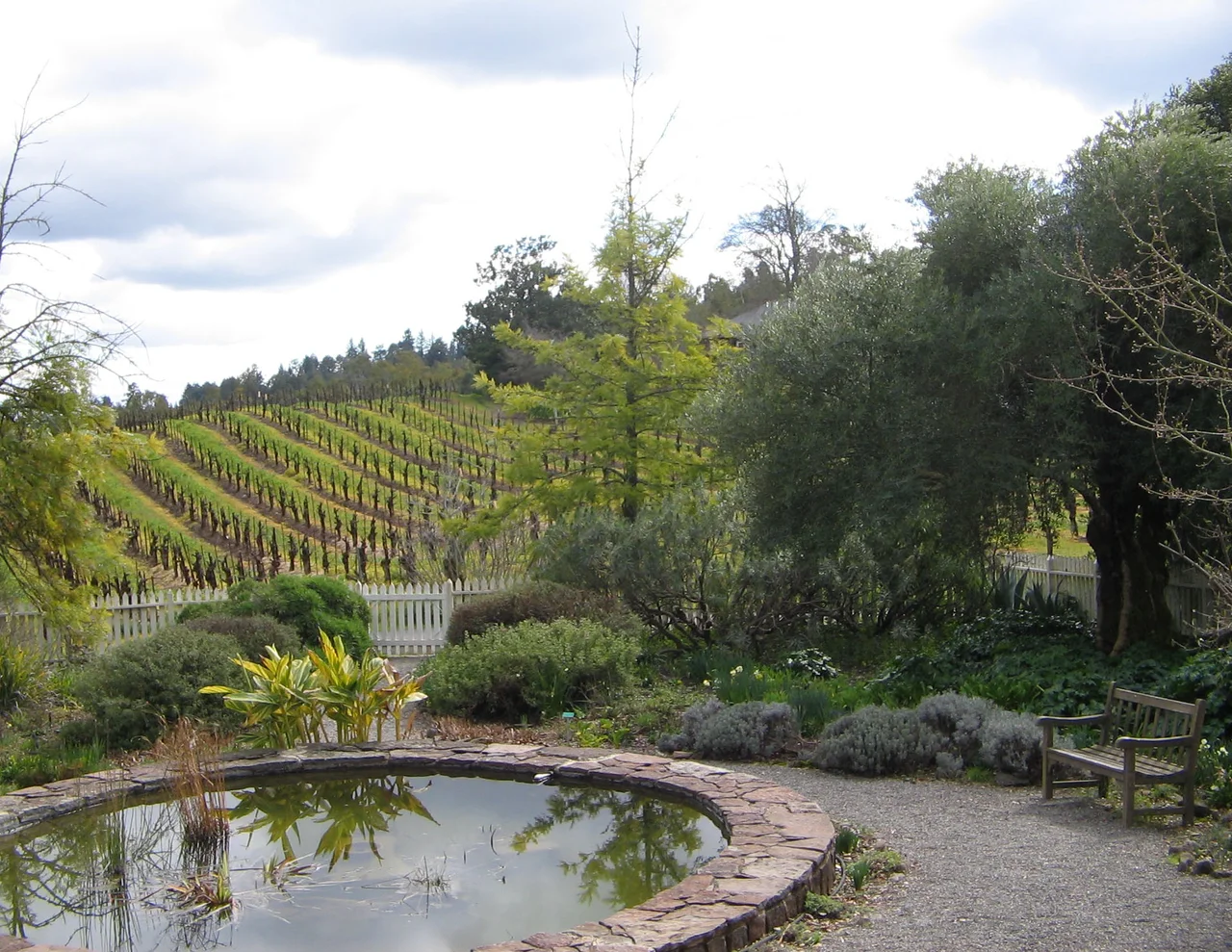
By 1905, Jack London was one of the most famous writers in the world. The Call of the Wild and The Sea-Wolf had made him wealthy, and he was turning out novels, short stories, and journalism at a pace that would eventually yield more than fifty books. But what London wanted was land. He purchased an abandoned winery property on the eastern slope of Sonoma Mountain, near the village of Glen Ellen, and named it Beauty Ranch. The property had belonged to Kohler & Frohling, one of California's early wine operations, and London set about converting it to a working ranch with the same ferocious energy he brought to his writing. He expanded the small winery cottage to 3,000 square feet and turned the adjacent stone building into a study. Between 1909 and 1911, he bought more surrounding land, growing the ranch into a sprawling agricultural experiment.
Ruins on the Hillside
The Wolf House was meant to be London's permanent home -- a stone edifice grand enough to match his literary reputation. Construction began in 1910 and consumed three years of planning, custom stonework, and imported materials. The cause of the fire that destroyed it on that August night in 1913 remains a subject of debate. What is not debated is its effect on London. He was devastated and deeply in debt. The Londons collected only $10,000 of the $35,000 to $40,000 in estimated losses. They pledged to rebuild and began drying redwood logs for the effort, but London's health was failing. He threw himself into writing with renewed desperation, trying to earn enough to sustain both the ranch and the lifestyle he had built around it. The effort, by many accounts, accelerated his decline. When he died on November 22, 1916, the redwood logs were still drying.
The Valley of the Moon at Sunset
London's burial wishes were simple and specific: cremation, ashes interred on the property near the pioneer children's graves on a small knoll, beneath a rock from the Wolf House. Four days after his death, at sunset on November 26, 1916, Charmian London, Jack's half-sister Eliza Shepard, and a handful of ranch workers carried his ashes to the spot he had chosen -- a quiet rise overlooking the Valley of the Moon, with views across the Sonoma hills that London had made the setting for one of his novels. No public ceremony. No speeches. When Charmian died in 1955, she was cremated and buried beside him in the same unadorned place.
Happy Walls and Open Gates
After Jack's death, Charmian built her own house on the property. She called it the House of Happy Walls -- a smaller, more formal echo of the Wolf House, furnished with pieces originally intended for the mansion that never was. In her 1938 will, she stipulated that the building should never be lived in by anyone but a caretaker, insisting it serve as a museum to Jack and herself. Eliza Shepard ran Beauty Ranch until her death in 1939, and the family stewardship continued through her son Irving and grandson Milo. By 1959, the land was given to the State of California. It was designated a California Historical Landmark in 1960 and a National Historic Landmark in 1962. Today, more than 800 acres of London's Beauty Ranch are preserved, operated by the Valley of the Moon Natural History Association after state budget pressures in 2012 threatened closure. The winery ruins host summer theater performances. Hikers follow trails through the oak-studded hills London rode on horseback. And the Wolf House stands exactly as the fire left it -- roofless walls of stone open to the sky, a monument to the gap between what we plan and what we get.
From the Air
Located at 38.35N, 122.54W on the eastern slope of Sonoma Mountain, near Glen Ellen in the Sonoma Valley. The park's 800+ acres of oak woodland and open meadow are visible from moderate altitude. The Wolf House ruins and House of Happy Walls are in the park's interior, accessible by trail. Nearest airports: Charles M. Schulz-Sonoma County Airport (KSTS) approximately 12 nm northwest, and Gnoss Field (KDVO) roughly 18 nm southeast. The Sonoma Valley runs north-south between Sonoma Mountain and the Mayacamas Range, providing clear geographic reference from the air.
Nearby Stories
- Sonoma Coast State Park 5 km away
- Engine Number 5 and the Tunnel That Kept Its Secret 5 km away
- The Canyon That Burned on Independence Day 6.5 km away
- Museum of the American Indian 8 km away
- California's Holland 16 km away
- Griffith Mansion 17 km away
- Where the Sheep Rancher Planted Stars 29 km away
- Cordell Bank: The Invisible Island 29 km away