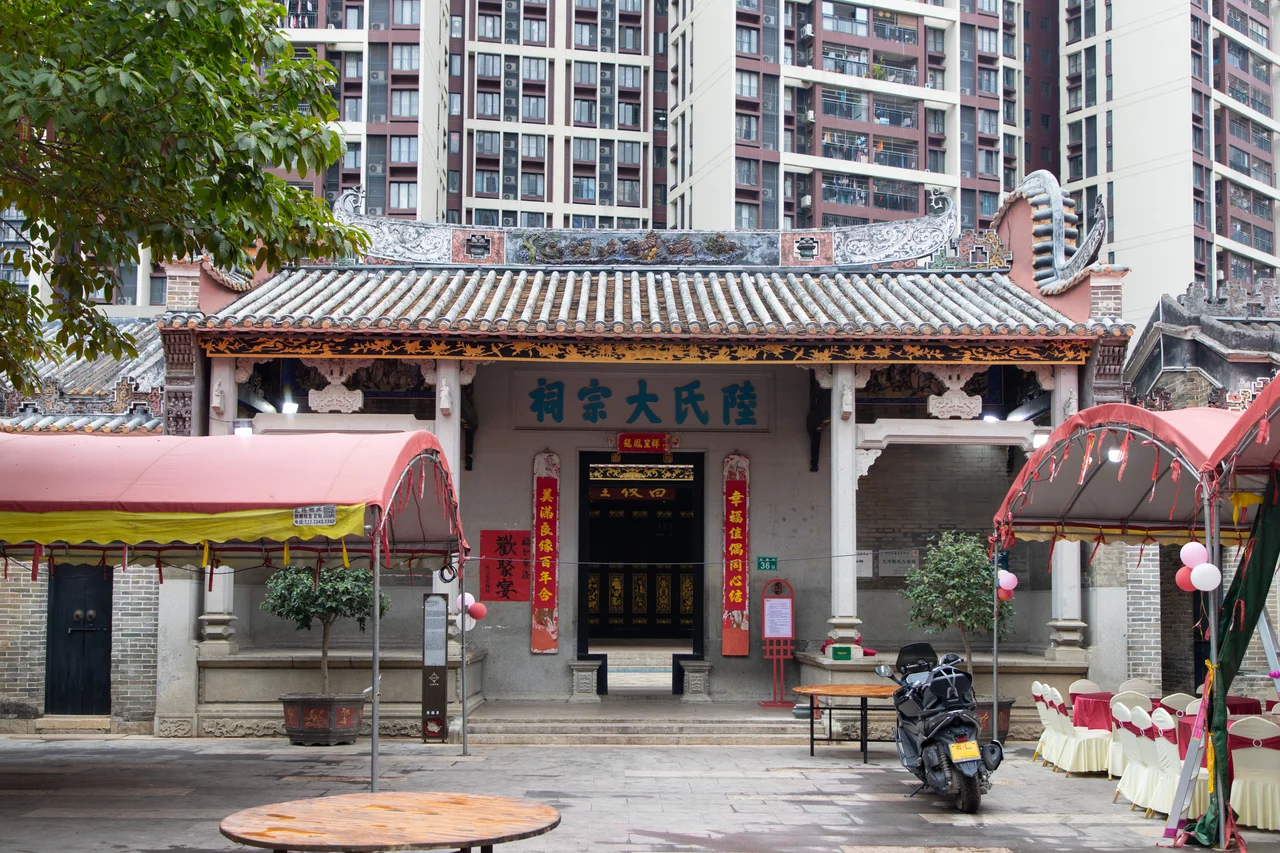

Changzhou Island
In 1924, Sun Yat-sen chose a small Pearl River island east of Canton to establish a military academy for the officers of his new revolutionary movement. The island was called Changzhou — known in English as Dane Island, after the Danish sailors who had once used it for repairs and burials during the Canton trade era. What happened on that island over the next two years did more than train soldiers: it shaped the leadership of modern China in ways that are still being sorted out a century later. Changzhou Island is about 11.5 square kilometers of low-lying river delta land, modest enough on a map. Its history is anything but.
The Foreign Cemetery by the River
Before the military academy, before the revolutionary politics, there was the anchorage. The Whampoa or Huangpu anchorage — the stretch of Pearl River around Changzhou and nearby Pazhou Island — was, under the Canton System, the designated stopping point for all foreign trading ships approaching Canton. Ships had to anchor here before their cargo could be moved inland by smaller boats.
Danish crews, among others, used Changzhou Island for practical purposes during this era: repairing ships, burying their dead. The island appears in a nineteenth-century painting by the Chinese artist Sunqua, who depicted the foreign cemetery there — a quiet patch of ground where sailors from northern Europe were laid to rest far from home, overlooking the river that had brought them to the other side of the world. The Canton trade era produced this kind of layered geography: commercial, practical, quietly mournful.
The Whampoa Military Academy
Sun Yat-sen founded the Whampoa Military Academy on Changzhou Island in 1924. It was established to create a professional officer corps for the National Revolutionary Army — the military arm of Sun's Nationalist movement, the Kuomintang (KMT). The academy was designed with Soviet assistance and was modeled in part on Soviet military institutions of the era.
The academy's first commandant was Chiang Kai-shek, then a rising figure in the Nationalist movement. Its political commissar was Zhou Enlai, who would go on to serve as the first Premier of the People's Republic of China. The student officers who trained here came from across China, motivated by a range of political convictions — Nationalist, Communist, and everything in between. The academy operated in the context of the First United Front, an alliance between the Kuomintang and the Chinese Communist Party that was, even as the academy opened, already under strain.
The Zhongshan Incident
In March 1926, Changzhou Island was again at the center of events. The Zhongshan Incident — named for the gunboat Zhongshan — unfolded at the Whampoa anchorage and had immediate and lasting consequences. Chiang Kai-shek used the incident, in which the gunboat was moved to Whampoa under circumstances that remain disputed, as a pretext to declare martial law and move against Communist influence within the Nationalist movement.
The result was decisive. Chiang consolidated his position as the dominant military leader of the Kuomintang, outmaneuvering both the Communists within the movement and Nationalist rivals who had questioned his authority. The First United Front began to fracture. Within a year, Chiang would turn the National Revolutionary Army against Communist-aligned forces in the April 12 Incident of 1927, effectively ending the alliance and beginning the long civil conflict between the KMT and the Communist Party of China. The small island in the Pearl River had, again, been the setting for something enormous.
Changzhou Today
Changzhou Island is now administered as part of Guangzhou's Huangpu District. The island — 11.5 square kilometers in total, 8.5 square kilometers of dry land — is linked to Guangzhou's road network by a bridge to neighboring Xiaoguwei Island. A future extension of Guangzhou Metro Line 7 is planned to serve the area.
The Whampoa Military Academy site on the island has been preserved and operates as a museum. Visitors can see reconstructed buildings from the 1920s campus and exhibitions on the academy's history and the political figures who passed through it. The Pearl River still surrounds the island as it always has, carrying container traffic and ferry boats past the same banks where Danish sailors once made repairs and revolutionary officers once drilled. Changzhou is easy to overlook on a map. On the ground, the layers of history press in from every direction.
From the Air
Changzhou Island sits at approximately 23.08°N, 113.41°E in the Pearl River Delta, roughly 15 km east-southeast of central Guangzhou. From the air, the island is clearly visible as a distinct landmass in the river, separated from the surrounding urban area by water on all sides. Pazhou Island (historic Whampoa anchorage) lies to the west-southwest. The nearest major airport is ZGGG (Guangzhou Baiyun International), approximately 35 km to the north-northwest. At 2,000–4,000 feet in clear weather, the island's size and shape are easily readable, and the bridge connections to the mainland are visible.
Nearby Stories
- Shunde 12 km away
- 2015 Shenzhen Landslide 15 km away
- Mount Luofu 23 km away
- Qingyuan Maglev Tourist Line 32 km away
- Kaiping 56 km away
- Heyuan 90 km away
- Chikan, Kaiping 92 km away
- Erlitou Site Museum of the Xia Capital 1257 km away