
Chelsea, London
The name means "landing-place for chalk" — Cealc-hyð in Anglo-Saxon — the kind of practical Thames-side designation that suggests a wharf, a stack of limestone, and the smell of river mud. From that landing-place grew a village. From the village grew a riverside parish of three thousand people that John Aubrey would, in the 1690s, call "a village of palaces." Henry VIII bought the manor in 1536; two of his wives lived in the manor house, and Princess Elizabeth — the future queen — spent part of her childhood there. Thomas More lived more or less next door at Beaufort House. Chelsea, in other words, has been a landing-place for grand people for nearly five hundred years.
From Synod to Bun House
Chelsea is older than its grand period. A church council, the Synod of Chelsea, was held there in 787, suggesting a place of some significance before the Saxon kings put down their wharves. The first record of the manor predates the Domesday Book: Thurstan, governor of the King's Palace under Edward the Confessor, gave the land to Westminster Abbey. By 1086, Chelsea was held by Edward of Salisbury, tenant-in-chief in Ossulstone Hundred, Middlesex. The village stayed rural for centuries. As late as the eighteenth century, it served London to the east as a market garden, growing vegetables and fruit for the metropolis. The Chelsea Bun House on the Pimlico Road sold its sticky, currant-filled coil of sweet dough through the Georgian era to a clientele that included the royal family. On its final Good Friday in 1839, it sold roughly a quarter of a million hot cross buns before closing forever — a small commercial extinction event recorded with surprising precision in the local press.
Wren, Wren Pensioners, Chelsea Porcelain
Charles II founded the Royal Hospital Chelsea in 1682, supposedly at the suggestion of his mistress Nell Gwynne, as a home for old soldiers. Christopher Wren designed it. The building opened in 1694 and still operates as it was intended: the Chelsea Pensioners in their scarlet coats and tricorne hats are the same institution that has lived there for over three centuries. The hospital grounds host the annual Chelsea Flower Show in May. A few streets away once stood the Chelsea Porcelain Factory, thought to be the first workshop to make porcelain in England. Its work — Chelsea ware — was sold by 1769 and the operation moved to Derby, but examples in good condition still fetch high prices at auction. King's Road takes its name from Charles II's private road from St James's Palace to Fulham; it remained royal property until George IV's reign. It would have an entirely different cultural meaning by the time of the next coronation but one.
The Painters' Mile
Chelsea's reputation as London's bohemian quarter belongs to the nineteenth century. James McNeill Whistler painted his Nocturnes from a Chelsea house; Dante Gabriel Rossetti, William Holman Hunt, J. M. W. Turner, William Morris, and John Singer Sargent all worked in the area; Sargent's studio was at 31 Tite Street, where Oscar Wilde lived a few doors down. The Pre-Raphaelite movement concentrated around Cheyne Walk and Cheyne Row. Thomas Carlyle lived for forty-seven years at 5 (now 24) Cheyne Row, where Leslie Stephen — Virginia Woolf's father — later set up a literary museum in his memory. Virginia Woolf set her 1919 novel Night and Day in Chelsea, with Mrs Hilbery in a Cheyne Walk house. George Meredith, Algernon Charles Swinburne, Leigh Hunt, Jonathan Swift, Richard Steele, and Tobias Smollett are all part of the local register of writers and addresses. Crosby Hall, on Cheyne Walk, is even older than its neighbours — a fifteenth-century mansion shipped brick by brick from Bishopsgate in 1910, after it was threatened with demolition, and reassembled in Chelsea as a survivor of the Great Fire of London. Its first owner had been Richard III.
The Swinging Sixties on the King's Road
Chelsea's second great cultural moment was briefer and louder. Through the 1960s, house prices in Chelsea were still lower than in Kensington next door, and the King's Road became the spine of Swinging London. The Beatles took houses in the area; Brian Jones, Mick Jagger, and Keith Richards of the Rolling Stones lived in Cheyne Walk; the boutiques Granny Takes a Trip and The Sweet Shop drew the cultural cognoscenti, with Twiggy among the regulars. The "Chelsea girl," the media critic John Crosby wrote, embodied a "life is fabulous" philosophy. By the mid-1970s, the King's Road had moved on into punk: Malcolm McLaren and Vivienne Westwood opened their boutique SEX at number 430, and the British punk movement was born within those walls. On 27 November 1974, the IRA exploded twin pillar-box bombs on Tite Street and Sloane Square, injuring twenty people — a reminder that Chelsea's celebrated decades happened against the background of a city under siege.
What's Left, What Was Lost
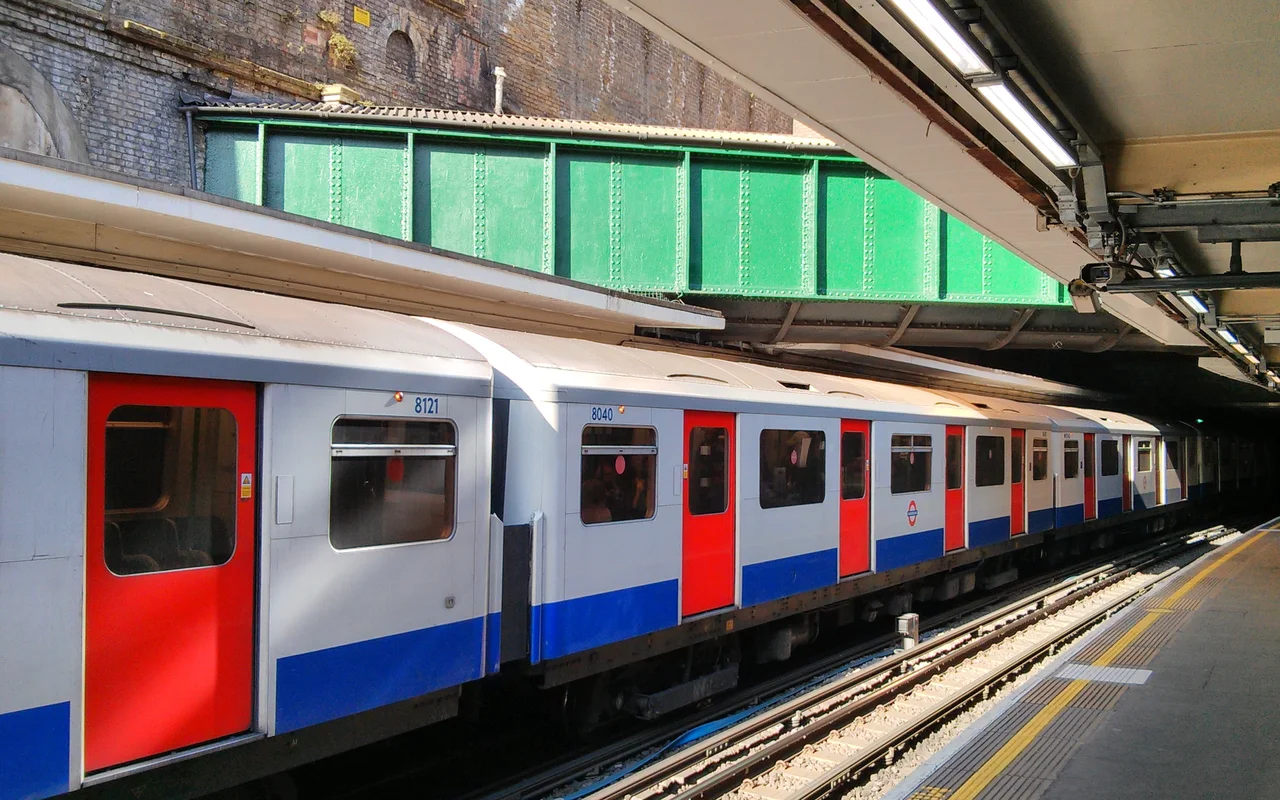
The bohemian Chelsea is mostly gone. The comfortable squares off King's Road now belong, as one local paper put it, to investment bankers and film stars. The Chelsea College of Art and Design left Manresa Road for Pimlico in 2005. Sloane Street has caught up with Bond Street as a luxury-fashion strip — Cartier, Tiffany, Prada, Gucci, Chanel, Dior, Louis Vuitton, Versace, Graff. King's Road itself has the same chain stores as any other British high street. Chelsea has no Underground station of its own (a Crossrail 2 line that would have changed this was shelved in 2020). Sloane Square station sits at the eastern edge; Gloucester Road to the north; Imperial Wharf on the West London Line to the west. The Chelsea Society, formed in 1927, still advises on changes to the built environment. The Chelsea Arts Club continues. The Royal Hospital still drills its pensioners and hosts its flower show. Chelsea Football Club, despite its name, has played at Stamford Bridge in neighbouring Fulham since 1905 — close enough to claim the neighbourhood, far enough to confuse visitors. The river bends, the bridges arc, and Chelsea remains, as it has for a thousand years, a landing-place — for chalk once, then for kings, then for painters, then for pop stars, and now for whoever can afford the postcode.
From the Air
Chelsea sits at 51.49N, 0.17W in the southern part of the Royal Borough of Kensington and Chelsea, on the north bank of the River Thames roughly 2.5 miles southwest of Charing Cross. From the air it appears as a tightly packed grid of squares and terraces between Hyde Park to the north and the Thames to the south, with the Royal Hospital Chelsea's distinctive Wren-designed red-brick block as the most identifiable single landmark. London Heathrow (EGLL) is twelve miles west, London City (EGLC) eight miles east. Best viewed from 2,000 to 4,000 feet on a clear day, using the Albert Bridge, Chelsea Bridge, and Battersea Power Station to the south as references.
Nearby Stories
- Battle of Britain, Northfleet 1.1 km away
- Bayham Old Abbey 5.4 km away
- Catharine Macaulay 6.4 km away
- Hatfield rail crash 8.8 km away
- Chequers 8.9 km away
- Chelmsford Cathedral 10 km away
- Queen Victoria Hospital 13 km away
- Fishbourne Roman Palace 36 km away