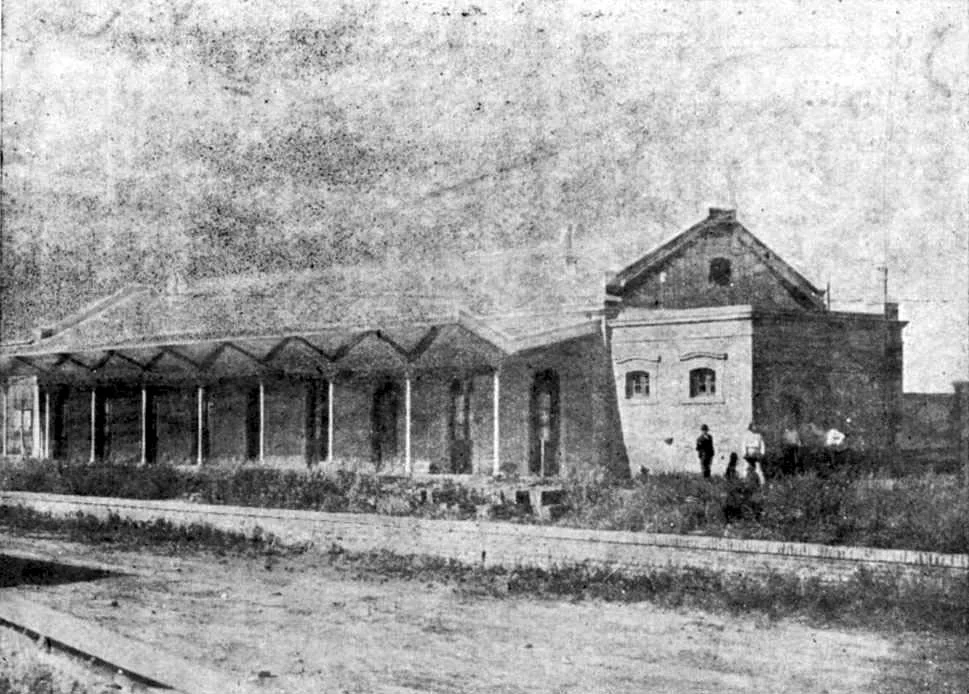

Coronel Suárez
Drive a few kilometers out of Coronel Suárez and you may smell apple strudel baking in the open air. Each year the colony of Santa María assembles a single enormous strudel to share with the whole crowd, while in nearby San José a festival celebrates Füllsel, a kind of bread pudding, alongside the Schlachtfest, the meat feast. The German words are no accident. This corner of the Argentine Pampas was settled in the 1880s by Volga Germans, ethnic Germans who had lived for generations on the Russian steppe before crossing another ocean, and who carried their language, their food, and their patron-saint Kerb festivals all the way to Buenos Aires Province. More than a century later, in three quiet colonies, the old dialect is still spoken.
A Twice-Migrated People
The Volga Germans had already crossed one frontier before they reached Argentina. Invited to settle along Russia's Volga River in the eighteenth century, they kept their German language and Catholic faith intact for generations on the steppe. When conditions soured, many emigrated again, this time to the Americas. In Argentina, after first arriving near Colonia Hinojo, a group led by Father Luis Servet negotiated with the landowner Eduardo Casey to settle by the Sauce Corto railway station that would become Coronel Suárez. Between 1886 and 1887 they founded three farming colonies near the town: Santa Trinidad, San José, and Santa María, known in the old tongue by their Russian colony names, including Dehler and Kamenka. There they rebuilt the world they had carried with them, church by church and harvest by harvest, on the far side of the planet from where their ancestors began.
Kerb and Kirche
The culture they preserved is still visible in the calendar. Every year each colony celebrates its Kerb, the festival of its patron saint, a word descended from the German Kirchweih, the consecration of a church: Kirche for church, Weih for blessing. There are parades and dinners, craft exhibitions and sports competitions, and the festivities have been formally declared of municipal and provincial interest. Fewer people live in the colonies now, as the larger towns pull younger generations away, but the families who remain still pass down the dialect and the recipes from one generation to the next. To stand at a Kerb celebration is to watch a distant province of nineteenth-century German Russia kept deliberately, lovingly alive in the South American grass.
The Colonel and the Poet
The city's name carries its own thread of history straight into Argentine literature. It honors Manuel Isidoro Suárez, a colonel born in 1799 who fought in the wars of independence and, on 6 August 1824, led Peruvian and Colombian cavalry to a decisive victory at the Battle of Junín in the highlands of Peru. That colonel was the great-grandfather of Jorge Luis Borges, one of the towering writers of the twentieth century, who immortalized his ancestor's charge in verse, including the poem A Page to Commemorate Colonel Suárez, Victor at Junín. So a farming town on the Pampas, founded in 1883 by Eduardo Casey on what was then the frontier of indigenous territory, bears the name of a cavalry officer whose battlefield glory would echo decades later through some of the finest poetry in the Spanish language.
Ten Years on Top of the World
Coronel Suárez has one more claim that reaches far beyond the province. Its polo club, founded in 1929, produced the most dominant team in the history of the sport. In the Argentine Open, the world's premier polo championship, the Coronel Suárez squad won ten consecutive titles from 1961 to 1970, an almost unimaginable run. The team revolved around two legendary families, the Harriotts and the Heguys: Juan Carlos Harriott Jr. would amass twenty Open championships, more than any player in the tournament's history, and is widely regarded among the greatest ever to swing a mallet. All told, Coronel Suárez has claimed twenty-five Argentine Open titles, by far the most of any club. A modest agricultural town of around 24,000 people, ringed by German colonies and named for the ancestor of a poet, also happens to be the spiritual home of championship polo.
From the Air
Coronel Suárez sits at 37.45°S, 61.93°W on the Pampas of Buenos Aires Province, near the northern edge of the Sierra de la Ventana hill country. Its own airfield, Brigadier D. Héctor Eduardo Ruiz (ICAO: SAZC), has a single paved runway about 1,318 m long at an elevation of 234 m and serves as the nearest airport; Comandante Espora (ICAO: SAZB) at Bahía Blanca lies roughly 110 km to the south. The surrounding land is flat to gently rolling farm and grazing country, ideal for a clear, wide view from cruising altitude. Look for the regular street grid of the city, the converging old railway lines that once linked the British- and French-owned networks, and the scattered cluster of the three German farming colonies — Santa Trinidad, San José, and Santa María — set among the fields nearby.
Nearby Stories
- The Works of Francisco Salamone 19 km away
- Club Hotel de la Ventana 36 km away
- Villa Epecuén 49 km away
- Tres Arroyos 127 km away
- Yellow Fever in Buenos Aires 138 km away
- Monte Hermoso 163 km away
- Azul 203 km away
- Lihué Calel National Park 270 km away