
Davis & Elkins College
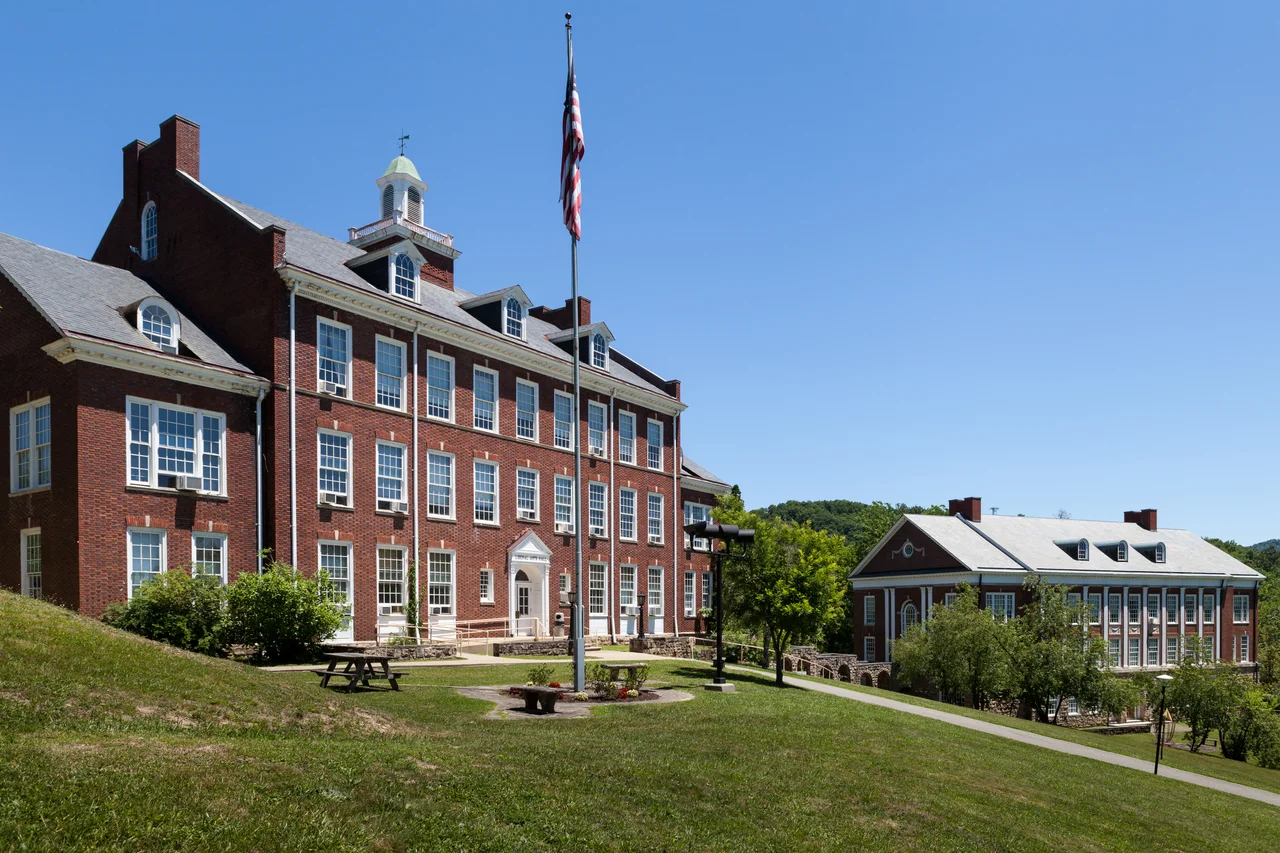
Halliehurst Mansion was a wedding gift from a senator to his daughter. By 1926, it became something else entirely. Hallie Davis Elkins, the widow of Senator Stephen B. Elkins, gave the family estate to a struggling Presbyterian college that had been founded twenty years earlier across town. The donation moved the campus to grander grounds and gave Davis and Elkins College its current shape - 180 acres of mansion-and-meadow landscape on the edge of the Allegheny highlands, where students now study in the same rooms that once hosted railroad barons and US Senators. The college takes its name from those two men: Henry G. Davis and Stephen B. Elkins, father-in-law and son-in-law, both US Senators from West Virginia.
Two Senators and a School
Davis and Elkins were not just relatives - they were business partners and political collaborators who shaped the coal and rail economy of north-central West Virginia in the late nineteenth century. When the college was founded in 1904 with Presbyterian backing, naming it after them was both fundraising savvy and historical acknowledgement. The school's affiliation with the Presbyterian Church has remained continuous since, and today it still sits within the Association of Presbyterian Colleges and Universities. What changed over the years was the campus. The original site, in south Elkins, was modest. The move to Halliehurst in 1926 gave the school architectural gravitas it could not have built on its own.
Mansions in the Curriculum
Halliehurst still stands, as do Graceland Mansion - now operating as the Graceland Inn and the Robert C. Byrd Center for Hospitality and Tourism - and a cluster of buildings that span more than a century of campus history. Liberal Arts Hall and Charles E. Albert Hall date from the 1925 to 1976 building period, joined later by Booth Library, the Myles Center for the Arts dedicated in 2012, and Glory Residence Hall. Walking the grounds is a tour of how American higher education layered itself on inherited wealth: a Gilded Age estate at the core, mid-century academic buildings around it, modern athletic and arts facilities at the edges. About 805 students study here, with a twelve-to-one faculty ratio.
Augusta and the Mountain Sound
Something else grew here that nobody at the founding could have predicted. The Augusta Heritage Center, formerly part of the college, became one of the most important programs in American folk music and Appalachian craft. Its week-long workshops bring hundreds of musicians, dancers, instrument-makers, and tradition-bearers to Elkins every year. Thousands more attend the public concerts, dances, and festivals. Augusta archives field recordings, oral histories, photographs, and instruments - a living library of the music and craft of the mountains, the kind of culture that easily disappears if no one bothers to teach it deliberately. For decades, Davis and Elkins served as the venue where that teaching happened.
The Maravich Connection
The alumni roll holds a few surprises. Press Maravich coached college basketball and taught his son Pete the fundamentals that would make him - as Pistol Pete - one of the most spectacular scorers in basketball history. Singer Kaia Kater, a Grenadian-Canadian banjo player whose work draws on Appalachian and Caribbean traditions, studied here. The athletic teams, the Senators, take their name from the school's founders and rejoined the Mountain East Conference in 2019, returning to play their historic rivals. The Senators field a broad slate of men's and women's sports - from baseball to triathlon - across a small campus where, on a quiet weekday morning, a student can still walk past a Gilded Age mansion on the way to class.
From the Air
Located at 38.93 degrees north, 79.85 degrees west, in Elkins, West Virginia. Best viewed from 3,500 to 5,500 feet AGL. The campus occupies a 180-acre area on the north side of Elkins, distinguishable by the cluster of mansion-scale buildings and adjacent academic structures. Nearest airport is Elkins-Randolph County (KEKN), just minutes from the campus. The Tygart Valley runs through the area; look for the town center and the rail corridor as orientation cues.
Nearby Stories
- North Fork Mountain 1.4 km away
- Roaring Plains West Wilderness 1.8 km away
- Cheat Mountain 6.8 km away
- Salem University 10 km away
- Weston and Gauley Bridge Turnpike 12 km away
- International Mother's Day Shrine 16 km away
- Mount Storm Power Station 16 km away
- Sutton, West Virginia 18 km away