
Downing Street mortar attack
It was 7 February 1991. Inside 10 Downing Street, Prime Minister John Major's war cabinet was meeting to discuss the Gulf War, which had been raging in Iraq and Kuwait for three weeks. Around the table sat the Foreign Secretary Douglas Hurd, the Defence Secretary Tom King, Chancellor Norman Lamont, and the Chief of the Defence Staff David Craig, along with several other senior politicians and civil servants. About 200 yards away, on the Whitehall side of Horse Guards Avenue, a Provisional IRA member was parking a transit van. The roof of the van had been cut. Inside were three homemade mortar tubes pointed up into the London sky on a calculated angle. Less than a minute later, the gunman set the timer and walked away.
The Long Build-Up
The attack had been years in planning. Throughout the Troubles, the Provisional IRA used homemade mortars (known in the trade as "barrack busters") against police and army targets in Northern Ireland, most devastatingly in the 1985 Newry mortar attack, which killed nine officers of the Royal Ulster Constabulary. The Army Council had thought hard about Downing Street as a target. They had considered a car bomb, parked on a nearby street and detonated by remote control as the Prime Minister's official car drove past, but the Council rejected the plan because the likely civilian casualties would have been politically counterproductive. Margaret Thatcher had been the top name on the list, surviving the Brighton hotel bombing of 1984 by minutes. By February 1991 Thatcher was out and John Major was in. The plan had changed shape; the target had not.
Three Bombs in the Sky
The mortar tubes fired one after another, each shell weighing 140 pounds. From a launching position 250 yards across Whitehall, with no direct line of sight to the back garden of Number 10, the IRA volunteer had estimated the angle by map. One former British soldier later described the aim as "remarkably good," the kind of accuracy many trained army crews would have been pleased to achieve. Two of the three shells overshot the target and landed on a grass strip nearby, where they failed to explode properly. The third detonated in the back garden of Number 10, 30 yards from the Cabinet Office window where Major and his ministers were sitting. The blast scorched the back wall, smashed windows, and dug a crater several feet deep in the lawn. The blast wave hit the bomb-proof netting on the windows and dispersed.
Under the Table
Inside the Cabinet Office, every person in the room ducked under the table. The reinforced windows held. Nobody around the cabinet table was hurt. Four other people received minor injuries, including two Metropolitan Police officers stationed nearby. When the explosion's aftershock had died away and the room fell quiet, Major straightened his jacket and said, with the kind of dry understatement that defined his style of leadership, "I think we had better start again, somewhere else." Less than ten minutes later the cabinet reconvened in the Cabinet Office Briefing Room, the secure space deeper inside the Whitehall complex now usually known by its acronym, COBRA. The Gulf War strategy meeting continued. Decisions about the bombing campaign over Baghdad were taken as if nothing had happened, which was both performance and substance: the British government had to be seen to continue functioning.
A Brilliant Shot, A Failed Assassination
If the angle of fire had been five or ten degrees different, security analysts later said, the third shell would not have landed in the garden but inside the Cabinet Office itself, and the war cabinet would have been killed. The IRA had come painfully close to assassinating a British Prime Minister, his Foreign Secretary, his Defence Secretary, his Chancellor, and the head of the armed forces, all on the same morning. They missed by about fifteen feet and a few degrees of elevation. The attack was later celebrated in Irish rebel song. The band The Irish Brigade released a track called "Downing Street," set to the tune of "On the Street Where You Live" from My Fair Lady, with lyrics including the line "while you hold Ireland, it's not safe down the street where you live." The melody and the threat sit uneasily together; that was the point.
After the Smoke
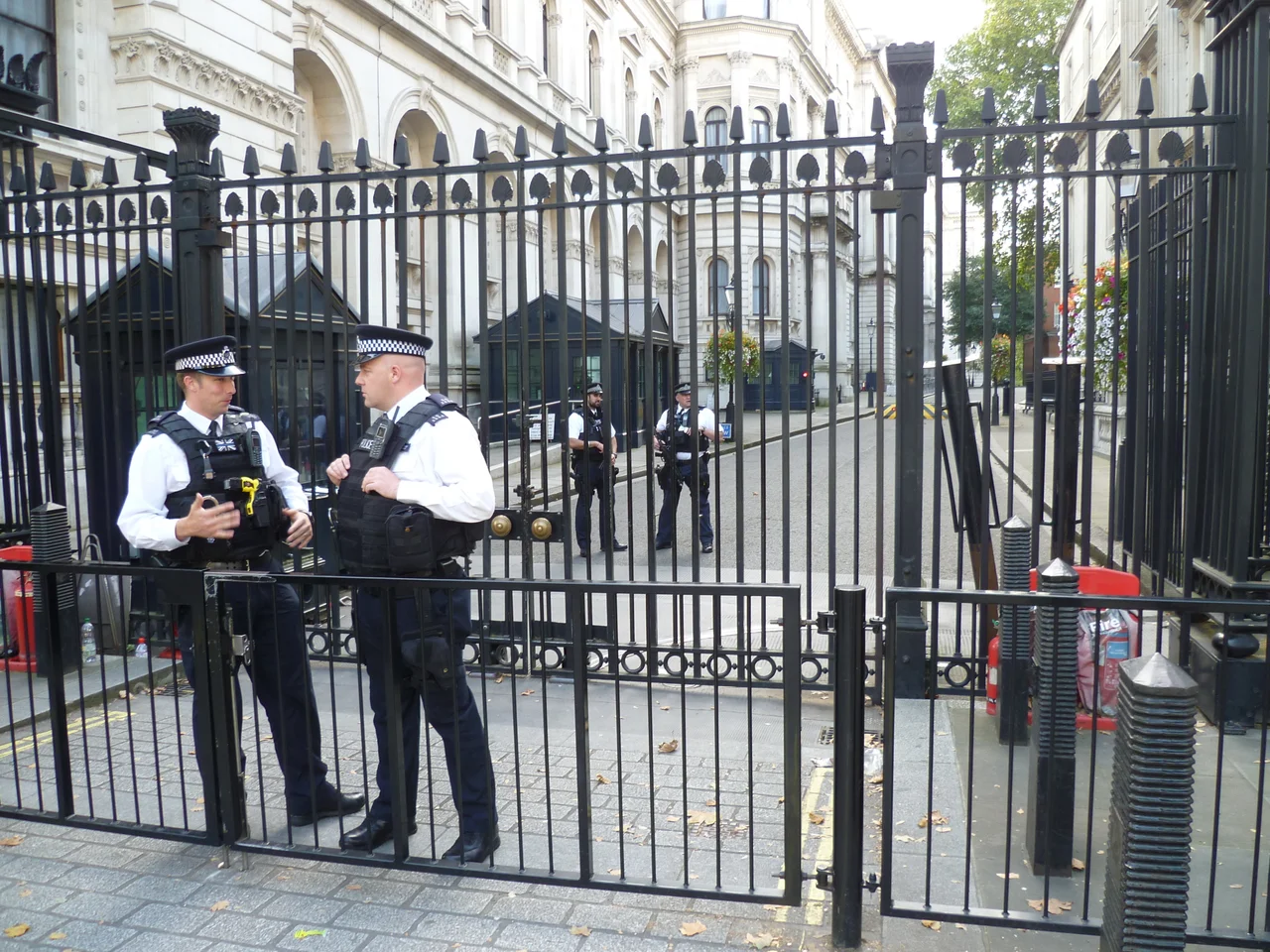
John Major temporarily moved to Admiralty House while the bomb damage to Number 10's back wall and garden was repaired. The repairs were comparatively minor, mostly cosmetic. The political consequences were not. Within months, the Downing Street security regime had been transformed: permanent guardhouses appeared at both ends of the street, and the ironwork gates that now separate Downing Street from the public on Whitehall were installed, marking the end of the long era when ordinary people could walk past the front door of Number 10 on their way to Trafalgar Square. The IRA campaign continued for another seven years before the Good Friday Agreement of 1998 finally created a political framework that could end it. The cabinet that ducked under the table that morning kept governing. Major went on to win the 1992 general election. The lawn at the back of Number 10 was reseeded, and a 1991 photograph of the crater is one of the few visible reminders that an army once tried to kill a British government by firing artillery at a kitchen garden.
From the Air
10 Downing Street sits at 51.5036 N, 0.1281 W in Whitehall, central London, about half a mile north of the River Thames and roughly equidistant from Trafalgar Square (a few hundred yards north) and the Houses of Parliament (a few hundred yards south). The mortar launch site was at the junction of Horse Guards Avenue and Whitehall, about 200 yards east of Number 10. From the air, look for the distinctive long axis of Whitehall running north-south through Westminster, with the Cenotaph as a landmark mid-street. Nearest airports: London City (EGLC) about 7 nm east, London Heathrow (EGLL) about 14 nm west. The area is permanently restricted airspace; private flights cannot transit at low altitude.
Nearby Stories
- Battle of Britain, Northfleet 1.1 km away
- Bayham Old Abbey 5.4 km away
- Catharine Macaulay 6.4 km away
- Hatfield rail crash 8.8 km away
- Chequers 8.9 km away
- Chelmsford Cathedral 10 km away
- Queen Victoria Hospital 13 km away
- Fishbourne Roman Palace 36 km away