
Dudley
Dud Dudley was the illegitimate son of a sixteenth-century English baron, and around 1620 he became the first person in Europe known to have smelted iron with coke instead of charcoal. He did the work in the family's ironworks just outside the town that shared his surname. The Royalist defeats of the Civil War scattered his patents and his furnaces; he died in 1684, his discovery officially forgotten. Then, in 1709, a man named Abraham Darby - descended from Dud Dudley's sister Jane - tried the same trick at Coalbrookdale and made it work commercially. Darby is the name in every textbook. Dud Dudley is mostly a footnote. Both of them began their work in the same Black Country town that the borough council now markets, accurately enough, as the capital of the region.
Dudda's Clearing
The name comes from Old English: Duddan Leah, meaning Dudda's clearing. The Domesday Book of 1086 lists it as Dudelei in the Hundred of Clent in Worcestershire, a medium-sized manor held by William Fitz-Ansculf, whose father Ansculf de Picquigny had built Dudley Castle on the limestone ridge in 1070. The castle controlled the Barony of Dudley, with estates in eleven counties. In 1138 King Stephen attacked the town after the baron supported Empress Matilda's claim during the civil war known as the Anarchy. The siege failed but the campaign weakened the family. Through the medieval period the market grew on coal, iron, and limestone, the three resources that the geology underneath the town had stacked up for the taking. Working iron and mining coal were practised here by the thirteenth century - centuries before the Industrial Revolution officially started elsewhere.
The Worst Town in England to Live In
By the mid-nineteenth century Dudley was a national health emergency. The Health Inspector William Lee wrote in his official report: 'In no other part of England and Wales is the work of human extermination effected in so short a time as in Dudley.' Cholera, typhus, lung disease, industrial injuries - the death rate among coal miners and iron-workers and their families exceeded almost anywhere else in the country. The report forced the installation of clean water and sewage systems. It led, eventually, to slum clearance and council housing. The Industrial Revolution that had made Dudley prosperous had also made it lethal, and the survivors built the institutions that fixed it: hospitals, libraries, working-men's clubs, the Mechanics' Institute that became Dudley College of Technology. By 1888 Dudley was a county borough; in 1889 it was its own parliamentary constituency. The town that William Lee had called a place of human extermination was, by then, a place that elected its own MPs.
A Zoo Built Into a Castle
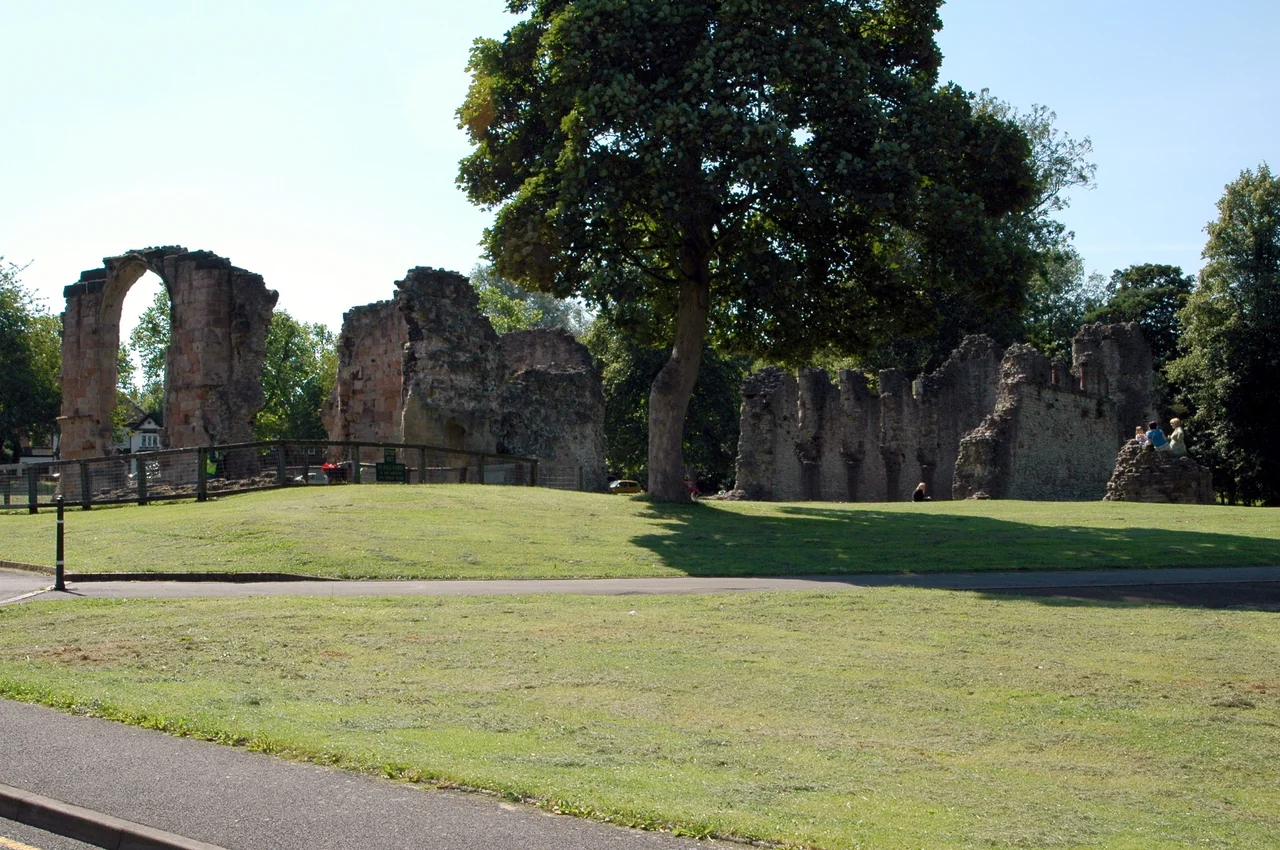
In 1937 the Earl of Dudley opened a zoo inside the grounds of Dudley Castle, with buildings designed by the modernist architect Berthold Lubetkin. Lubetkin had fled the Soviet Union, designed the famous Penguin Pool at London Zoo, and was about to design Highpoint One. The Dudley Zoo houses the largest collection of Tecton buildings - the modernist firm Lubetkin founded - anywhere in the world. The opening day in 1937 drew an estimated 250,000 visitors. The castle ruins above the cages are Grade I listed, the only Grade I listing in the town. Dud Dudley would not have recognised the zoo. He would probably have recognised the castle, though by his time it had already been besieged twice by Parliamentarians during the Civil War and demolished by government order after the Royalist surrender. The ruins he left are the ruins still there.
Merry Hill and the Empty Shops
In 1985 the developers of Merry Hill Shopping Centre, two and a half miles outside the town, secured Enterprise Zone status from the government, which gave them substantial tax breaks. Construction proceeded between 1985 and 1990. The new centre's gravitational pull was immediate. By 1989 Sainsbury's had left Dudley town centre. By 1990 British Home Stores and Marks and Spencer had followed. By 1992 C&A was gone, Littlewoods had gone in 1990. Dudley's market share in retail dropped 70 percent in five years. The 2008 financial crisis finished off most of what was left. Beatties closed in January 2010 as the last department store. By 2012 nearly a third of the town's shop units were vacant - the highest rate in England for a centre of its size. In 2014 a study named Dudley the worst place to shop in the UK. The council called the survey unfair. The shops did not return.
The People Dudley Sent Into the World
Dudley exports talent at a rate disproportionate to its population. James Whale, the horror director who made Frankenstein, The Old Dark House, The Invisible Man, and Bride of Frankenstein, was born here in 1889. Sir Cedric Hardwicke, the stage and film actor, in nearby Lye in 1893. Sir Maurice Wilkes, who built the EDSAC computer at Cambridge in 1949 and effectively launched British computer science, in 1913. Ian Messiter, who created Just a Minute for BBC Radio 4. Duncan Edwards, who died at Munich. Lenny Henry, born in 1958 to Jamaican parents who had come to Dudley in the late 1950s as part of the Windrush-era migration that the town used to fill its postwar labour shortage. Norman Pace of Hale and Pace. Jason Bonham, drummer and son of John Bonham. The list runs on through Tyler Bate the wrestler, Reanne Evans the snooker champion, Dorothy Round who won Wimbledon women's singles in 1934 and 1937. The town that gave the world coke-smelted iron also keeps quietly turning out the people who run British culture.
A Tram Returns
Dudley lost its railway station to the Beeching cuts in 1964 and its tram lines to Midland Red buses in 1930 and 1939. Now, after eighty-five years, trams are coming back. Construction began in 2021 on a West Midlands Metro extension running from Wednesbury to Brierley Hill via Dudley town centre, due to begin operation in August 2026, more than two years behind the original schedule. A new bus and tram interchange is part of the first phase opening. The first phase will connect Dudley to Edgbaston Village in Birmingham city centre and to Wolverhampton railway station. The construction has dragged on, as such things do in England. The expectation in the town centre is cautious; promises of regeneration have been made before, and Merry Hill is still the centre of regional retail. But the trams, when they run, will mark the first new public transport link to Dudley in over half a century. A market town since the Middle Ages, an industrial pioneer in the seventeenth century, hollowed out in the late twentieth, hoping in the twenty-first to find again something like the centrality it used to have.
From the Air
Dudley sits at roughly 52.51 degrees north, 2.09 degrees west, in the West Midlands six miles southeast of Wolverhampton and eight miles northwest of Birmingham. From cruising altitude in clear conditions, look for the ruined keep of Dudley Castle on the limestone ridge above the town - a Grade I listed medieval landmark - and the nearby Wren's Nest Hill nature reserve immediately northwest. Birmingham Airport (EGBB) lies about thirteen miles east-southeast; Wolverhampton Halfpenny Green (EGBO) is about nine miles west. Best viewing altitudes are 2,000 to 4,000 feet for the town and castle together.
Nearby Stories
- Shepshed 8.5 km away
- Battle of Evesham 11 km away
- Hixon rail crash 12 km away
- Battle of Cropredy Bridge 12 km away
- Wenlock Priory 15 km away
- RAF Shawbury 16 km away
- Market Bosworth 17 km away