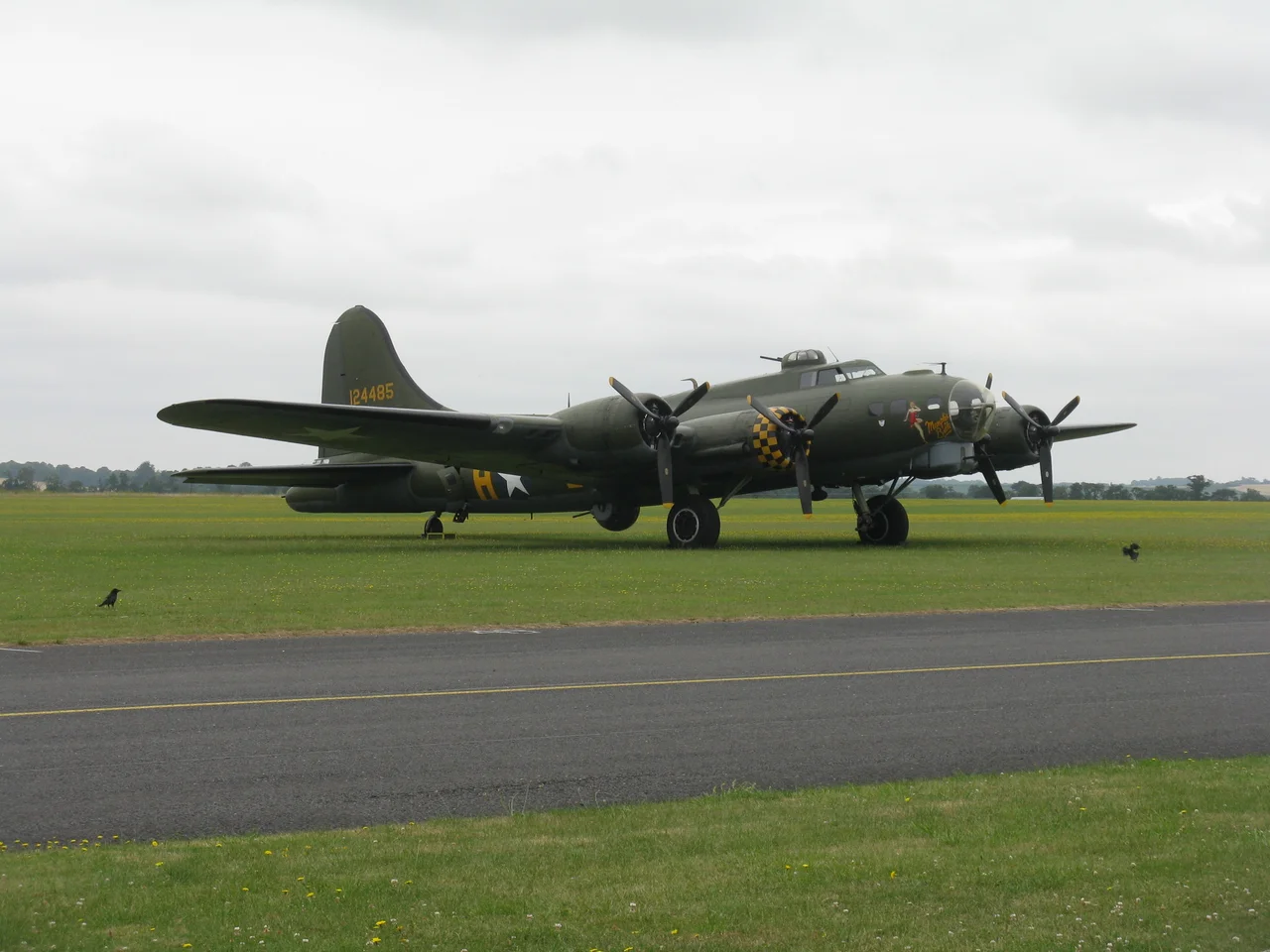

Duxford Aerodrome
On 15 September 1940, the day that became known as Battle of Britain Day, sixty Spitfires and Hurricanes scrambled twice from Duxford and nearby Fowlmere to intercept Luftwaffe formations attacking London. They were among the pilots and aircraft that turned the tide. The threat of German invasion passed. And the airfield that helped make that possible — a patch of Cambridgeshire countryside that had first been used for military flying in 1917 — is now owned by the Imperial War Museum and hosts one of the world's great collections of vintage aircraft. You can still take off from the runway if you want to. Concorde could not, by the time the museum shortened the strip in 1977 to accommodate a new motorway.
Before the Battle
Military use of the land around Duxford began at the Army Manoeuvres of 1912, but formal airfield construction started only in October 1917, as the First World War entered its final year. The first units arrived in March 1918, including members of the American Expeditionary Forces. The airfield's character was shaped in those early months: a training ground for pilots who would go on to face combat. In 1936, a young Flight Lieutenant named Frank Whittle, then studying at Cambridge University, flew regularly from Duxford as a member of the Cambridge University Air Squadron. Whittle would go on to develop the jet turbine. In August 1938, No. 19 Squadron became the first RAF unit to receive the new Supermarine Spitfire — the third production aircraft off the line, K9789, was formally presented at Duxford by Supermarine's chief test pilot Jeffrey Quill.
The Battle of Britain
By June 1940, Germany had overrun Belgium, the Netherlands, and France, and the invasion of Britain appeared imminent. Duxford was placed on high alert as the southernmost station of 12 Group, responsible for defending the Midlands and East Anglia. Squadrons of Czechoslovak and Polish pilots — men who had escaped the German conquest of their own countries and made their way to Britain to keep fighting — flew alongside British airmen from Duxford's grass runways. On 9 September, Duxford's squadrons intercepted and turned back a large force of German bombers. On 15 September they scrambled twice to repel Luftwaffe attacks on London. RAF Fighter Command prevailed. The 'Big Wing' tactic, championed by Douglas Bader, remained controversial among strategists, but Duxford's operational contribution to the Battle of Britain was unambiguous.
The Americans Arrive
After the last RAF units withdrew, Duxford was officially transferred to the United States Eighth Air Force on 15 June 1943. The 78th Fighter Group arrived in April 1943, re-equipped with P-47 Thunderbolts — their aircraft identifiable by a black-and-white chequerboard pattern — and later converted to P-51 Mustangs in December 1944. From Duxford, the 78th flew escort missions for B-17 Flying Fortresses and B-24 Liberators hitting industrial targets, submarine yards, and V-weapon sites across continental Europe. They supported the Normandy landings in June 1944, fought through the Battle of the Bulge, and received two Distinguished Unit Citations — one for Operation Market Garden, one for a devastating raid on Luftwaffe airfields near Prague in April 1945. The group was inactivated in October 1945 and sailed home.
Museum of the Air
The RAF made its last operational flight from Duxford in July 1961, a Gloster Javelin departing into the sky and not returning. The aerodrome sat abandoned. In 1977, Cambridgeshire County Council joined with the Imperial War Museum and the Duxford Aviation Society to buy the runway and begin restoration. Also that year, the main runway was shortened by about 1,200 feet — to accommodate the M11 motorway that now runs along the airfield's eastern edge. The last aircraft to land before the shortening was Concorde prototype G-AXDN, now on display inside the Airspace hangar. Today, the Imperial War Museum Duxford and the American Air Museum hold aircraft ranging from First World War biplanes to Cold War jets. Private operators maintain and fly historic military aircraft from the site. The field holds a CAA Ordinary Licence and is open to general aviation — you can still land here, in the shadow of the history.
From the Air
Duxford Aerodrome (EGSU) is located at 52.0908°N, 0.1319°E, 8 nautical miles south of Cambridge. The grass and concrete runways are visible from altitude against the flat Cambridgeshire farmland. The M11 motorway forms the eastern boundary of the airfield. Cambridge City Airport (EGSC) is approximately 16 km to the north. London Stansted Airport (EGSS) is approximately 30 km to the south. Elevation at the airfield is approximately 125 feet above mean sea level. PPR required for visiting pilots; the aerodrome is not licensed for night use.
Nearby Stories
- Kentwell Hall 2.5 km away
- Thetford Hoard 2.8 km away
- King's Ely 6 km away
- Bedford 7.8 km away
- White House Farm murders 13 km away
- Oundle 14 km away
- Hemel Hempstead 14 km away
- North Weald Airfield 15 km away