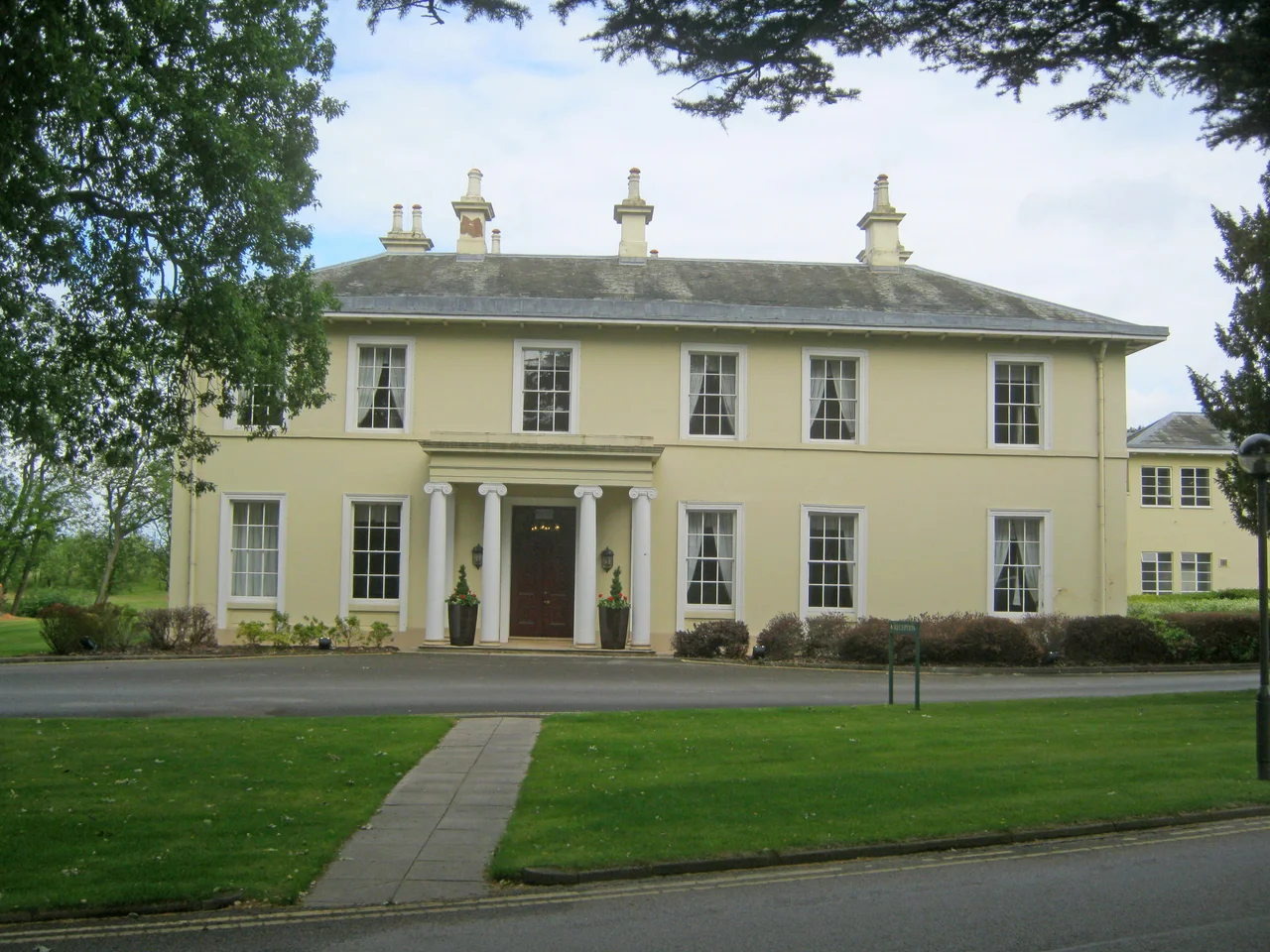

Eastwood, Nottinghamshire
Within easy walking distance of the house at 8a Victoria Street, Eastwood, where D. H. Lawrence was born on 11 September 1885, there were ten coal mines. His father went down one of them. The overwhelming majority of the local men did. Most of the women were housewives. Most of the boys were impatient to reach fourteen, the age at which the pit would take them too. This was the place Lawrence walked away from and could not stop writing about — a Nottinghamshire mining town on the Derbyshire border, eight miles northwest of Nottingham, where the coal seams ran almost to the surface and the smoke from the chimneys settled over the gardens.
A Clearing in Sherwood
Eastwood is one of those English place-names that argues with itself. Est is Old English for east; Þveit is Old Norse for a cleared meadow, the same word that turns up in dozens of northern village names as 'thwaite'. So Eastwood probably means eastern clearing — most likely a Viking-age opening in Sherwood Forest, the woodland that once covered the whole of central Nottinghamshire. The Domesday Book records the settlement in 1086. For most of the next seven hundred years it was a hill village with a parish church and a few hundred farmers. What changed everything was what lay underneath: extensive, easily mined coal deposits in the Erewash valley, and rich agricultural land above them.
Ten Pits in Walking Distance
The Industrial Revolution arrived early. By 1880 the population had reached 4,500, with the steepest density growth of any parish in Nottinghamshire. The Midland Railway was formed at Eastwood. Framework knitting, corn milling, brick making, brewing, and rope making all set up shop alongside the collieries. The Buildings — three hundred terraced miners' cottages laid out as a grid in the 1860s — were saved from demolition in the 1970s and won a European habitat award in 1977 for the way they had been preserved as a working community. They stand now as one of the most complete pieces of Victorian mining-village architecture in the country.
The Collier's Son
Arthur Lawrence was a coal miner. His wife Lydia had been a schoolteacher before her marriage, and read books, and wanted something else for her four sons. The youngest, David Herbert, attended Greasley Beauvale Primary School, won a county council scholarship to Nottingham High School, and worked briefly as a clerk and then a teacher before publishing his first novel, The White Peacock, in 1911. He set it against the industrialised countryside he had walked through as a boy. Beauvale Priory, the ruined Carthusian monastery in the woods outside Eastwood, turns up in the novel as the Abbey. The cottage where he was born is now a museum. The library on Wellington Place keeps his desk and the headstone from his original grave in Vence, in the south of France, where he died of tuberculosis in 1930 at the age of forty-four.
The Tram That Frightened Him
Lawrence grew up not just inside an industrial landscape but on top of one. He lived next to the tram line that ran between Nottingham, Ripley, and Heanor in the early 1900s, and described it as the most dangerous tram service in England — a rattling open-top service that lurched along the high ridges between the colliery towns. He wrote about the men coming off shift in the evening, the wives waiting at the gates with babies, the small particular fear of a pit accident in the night. He could see the choices laid out clearly: down the pit at fourteen, marry a collier, raise more colliers. He chose the unreasonable third option of becoming a writer of difficult fiction in a country that did not yet know what to do with him. By the time he died, Sons and Lovers and Women in Love and Lady Chatterley's Lover had each made him famous and most of them had got him into legal trouble.
After the Coal
In the 1951 census, 11.5% of Eastwood worked in mining and quarrying. By 2001, that figure had fallen to 0.15%. Eastwood Hall, once the headquarters of British Coal, is now a hotel and conference centre. The slag heap visible from the town is called locally dot hill, dirt hill, or — with characteristic East Midlands directness — bum hill, and has been reclaimed and replanted. Colliers' Wood, the 14-hectare community woodland on the old pit land, hosts mute swans and skylarks and lesser redpolls in habitats designed to fit them. The Eastwood Collieries' Male Voice Choir, founded in 1919, is one of the oldest surviving colliery choirs in the United Kingdom and still meets weekly. The pit wheels are gone. The choir still sings.
From the Air
53.018 N, 1.306 W, eight miles NW of Nottingham city centre on the Derbyshire border. View from 1,500 to 3,500 ft AGL; the town sits along a north-west to south-east ridge above the Erewash valley. East Midlands (EGNX) is 8 nm S; Nottingham/Tollerton (EGBN) is 13 nm SE. The M1 motorway (junctions 26 and 27) runs along the eastern flank of the town.
Nearby Stories
- Rutland Railway Museum 2.4 km away
- Welbeck Abbey 5 km away
- Lichfield rail crash 6 km away
- Peveril Castle 8.8 km away
- Grantham Rail Accident 11 km away
- Croxden Abbey 11 km away
- RAF Scampton 11 km away
- Leicester Abbey 11 km away