_(March_2022)_(2).jpg)
Edgbaston
Two of the strangest buildings in Birmingham stand within a few hundred yards of each other in Edgbaston. Perrott's Folly is a seven-storey tower built in 1758 by a landowner reportedly so grief-stricken at the loss of his wife that he raised a Gothic spire to look toward her grave. The Edgbaston Waterworks Tower, completed in 1870, climbs almost as high in dark brick a short walk away. A schoolboy named Ronald Tolkien grew up in their shadow in the 1890s. Decades later he wrote a story set in a place called Gondor, where two great towers guarded a kingdom under siege. Anyone who has stood on Waterworks Road at dusk and looked from one tower to the other has a fair idea where the picture came from.
Where the trees begin
Edgbaston earned its reputation in the 19th century, when the Gough-Calthorpe family controlled most of the manor and refused to let factories or warehouses be built on it. Birmingham was becoming the workshop of the world, but the Calthorpes kept their estate genteel, leasing villas to industrialists who wanted to live somewhere quieter than the soot and clatter of central Brum. The Domesday Book recorded the place as Celboldistane in the Hundred of Coleshill in 1086, a corruption of an Old English name meaning village of a man called Ecgbald, bold sword. By 1841 the area held sixteen and a half thousand people, drawn by the trees and the absence of furnaces. Locals took to calling Edgbaston the place where the trees begin, a phrase that still gets quoted by estate agents.
A neighbourhood of firsts
For a suburb of just over forty thousand people, Edgbaston has accumulated a surprising number of beginnings. The Edgbaston Archery and Lawn Tennis Society, founded in 1860, is the oldest lawn tennis club in the world. Warwickshire County Cricket Club opened Edgbaston Cricket Ground in 1886 on a meadow leased from the Calthorpes. The Birmingham Botanical Gardens, designed by the great Victorian landscaper J. C. Loudon, opened in 1832. The Birmingham Oratory on Hagley Road was built in 1907 as a memorial to John Henry Newman, the Anglican who became a Catholic cardinal and is now a saint. He had founded the English Oratory community there in 1849, and his rooms can still be visited. The University of Birmingham campus, dominated by Joseph Chamberlain's vast clock tower, fills the southern end of the ward.
The Tolkien connection
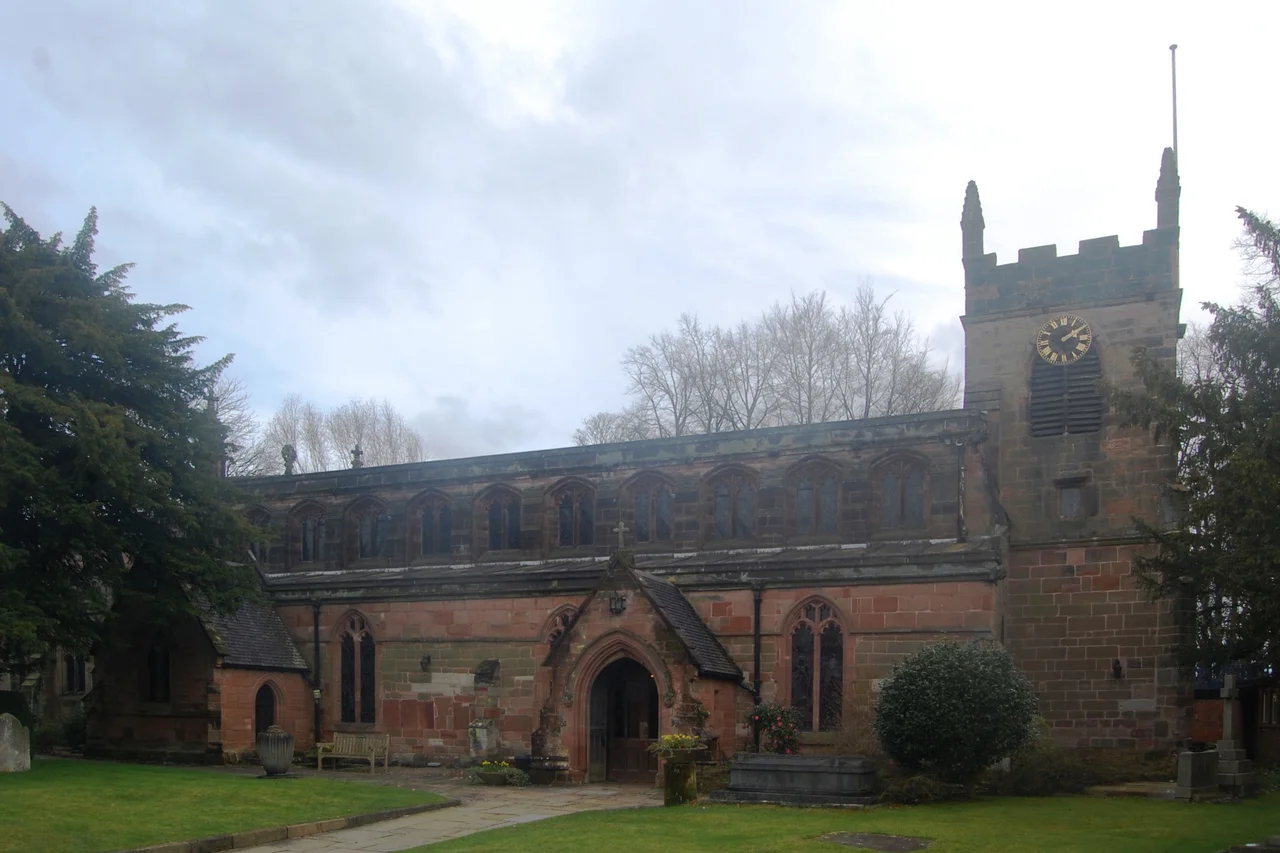
J. R. R. Tolkien lived in Edgbaston twice as a boy. After his father died in South Africa and his mother brought the family back to England, they settled briefly in nearby Sarehole, but Edgbaston became his home through his teens. Perrott's Folly and the Waterworks Tower were part of his daily landscape, and biographers have long argued that the pair lodged in his imagination and emerged as Minas Tirith and Orthanc. Tolkien himself was characteristically slippery about literary debts, but he never denied the connection. The towers are still there. So is Edgbaston Old Church, where the rest of his Birmingham was visible through Victorian smoke, and so are several of the houses he knew. Edgbaston Reservoir, once known as Rotton Park Reservoir, sits a short walk away and feeds the Birmingham Canal Navigations.
Prime ministers, suffragettes, and a chess grandmaster
Edgbaston's blue plaques read like a roll-call of Victorian and 20th-century Birmingham. Neville Chamberlain was born here in a house called Southborne and later represented the area in Parliament. His half-brother Sir Austen Chamberlain, the Nobel Peace Prize laureate, lived at 83 Harborne Road. Sir Rowland Hill, who invented the penny post, lived at 146 Hagley Road. Cardinal Newman lived at the Oratory until his death. The militant suffragette Bertha Ryland and the social worker and suffragette Mary Neal both came from Edgbaston, as did Catherine Osler, a quieter campaigner who held her organising meetings at Fairfield on the corner of Hagley and Norfolk Roads. Pink Floyd's drummer Nick Mason and Tony Miles, England's first chess grandmaster, were born in the suburb, and the novelist Barbara Cartland grew up at 31 Augustus Road. Edgbaston Hall, once home to Dr William Withering, the physician who introduced digitalis from foxgloves into Western medicine, still stands.
From the Air
Edgbaston covers a broad swath of south-west Birmingham, centred near 52.458 degrees north, 1.919 degrees west. From the air, the suburb is dark with trees compared to the surrounding city, with the green oval of the cricket ground, the Botanical Gardens, and the silver disc of Edgbaston Reservoir visible at 2,000 to 4,000 feet. Joseph Chamberlain's clock tower on the University of Birmingham campus is the most prominent landmark, visible for miles. Birmingham International (EGBB) lies fourteen kilometres east, Coventry (EGBE) twenty-six kilometres south-east, and Wolverhampton Halfpenny Green (EGBO) twenty-nine kilometres west. Low cloud is common from October to March; haze can soften visibility over the city in summer.
Nearby Stories
- Shepshed 8.5 km away
- Battle of Evesham 11 km away
- Hixon rail crash 12 km away
- Battle of Cropredy Bridge 12 km away
- Wenlock Priory 15 km away
- RAF Shawbury 16 km away
- Market Bosworth 17 km away