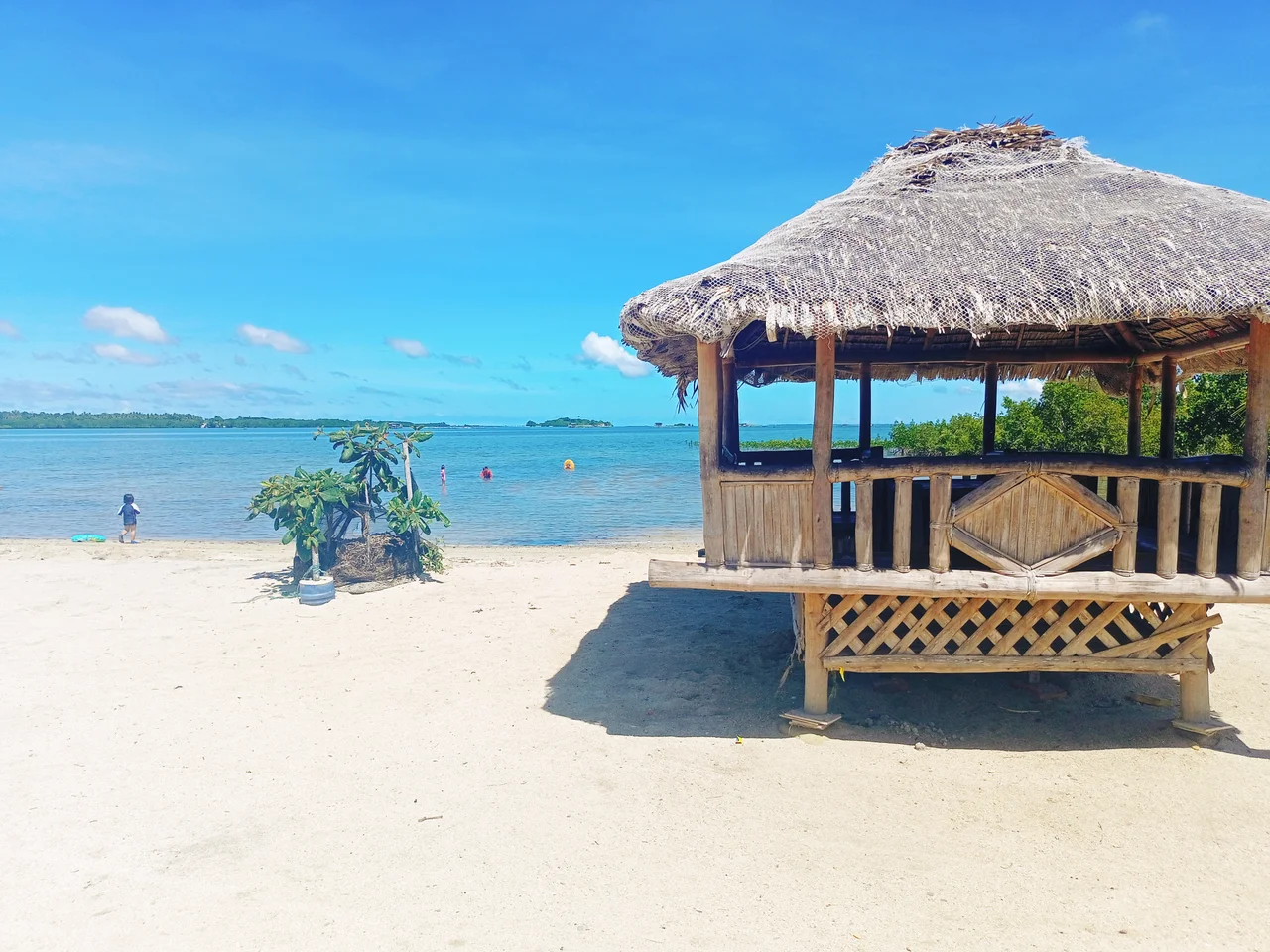

Escalante, Negros Occidental
In 1975, a team of anthropology students from Silliman University dug into a coastal barangay called Japitan, facing the Tanon Strait and the island of Cebu. What they pulled from nine graves changed the timeline of human habitation on Negros: celadon plates and bowls, stoneware jars, a Sung Dynasty jarlet dating to between 960 and 1280 AD, gold beads, iron daggers, and a hunting knife with an ivory bone handle. Carbon-14 dating placed the burials in the twelfth century. The city of Escalante had been a crossroads of trade and culture for nearly a thousand years before Spain gave it a name.
From Manlambus to Escalante
The original settlement was called Manlambus, a Visayan term meaning to strike with a club, a reference to the fishing technique used in its coastal waters. When Spanish colonial authorities formalized the town, they renamed it after a hometown in Spain favored by the governor and parish priest. On November 28, 1856, Governor-General Manuel Crespo issued the decree that separated Escalante and the neighboring town of Saravia from their mother town of Silay. The Parish of Escalante was established on May 22, 1860, under Father Cipriano Navarro, who noted that his parishioners across fourteen coastal barrios spoke Cebuano, having migrated from the neighboring island, with the exception of those from Barrio Marianas, who spoke Hiligaynon and had come from the district of Iloilo.
Sugar, Telegraph, and Mail Boats
By the late nineteenth century, Escalante had become a surprisingly connected place. As early as 1871, the town served as a major link between Bacolod and Cebu through a mail route that ran from Bacolod to Escalante, then across the strait to Tuburan and Toledo on the Cebu side. By 1875, the town's gobernadorcillo, Emerenciano Amante, was operating his own mail boat on a weekly schedule between Toledo and Escalante. A telegraphic station arrived in 1894, with the cable extending to Tuburan, Cebu, and becoming operational by October 1897. Meanwhile, sugar was reshaping the economy. The tobacco monopoly that had constrained agriculture gave way to sugarcane cultivation, and by 1891, Escalante operated six steam-engine sugar mills, thirty-six horse-powered mills, and eleven powered by carabao, with approximately 848 hectares planted to cane.
A Coast That Sustains
Escalante faces the Tanon Strait from the northeastern tip of Negros Occidental, 95 kilometers from the provincial capital of Bacolod and 49 kilometers from San Carlos City. Its coastal environment holds one of the richest diversities of plant life in the province. Two surviving ecosystems define the shoreline: mangrove forests that occupy the landward portions and seagrass beds that thrive in the shallow nearshore waters. Remnants of a third ecosystem, coral reef, survive in degraded form. The marine waters remain warm throughout the year, except during the cool early mornings of December through February. For a city whose original name described a method of fishing, the coast has never stopped defining daily life.
Prodigies and Players
Escalante's most unexpected exports are its people. Alekhine Nouri, born in 2005, became the youngest chess FIDE Master in the world at the age of seven. James Yap, born in 1982, became one of the most celebrated professional basketball players in the Philippines. Christian Bables, born in 1992, established himself as a film and television actor. For a city of modest size on the far side of Negros Island, the concentration of nationally recognized talent suggests something about the place itself, a community small enough that individual excellence becomes visible and encouraged, but connected enough to the wider world that its prodigies find stages beyond the strait.
143 Years to Cityhood
Escalante existed as a municipality for 143 years before its conversion to a city. The process began in 1998 when Mayor Santiago G. Barcelona Jr. initiated the legislative campaign. Congressman Julio A. Ledesma IV filed House Bill No. 1514 to create the City of Escalante. President Joseph Estrada's moratorium on new city conversions that same year did not derail the effort, and the bill eventually succeeded. Today Escalante's 21 barangays house a population that has grown at an average rate of 1.63 percent per year, with the 2010 census recording just over 93,000 residents. The city's pace remains deliberate, shaped by the rhythms of sugarcane harvests, fishing seasons, and the slow accumulation of history along a coastline that has drawn people since the twelfth century.
From the Air
Located at 10.83N, 123.50E on the northeastern coast of Negros Occidental, facing the Tanon Strait and the island of Cebu. The nearest major airport is Bacolod-Silay International Airport (RPVB), approximately 95 km to the southwest. From the air, the city is visible on the coastal plain with the mountainous interior of Negros rising behind it. The Tanon Strait is a prominent water channel separating Negros from Cebu, easily identifiable from cruising altitude.
Nearby Stories
- Bernardino Jalandoni Museum 7.7 km away
- Cebu 43 km away
- Republic of Negros 61 km away
- Gigantes Islands 64 km away
- Jalaur Dam 65 km away
- November 2023 Mindanao Earthquake 561 km away
- Sinkyo Maru 613 km away
- Sinking of MV Sewol 2582 km away