
Eurovision Song Contest 1993
A BBC journalist called it a cowshed. Nicholas Witchell, looking around at the Green Glens Arena that May, could not quite believe what RTE had done. Eurovision had always belonged to capitals. Dublin had hosted it three times before. Now, somehow, the contest had been awarded to Millstreet, a town of fifteen hundred people tucked into the foothills of the Boggeragh Mountains, served by a single railway station that needed an extension just to handle the trains rolling in. The cowshed remark followed the contest for years. So did the answer Millstreet gave back: 187 points, a Waterford Crystal trophy, and the smallest place ever to stage Eurovision.
How Millstreet Got the Contest
The story turns on a wealthy local businessman named Noel C. Duggan, who owned the Green Glens Arena and used it mostly for equestrian events. When RTE's Director-General Joe Barry began scouting locations outside Dublin in the months after Linda Martin's 1992 win with Why Me?, Duggan made him an offer no capital could match: take the arena for free, and bring along a pledge of further support from local businesses. Production teams toured rural Ireland through the autumn. Dublin and Galway both made their pitches. So did Cork city. But Millstreet had the arena, and the arena had the height, the floor area, and the willingness. Most decisively, it had a town that wanted Eurovision the way few places had ever wanted it. The vote went to Millstreet, and the rest of Ireland began trying to understand where, exactly, that was.
The Largest Outside Broadcast RTE Had Ever Tried
Once the choice was made, the work began. The arena floor had to be dug out to give the stage and lighting rigs enough clearance. Phone lines had to be installed by the hundreds. The railway line at Millstreet station required an extension to handle the influx of delegations, press, and crew. Twenty-five countries were coming, the largest field in Eurovision history, because the collapse of the Eastern Bloc had cracked the contest open. Bosnia and Herzegovina, Croatia, and Slovenia had qualified through a contest in Ljubljana that April called Kvalifikacija za Millstreet. The stage, designed by Alan Farquharson, was the biggest ever built for Eurovision: twenty-five hundred square feet of translucent material lit from below, with a mirror image triangle suspended above and a slanted backdrop that bent the perspective. The contest logo, drawn by Conor Cassidy, was adapted from the coat of arms of County Cork.
In Your Eyes
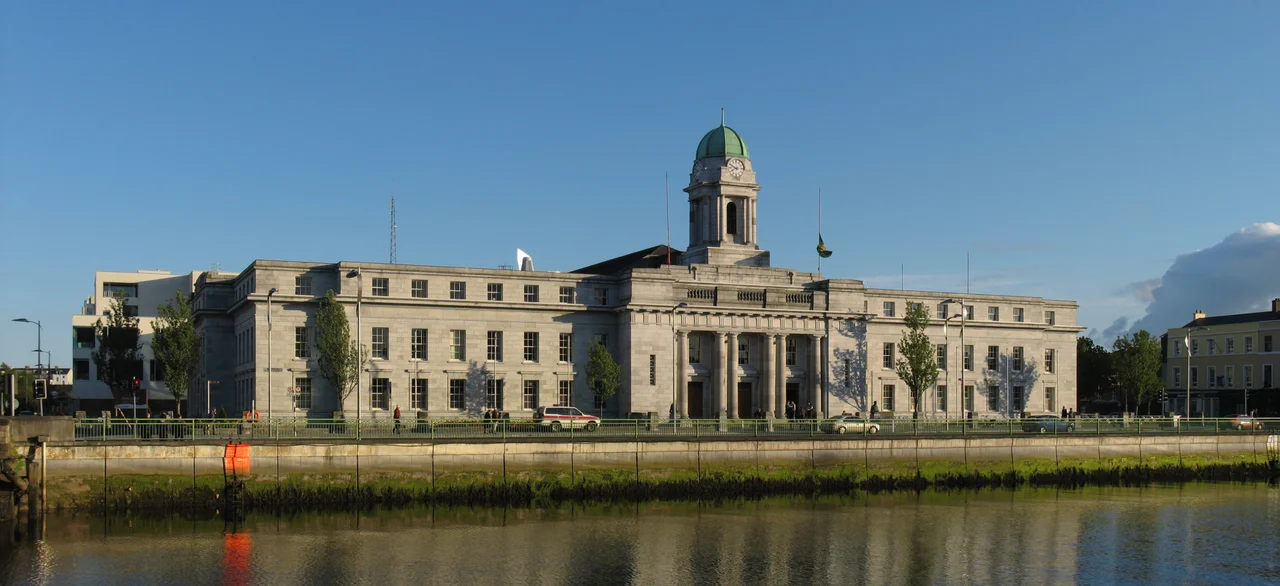
The night came on Saturday, 15 May, at eight o'clock Irish time. Gary Keenan's opening sequence drew on Celtic mythology, set to traditional music and the uilleann pipes of Davy Spillane. Fionnuala Sweeney walked onto the stage through a hidden doorway in the centre of the set. Three hours and one minute later, Niamh Kavanagh stood in front of the world, having sung In Your Eyes, a Jimmy Walsh composition, into something close to inevitability. Ireland received the maximum twelve points from seven countries and finished with 187 points to the United Kingdom's 164. It was the country's fifth Eurovision win, matching the all-time record, and the second in a row. Delegations had been billeted across Killarney and Cork city. The reception at City Hall was hosted by the Minister for Arts, Culture and the Gaeltacht, a Mayo poet named Michael D. Higgins who would, two decades later, become President of Ireland.
A Town That Held the Record
Three to five hundred million people watched. The arena held about thirty-five hundred, which was more than twice the population of Millstreet itself. The cowshed line had not aged well. Harrogate, an English town of seventy thousand, had previously been the smallest place to host Eurovision. Millstreet beat that comfortably, and more than three decades later it still holds the record. Duggan's instinct had been right: the prestige stuck. Millstreet has remained the town that pulled off Eurovision, the place that proved a contest the size of the European Union could be staged in a parish with a single petrol station, if the will to do it was strong enough. Niamh Kavanagh sang at the Eurovision interval in 2010, in Oslo, almost twenty years on. The Waterford Crystal trophy still travels.
From the Air
Millstreet sits at 52.06 degrees north, 9.06 degrees west, in the Boggeragh foothills of north County Cork. The nearest commercial airport is Cork International (EICK), about 60 km southeast; Kerry (EIKY) lies roughly 50 km southwest, and Shannon (EINN) is about 100 km north. Look for the broad valley of the River Blackwater opening east toward Mallow, with Mushera Mountain rising to the south. The Green Glens Arena is a low equestrian complex on the eastern edge of town.
Nearby Stories
- Aghadoe Cathedral 6.3 km away
- Ringaskiddy 8.7 km away
- Newcastle West 9.7 km away
- Carrignacurra Castle 9.7 km away
- Fermoy 11 km away
- Uragh Stone Circle 15 km away
- Siege of Carrigafoyle Castle 21 km away
- Tipperary (town) 21 km away