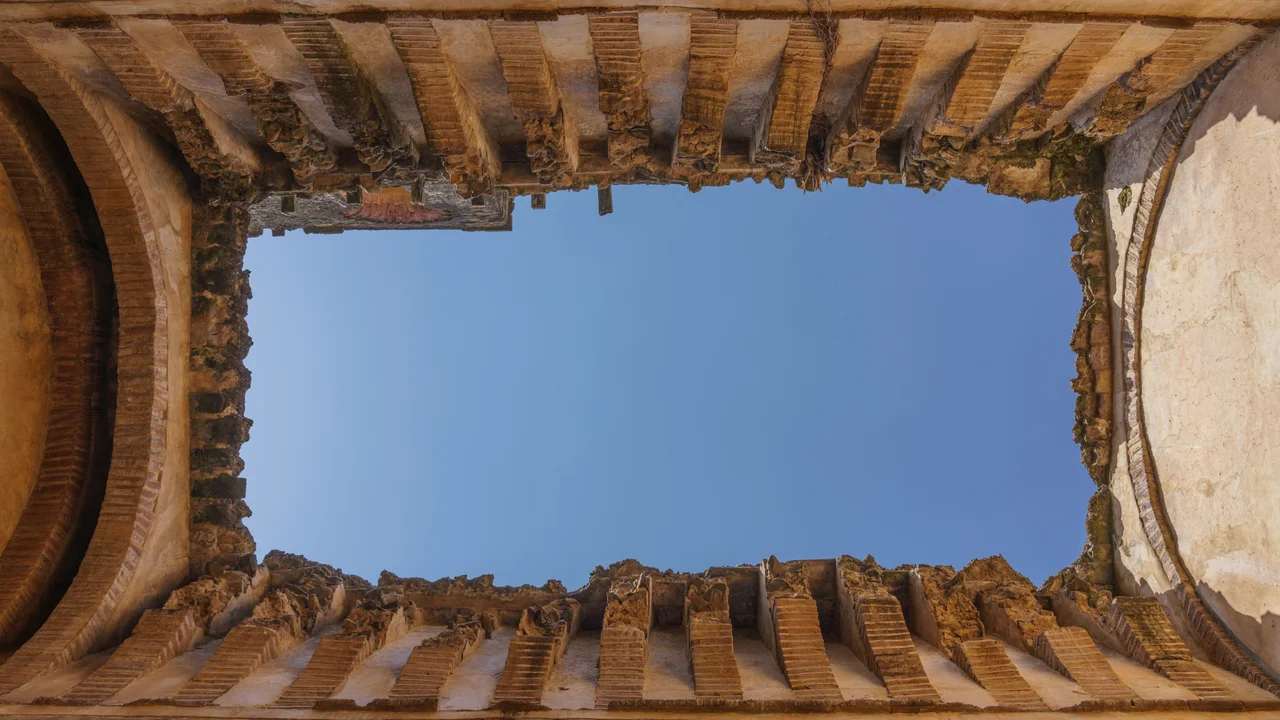

Fasil Ghebbi
Walk through the Fit Ber gate and the first castle rises ahead of you in brown basalt. Fasilides built it in the 1630s, and nearly four centuries later its fortress walls still look impossibly permanent - round towers at the corners, arched windows staring down over the 70,000 square meters of the royal enclosure. Behind it, more castles: Iyasu's palace, Dawit's Hall, Bakaffa's banqueting hall, Empress Mentewab's residence. This is Fasil Ghebbi, and it is the reason Gondar was called the 'Camelot of Africa' - a comparison both lazy and not entirely wrong.
The Emperor Who Stopped Moving
For centuries, Ethiopian emperors had governed from mobile camps, pitching tents wherever the season and the politics required. In 1636, Fasilides broke the tradition. He chose a site 35 kilometers north of Lake Tana, in Kemant country where caravans from Sudan and the Red Sea naturally converged, and declared it his permanent capital. Gondar was the result. Within the new city, Fasilides ordered construction of an imposing castle to anchor his court. A Yemeni ambassador named Hassan ibn Ahmad al-Haymi visited in 1648, when the castle was still new, and called it 'one of marvellous of buildings, worthy of admiration, and the most beautiful of outstanding wonders.' Beds from Constantinople lined the interior. Mattresses from India glittered with gold thread. Sofas were inlaid with jewels. Swords from the Funj Sultanate of Sennar had hilts of pure gold.
An Indian Architect in the Highlands
According to al-Haymi, the castle's designer was an Indian master named Abdal Kerim who had already built a palace for Emperor Susenyos I at Danqaz. The unusual provenance of the architect helps explain the building's hybrid style: Portuguese arches, Indian carved details, Arab geometric ornament, all stacked into a distinctly Ethiopian silhouette. Subsequent emperors brought in their own builders. Yohannes I's library and chancellery, and Iyasu I's palace - described by contemporaries as 'more beautiful than the house of Solomon' - were built by an Ethiopian architect named Walda Giyorgis, described in the royal chronicles as 'able, intelligent, and of good renown.' The manual labor throughout came largely from the local Beta Israel, the Ethiopian Jewish community, particularly the Kayla clan, who worked as masons, metalsmiths, and carpenters - skilled trades the general population looked down on but could not have built the castles without.
Twelve Gates and a House of Song
The compound is enclosed by a 900-meter curtain wall pierced by twelve named gates. Fit Ber, also called Jan Tekle Ber, opens onto Adababay, the marketplace where proclamations were read and criminals executed - now a quiet city park. Wember Ber is the Gate of the Judges. Tazkaro Ber is the Gate of Funeral Commemoration, whose bridge was destroyed during fighting in the reign of Iyasu II. Adenager Ber, the Gate of the Spinners, once connected by a wooden bridge to the weaver's quarter. Imbilta Ber is the Gate of the Musicians. Balderas Ber belonged to the Commander of the Cavalry. Each name contains a small slice of 17th-century court life. Inside, Dawit's Hall - often mistakenly translated 'House of Song' but more likely 'House of the Throne' - sits roofless now, its single long hall open to sky and birds. An Armenian courtier named Khoja Murad, visiting in 1696, reported at least 80 royal children running around the enclosure 'indiscriminately.'
Ruin and Restoration
A great many of the original buildings did not survive the centuries that followed. Earthquake damage, British shelling during the 1941 Battle of Gondar, internal fighting during the Zemene Mesafint - the Era of the Princes - all took pieces. By the early 20th century, Fasil Ghebbi was a half-ruined parkland visited mostly by goats. The Italian occupiers carried out some restoration in the late 1930s, partly for prestige and partly because they were repairing everything they could to make Italian East Africa look governable. After Ethiopia regained its independence, further conservation work followed. In 1979, UNESCO inscribed Fasil Ghebbi as a World Heritage Site, citing that it 'faithfully represents modern Ethiopian civilization at north of Lake Tana which appeared in the early 17th century and influenced Ethiopian architecture for many years.'
What the Stones Still Do
Fasil Ghebbi sits in the middle of a living city. You cross from a neighborhood of tin-roofed shops and tej bars, buy a ticket at the modest visitor center, and step onto ground where Fasilides' grandchildren played, where emperors were crowned and deposed, where pilgrims once gathered for Timkat - Ethiopian Orthodox Epiphany - which is still celebrated in Gondar each January with thousands of worshippers processing from Fasilides' Bath back into the city. The site includes more than just the main compound. Fasilides' Bath, a stone pavilion beside the Qaha River, is flooded once a year for the Timkat ceremony. The Qusquam complex, built by Empress Mentewab across town, is a ruined palace and church many consider the most beautiful in Ethiopia. Walking through any of them, you are walking through the oldest continuously Christian royal architecture in sub-Saharan Africa.
From the Air
Fasil Ghebbi is in Gondar at 12.61°N, 37.47°E, elevation 2,133 meters. Gondar Airport (ICAO: HAGN, IATA: GDQ, also called Atse Tewodros Airport) is 18 km south of the city. From cruising altitude, Gondar appears as a clustered urban area on the northern edge of the Ethiopian Plateau, about 35 km north of Lake Tana's shimmering expanse (Africa's 9th-largest lake and source of the Blue Nile). The Simien Mountains rise dramatically to the northeast, with peaks above 4,500 meters. Best visibility October through May; summer brings strong afternoon thunderstorms.
Nearby Stories
- Lake Tana 40 km away
- Simien National Park 40 km away
- Debre Tabor 51 km away
- Welkait 103 km away
- Simien Mountains 115 km away
- Northern front, East Africa, 1940 160 km away
- Eritrea-Sudan Border 192 km away
- Gimbi Massacre 371 km away