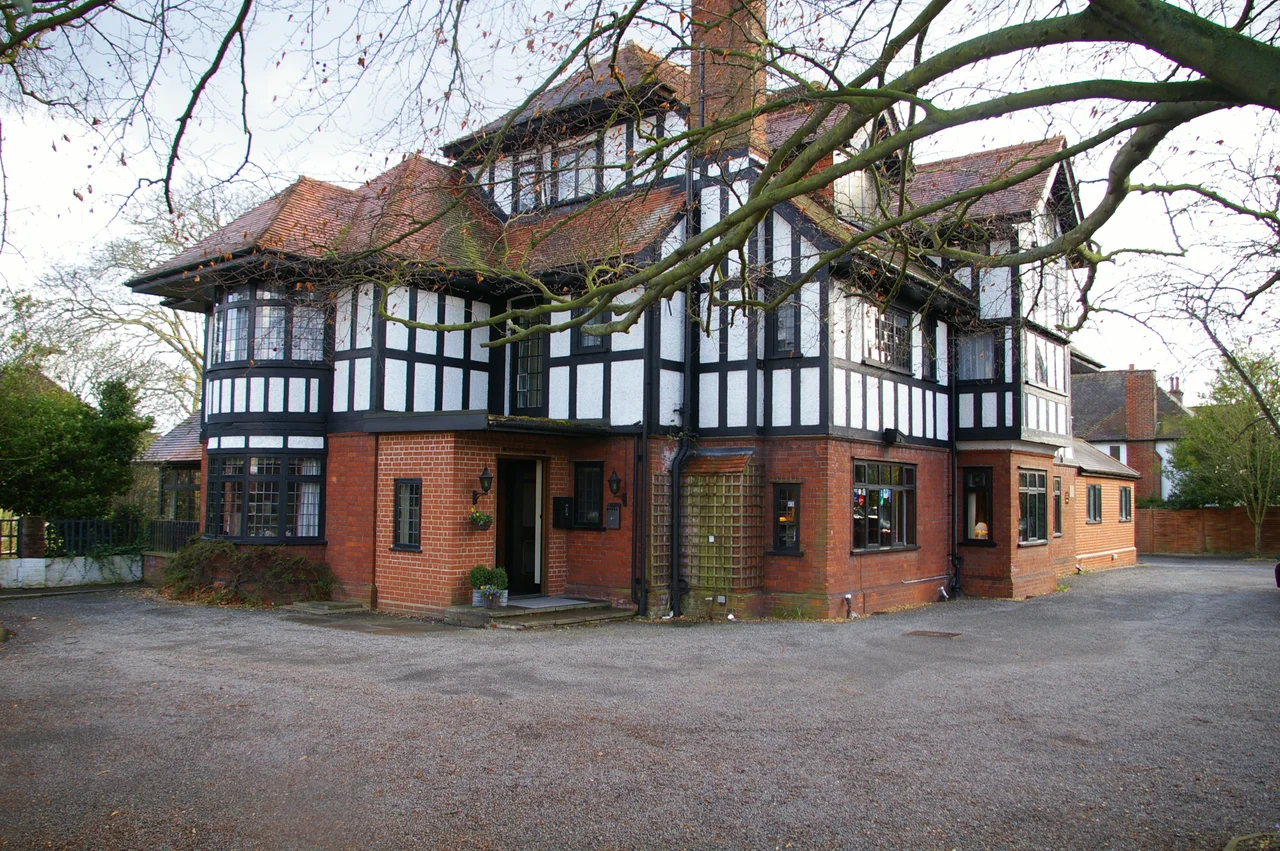

Fitzwilliam College, Cambridge
In 1869, Cambridge University did something quietly radical. It opened its doors to men who were not members of any college — students who had the minds for Cambridge but not the money. They gathered in a house on Trumpington Street, opposite the Fitzwilliam Museum, and called themselves Non-Collegiate Students. The name was unglamorous. The ambition was not. From that modest beginning, Fitzwilliam College grew into one of Cambridge's most distinctive institutions — modern in its buildings, traditional in its rigor, and fiercely proud of having been founded not on wealth, but on merit.
The Radical Opening
The idea behind Fitzwilliam was almost subversive for its time. In Victorian Cambridge, belonging to a college was expensive — membership fees, room charges, formal dinners. Many academically gifted students simply couldn't afford it. The new Non-Collegiate Students Board offered an alternative: join the university without joining a college. Students would have a censor to supervise them, sit the same examinations as everyone else, and compete for the same degrees and scholarships. They even gave themselves a name. At a meeting of the Non-Collegiate Amalgamation Club in 1887, the students voted to call their institution Fitzwilliam — after the museum across the street, itself named for Richard FitzWilliam, 7th Viscount FitzWilliam, whose art collection and fortune had endowed it. The arms borrowed from the Fitzwilliam family were technically unauthorized, but the university acquiesced. The name stuck.
A College Among Hills
For nearly a century, Fitzwilliam existed without a true campus. When the possibility of closure arose after World War II, former students raised an outcry. The college had produced Nobel laureates and heads of state — it had earned a permanent place. A new site was acquired at Castle Hill, a mile north of the city center, and a building program began in 1963 under architect Sir Denys Lasdun, the same man who later designed the National Theatre in London. The result was a campus unlike anything else in Cambridge: modernist concrete courts set within the grounds of an 1813 regency manor called the Grove, where Emma Darwin once lived after her husband Charles died, lining the interior with William Morris wallpaper. The juxtaposition is striking — Lasdun's bold geometric buildings surrounding a graceful Georgian house that once belonged to the family of the man who changed how we understand life itself.
Music, Quartets, and a Grammy
In 1968, four Cambridge undergraduates — two of them Fitzwilliam students — formed a string quartet in their rooms. They made their professional debut the following year at the Sheffield Arts Festival, graduated in 1971, and took up residence at the University of York. Just a year later, Dmitri Shostakovich personally acquainted himself with them and asked them to premiere several of his string quartets. They went on to become the first ensemble to perform and record all fifteen of Shostakovich's string quartets; the composer himself called them his preferred performers. The Fitzwilliam Quartet won the Gramophone Award for Chamber Music in 1977. Meanwhile, back in his college room in 1968, a student named Nick Drake recorded a four-track demo that landed him a record deal with Island Records. These stories sit at the heart of Fitzwilliam's identity: a place where serious talent finds its way.
The Weight of What Was Found Below
In 2008, an archaeological dig on the college site uncovered the remains of a 3,500-year-old farmstead — the earliest clear evidence of settlement in Cambridge. The discovery was almost fitting. Beneath the modern concrete courts, medieval wine cellars of an earlier foundation still exist. The college motto, Ex antiquis et novissimis optima — the best of the old and the new — seems almost prophetic in this light. Fitzwilliam has always been a place where layers accumulate: the farmstead beneath the regency garden beneath the modernist campus, the non-collegiate students beneath the Nobel laureates. Six of those laureates came from Fitzwilliam, including Albert Szent-Györgyi, who discovered vitamin C, and Joseph Stiglitz, chief economist of the World Bank. Three heads of state studied here. In 2010, more Fitzwilliam graduates sat in Parliament than graduates of any other Cambridge college.
Still Growing
Fitzwilliam's newest campus addition — the Olisa Library, completed in 2009 — rises high enough to be visible for some distance across Cambridge's flat landscape, perched at the top of one of the city's few hills. The library's tower is sometimes said to be the highest point in the city. Ken Olisa, an alumnus, donated £1.4 million to it in 2011, and it now bears his name. The college has also built a boathouse on the River Cam, a new auditorium for concerts and performances, and added graduate housing. Its mascot, a goat — students call themselves Fitzbillys or Billygoats — appears on the boathouse facade and in various corners of the grounds. The college that once had no buildings, no courts, and no fellows' garden now has all of these, and more. What it has never lost is the thing that started it: the conviction that a Cambridge education should belong to those who can rise to it, not just those who can afford it.
From the Air
Fitzwilliam College lies in northwestern Cambridge at approximately 52.214°N, 0.105°E. From the air, look for the modernist concrete courts of Storey's Way north of the historic city center. The Olisa Library tower is one of the highest points in Cambridge's flat terrain. Cambridge City Airport (EGSC) is about 3 miles to the east. Approach from the east at 2,000 feet for the best view of the full college grounds against the Cambridgeshire fens.
Nearby Stories
- Walden Abbey 4.6 km away
- Bury St Edmunds 5.5 km away
- RAF North Pickenham 8.1 km away
- Ampthill 9.5 km away
- RAF Wittering 10 km away
- Murder of Una Crown 12 km away
- Colchester Community Stadium 18 km away
- John Bunyan Museum 19 km away