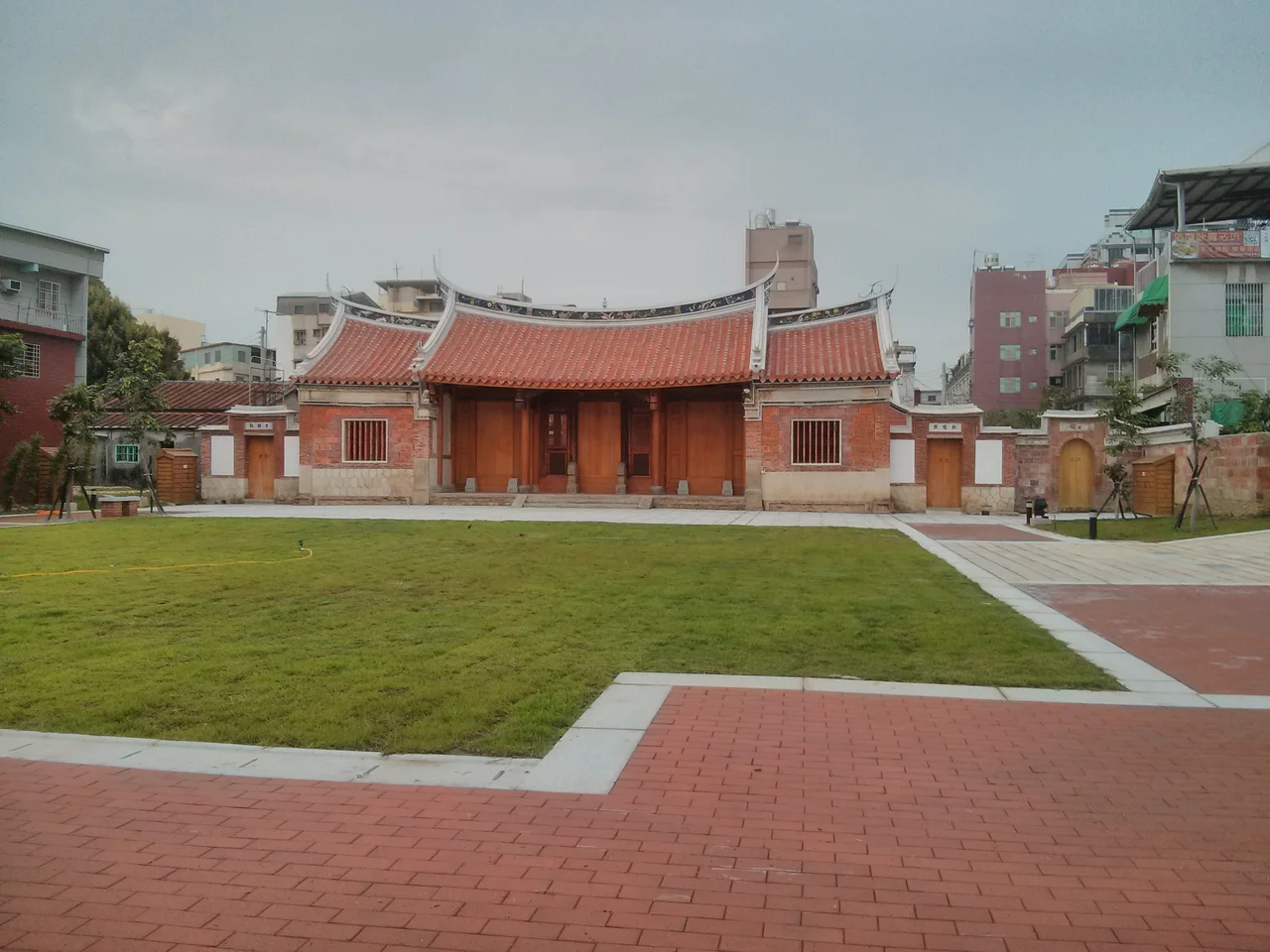

Fongyi Tutorial Academy
In 1814, a young man studying at the Fongyi Tutorial Academy in Fengshan was not just memorizing texts — he was preparing for the most consequential test of his life. The imperial examinations that the academy was built to serve were the engine of social mobility in Qing Dynasty China: pass them well enough, and a farmer's son could become a magistrate. The academy that scholar Jhang Ting-cing built under the reign of the Jiaqing Emperor to host that preparation still stands, 210 years later, as the largest preserved Confucian academy in Taiwan.
The Weight of an Examination
Tutorial academies were not schools in the modern sense. They were intensive preparation institutions for the imperial examination system, the elaborate series of tests that governed entry into the Qing bureaucracy. Passing required mastery of classical texts, calligraphy, and essay composition in highly formalized styles — years of study compressed into a sequence of grueling examinations held in provincial examination halls. The Fongyi Academy gave candidates in southern Taiwan a place to study under qualified scholars, to compete against peers, and to prepare for examinations that could, if they succeeded, lift them and their families into an entirely different world. The stakes were real. The pressure was constant. The academy existed precisely because the examination system demanded this kind of dedicated preparation, and Fengshan — the seat of Fengshan County, which then governed much of southern Taiwan — was the natural center for it.
A Complex Built to Last
Jhang Ting-cing did not build a modest schoolroom. The Fongyi Academy encompasses 37 rooms arranged in traditional Chinese architectural style. Wooden carvings ornament the structures. Stone drums flank the screen wall at the entrance — a classic feature of formal Chinese architecture that signals the gravity of what lies within. At the center of the complex, an altar is dedicated to three deities associated with learning and literary success: Wenchang Buddha, Kuichang Buddha, and Changsheng Buddha, patron figures for everyone who ever bent over a text hoping that effort would translate into examination success. The garden fills out the compound with statuary, and tablets inscribed with phrases about proper conduct line the halls. The whole ensemble communicates a coherent message: excellence here is not merely academic. It is moral.
Wall Paintings Hidden for Two Centuries
Restoration work that began after 2007 — when the Kaohsiung City Government acquired the land title and committed a budget of NT$100 million to the effort — yielded a remarkable discovery. Beneath layers of later paint and plaster, restorers uncovered 200-year-old wall paintings that had been sealed inside the building since the early nineteenth century. The paintings are a direct link to the academy's founding era, a visual record of what the building contained and communicated when it was new. Their survival is partly a matter of luck, partly a testament to the quality of the original construction. The building had been designated a level 3 historical monument on November 13, 1985, but the restoration effort that followed the city's 2007 acquisition transformed it from a protected relic into an actively preserved and interpreted cultural site. The wall paintings, once hidden, are now among the academy's most significant artifacts.
Fengshan's Enduring Landmark
Today the Fongyi Tutorial Academy stands in Fengshan District, accessible by a short walk east from Fongshan Station on the Kaohsiung Metro — a juxtaposition that could seem incongruous, the ancient academy steps from a modern rail stop, but that actually underscores how central Fengshan remains to Kaohsiung's identity. The city has grown enormously around the academy; the academy has not moved. Visitors who walk its courtyard pass through the same space where scholars paced before examinations, where teachers corrected essays, where the anxiety and ambition of Qing Dynasty Taiwan concentrated itself into classical prose. The imperial examination system that gave the academy its purpose ended in 1905. The building it required, and the intellectual seriousness it embodied, remain.
From the Air
The Fongyi Tutorial Academy is located at approximately 22.627°N, 120.359°E in Fengshan District, about 8 kilometers northeast of Kaohsiung International Airport (RCKH). From the air at around 1,500 feet, Fengshan's dense urban grid is visible east of central Kaohsiung; the academy sits within the older southern portion of the district near Fongshan Station. The Love River and Kaohsiung Harbor provide orientation to the west. Morning light from the northeast catches the courtyard and rooflines of traditional structures well. Approach from the south along the harbor before turning northeast toward Fengshan for the best visual orientation.
Nearby Stories
- Taimali 7.2 km away
- Meinong East Gate Tower 15 km away
- Kunci Temple 20 km away
- Checheng Fu'an Temple 42 km away
- Dongji Island 49 km away
- Orchid Island 69 km away
- South Penghu Marine National Park 77 km away
- Hong Kong 12 549 km away