
Fordlândia
In 1927, Henry Ford looked at a map of the Amazon and saw a problem he thought he could solve. The British and Dutch, through plantations in Southeast Asia, controlled the world's rubber supply. Winston Churchill had proposed a rubber cartel that would raise prices. Ford made cars, cars needed tires, tires needed rubber, and Ford did not intend to be at the mercy of foreign suppliers. The solution seemed obvious. Rubber trees were native to the Amazon. He would buy land, plant rubber, and grow his own. The Brazilian government gave him 2.5 million acres, about 10,100 square kilometers, of land along the Tapajós River in exchange for 9% of the profits, to be split between the federal government and local municipalities. Ford broke ground in 1928 and named the settlement Fordlândia. Six years later, the Ford Motor Company abandoned it.
A Midwestern Town in the Jungle
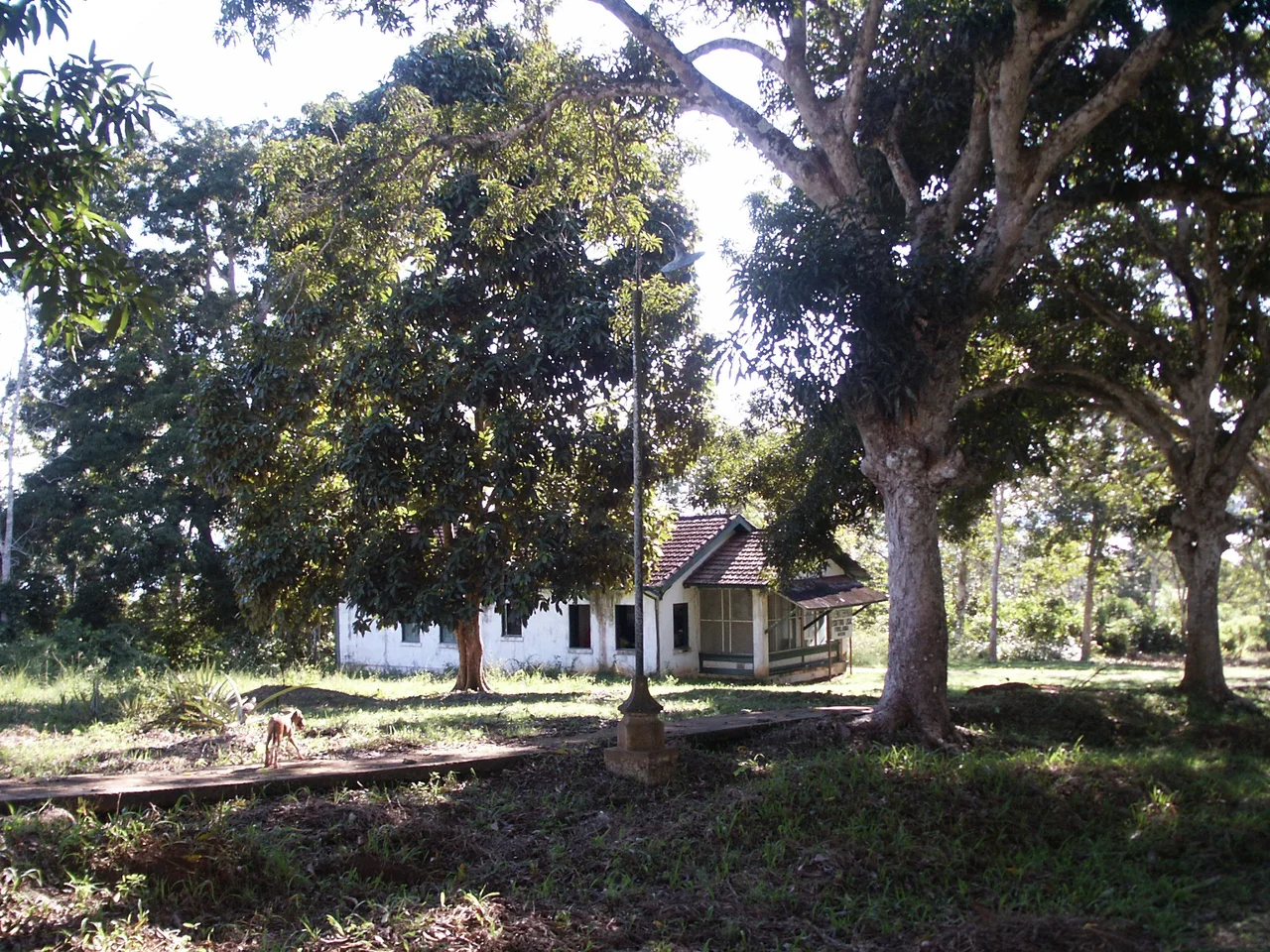
Ford's vision for Fordlândia was not merely industrial. He was a social reformer in his own idiosyncratic way, a man who believed American virtues could be packaged and installed anywhere. The plan was to build a prefabricated Midwest-style town for 10,000 people, with distinct zones for Brazilian workers and the American managers who lived in the so-called American Village. Significant infrastructure went up fast. American-style clapboard houses, a hospital, a school, a swimming pool, a golf course, tennis courts, and a movie theater all appeared in the middle of primary rainforest. Offices opened in Belém and Manaus to recruit workers from surrounding states with the promise of good wages. People came. What they found was not quite what they had been promised.
The Soil and the Trees
Nothing about the site was suitable for a rubber plantation. The land Ford had bought was hilly, rocky, and infertile. Worse, none of the managers he sent had expertise in tropical agriculture. In the wild, rubber trees protect themselves from disease by growing scattered, often next to other species that offer shade and support. Ford's planners, thinking like Midwestern farmers, planted them in dense monocultures, neat rows packed close together. The results were catastrophic. South American leaf blight, the fungus Microcyclus ulei, swept through the plantation. Saúva ants stripped seedlings. Lace bugs and red spiders and leaf caterpillars found in the dense plantings exactly the concentrated food source they had been waiting for. The trees that did not die produced poorly.
The People Ford Did Not Understand
The human problems were harder. Workers were required to keep American hours, meaning labor through the middle of the tropical day, and Paraense men who had grown up in the Amazon refused, often simply walking away, out of entirely sensible concern about heatstroke and dehydration. The food they were given was the food Ford preferred: hamburgers, canned food, meals that had no relationship to what people in Pará actually ate. Housing was American-style clapboard, hot and badly suited to the climate. The overall imposition of American social discipline on a Brazilian workforce was resented from the start. The resentment built. In 1930 it exploded in what later became known as the Quebra-Panelas — the Breaking of the Pans — a workers' uprising that destroyed the cafeteria equipment and forced Ford to accept a more traditional Brazilian diet, among other concessions. The hierarchy stayed. The tension did not leave.
Failure and Sale
The Brazilian federal government was suspicious of foreign investment in the northern Amazon and offered no particular help. The project was relocated upriver to Belterra in 1934, about 40 kilometers south of Santarém, where conditions were somewhat better. Fordlândia was effectively abandoned. Even Belterra struggled. Then, in 1945, synthetic rubber production came online in industrial quantity, a wartime development of the American chemical industry. World demand for natural rubber collapsed almost overnight. Ford's investment opportunity, such as it had ever been, evaporated. That same year, Henry Ford's grandson Henry Ford II sold the entire property back to the Brazilian government for a loss of more than US$20 million, equivalent to several hundred million dollars today. Fordlândia had never produced a single automobile tire.
What Came After
Between the 1950s and the late 1970s, the Brazilian Ministry of Agriculture installed various facilities on the site, and the houses once used by Ford's rubber tappers were given to the Ministry's employees. Their descendants in some cases still live in them. When the federal program ended, the town emptied out again. By the 2000s, only about 90 people remained. The rebirth came quietly, as people looking for land simply moved in, claiming houses, putting down roots. Today Fordlândia is a district of Aveiro municipality, population around 3,000. The 45-meter water tower still stands. The abandoned swimming pool is still there. Writers and filmmakers keep coming: Greg Grandin's 2009 book, Jóhann Jóhannsson's 2008 album, Michael Palin's BBC documentary in 2012, Susana de Sousa Dias's Fordlandia Malaise in 2019. The town has become a permanent lesson, widely cited in discussions of other contemporary utopian city projects, about what happens when money and conviction arrive in a place without knowledge or humility.
From the Air
Fordlândia occupies the east bank of the Tapajós River in Pará at 3.8314°S, 55.4975°W, about 300 km south of Santarém. From altitude the town appears as a rectangular cleared zone in otherwise dense Amazon rainforest, with the geometric American grid still visible and the water tower prominent on the skyline. Nearest major airport is Santarém/Maestro Wilson Fonseca (SBSN), 300 km north. The Tapajós runs clear blackwater and appears distinctly dark from the air compared to the white-water Amazon to the north.
Nearby Stories
- Tapajos Hydroelectric Complex 76 km away
- Santarém 120 km away
- Amazonia National Park 128 km away
- Parintins 136 km away
- Santarém-Maestro Wilson Fonseca Airport 138 km away
- Terra do Meio Ecological Station 141 km away
- Sawre Muybu Indigenous Territory 165 km away
- Tapajós–Xingu moist forests 212 km away