
Former British Consulate at Takao
Robert Swinhoe arrived in Formosa in 1861 with the title of Vice-Consul and no consulate to work from. Britain had forced the Qing dynasty to open four Taiwanese ports to foreign trade under the 1860 Treaty of Peking, and someone had to represent the empire's commercial interests. Swinhoe, who would become better known as one of the great naturalists of the Victorian age, spent his first year operating out of Tamsui before moving south to Takau in 1864. The building that would eventually house his successors was not constructed until 1879, by which point Swinhoe had long since retired. But the consulate he helped establish on the hill above Takao Harbor outlasted the empire it served.
Bricks from Amoy
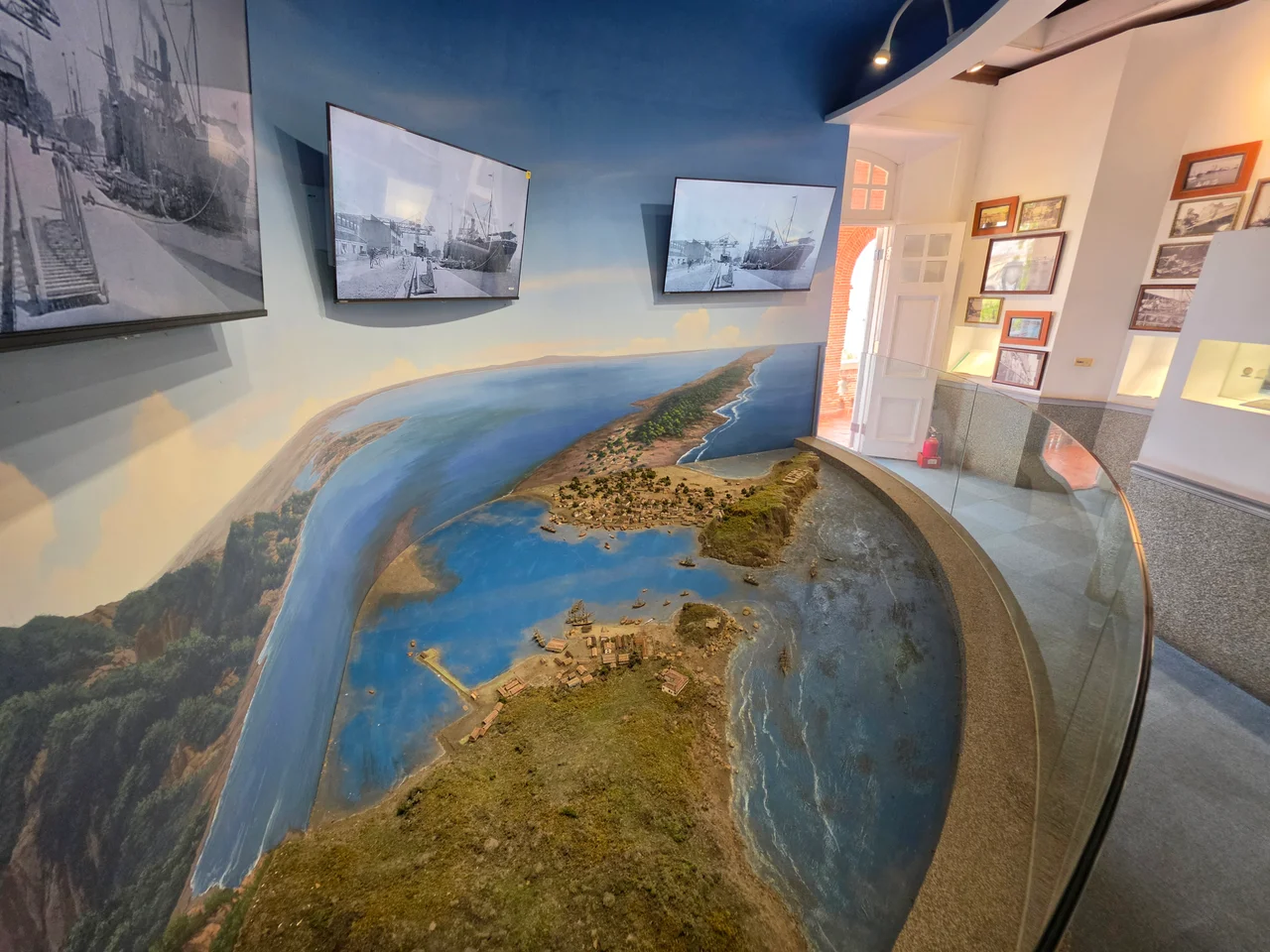
The consulate sits on the peak of Shaochuantou in what is now Gushan District, Kaohsiung, overlooking Sizihwan Bay and the Port of Kaohsiung. The firm McPhail and Company built it in 1879 using Chinese craftsmen, and the materials were shipped across the Taiwan Strait from the port city of Amoy, known today as Xiamen. The architecture is late Renaissance in style, built across two floors with arched colonnades that provide shade against the subtropical heat. It established a template for Western buildings in Taiwan, a technical and stylistic foundation that later structures would follow. The hilltop location was chosen for its commanding view of the harbor below, a practical consideration for a consulate whose primary concern was the flow of trade through a port that the British had compelled China to open barely five years earlier.
From Empire to Observatory
Swinhoe was appointed the first Consul General in Formosa in 1867, a post he held until his retirement in 1873. The consulate served British commercial interests through decades of geopolitical upheaval. When the Treaty of Shimonoseki ceded Taiwan to the Empire of Japan in 1895, the building carried on; the Triple Intervention by Russia, Germany, and France had little practical effect on British operations. That changed in 1909, when the Japanese colonial government asserted its authority over all foreign consulates on the island. The British consulate closed the following year. In 1931, the Japanese viceroy repurposed the building as an Ocean Observatory. During World War II, the walls were painted with white cement to camouflage the structure against American bombing raids, but the building saw no significant action. After Taiwan passed to the Republic of China in 1945, it became a Weather Bureau Observatory, a role it quietly fulfilled for the next forty-one years.
Restoration
In 1986, the Kaohsiung municipal government commissioned architect Li Chien Lang to restore the building as a museum for historical documents and cultural artifacts. It was declared a Second Class Historic Site the following year. The real transformation came in 2003, when the newly created Cultural Bureau of Kaohsiung appointed the Kingship Continental Hotel Group to complete the restoration and manage the property. An opening ceremony was held in September. The effort paid off quickly: in 2005, the former consulate received the prestigious Yuan-Yeh Award and recorded more than 400,000 visitors. The following year it hosted over one hundred artistic and cultural events, including the National Oil Painting Competition and National Photography Competition. In 2007, the United Nations Observatory Group visited, and the restoration of 312 oil paintings in and around the building was completed. Today the consulate serves as a cafe and tourist attraction, a place where visitors sip tea on the same hilltop where British diplomats once watched trading vessels navigate the harbor mouth.
What the Hill Remembers
The Former British Consulate at Takao is the oldest surviving Western-style building in Taiwan, and its history reads like a compressed timeline of the forces that shaped the island. Qing officials opened the port under duress. British merchants profited from the access. Japanese colonizers claimed the building and turned it into an observatory. Chinese Nationalists inherited it and used it to track the weather. Democratic Taiwan restored it as a cultural landmark. Each transition left the structure physically intact but changed what happened inside its walls. Walking through the arched colonnades and looking out over Sizihwan Bay, you see the same view that Swinhoe saw when he arrived as a young naturalist-diplomat in the 1860s: the harbor, the strait, the mountains behind the city. The building endures because it is beautiful, because it is well-built, and because every government that came to power in Kaohsiung found a reason to keep it standing.
From the Air
Coordinates: 22.619N, 120.267E, on a hilltop in Gushan District overlooking Sizihwan Bay and the Port of Kaohsiung. The red-brick building is visible on the green hillside above the harbor. Nearest major airport: RCKH (Kaohsiung International Airport), approximately 10 km south. Viewing altitude: 1,500-3,000 ft for the harbor and hilltop context. Accessible by foot from Sizihwan metro station.
Nearby Stories
- Taimali 7.2 km away
- Meinong East Gate Tower 15 km away
- Kunci Temple 20 km away
- Checheng Fu'an Temple 42 km away
- Dongji Island 49 km away
- Orchid Island 69 km away
- South Penghu Marine National Park 77 km away
- Hong Kong 12 549 km away