
Fota Wildlife Park
Walk through the gate at Fota and within a few minutes a ring-tailed lemur will probably stroll past your boots. The lemurs are not contained - they live on free-roaming islands and casually cross paths with visitors. So do the kangaroos and the maras. The giraffes browse mature grassland that stretches for hectares before any fence appears. Only the predators - the cheetahs, the Sumatran tigers, the Asiatic lions - are kept in enclosed habitats, for reasons that need no explanation. Opened in July 1983 by then-President Patrick Hillery, Fota Wildlife Park is Ireland's only zoo of any size outside Dublin, and it has spent more than forty years experimenting with what a zoo can be when the cages are mostly invisible.
The Idea, the Land, the Money
By the late 1970s Dublin Zoo had reached the limit of what it could do on its existing site. In 1979 the director proposed something new - a wildlife park, somewhere with land. University College, Cork had just acquired the Fota estate from Dorothy Bell, the last of the Smith-Barry family. UCC offered the land free under a licence agreement to the Zoological Society of Ireland, and the partnership that still runs Fota was formed. Fundraising committees were set up in Dublin and Cork. Almost all the money was raised by public subscription. The only grant came from Bord Failte, the tourist board, for the perimeter fence. The first animals arrived in late 1982. President Patrick Hillery opened the park in the summer of 1983. The model was deliberate: a charity, not-for-profit, funded by visitors and donors.
Why the Giraffes Have Room
The defining design choice at Fota was to let most animals roam. The African Savannah paddock alone covers a substantial fraction of the park's hundred acres - ostriches, Grant's zebras, scimitar-horned oryx and Rothschild's giraffes share mature grassland with no internal fences between them. The animals interact, compete, and behave more like their wild equivalents than caged zoo animals can. Ring-tailed lemurs and red-necked wallabies live on islands in the visitor paths. Kangaroos, mara and other small mammals roam quite freely within sections of the park. Cheetahs, tigers, rhinos and big cats need their own enclosures - safety overrides ideology. But where ideology can apply, it has.
Breeding for Endangered Species
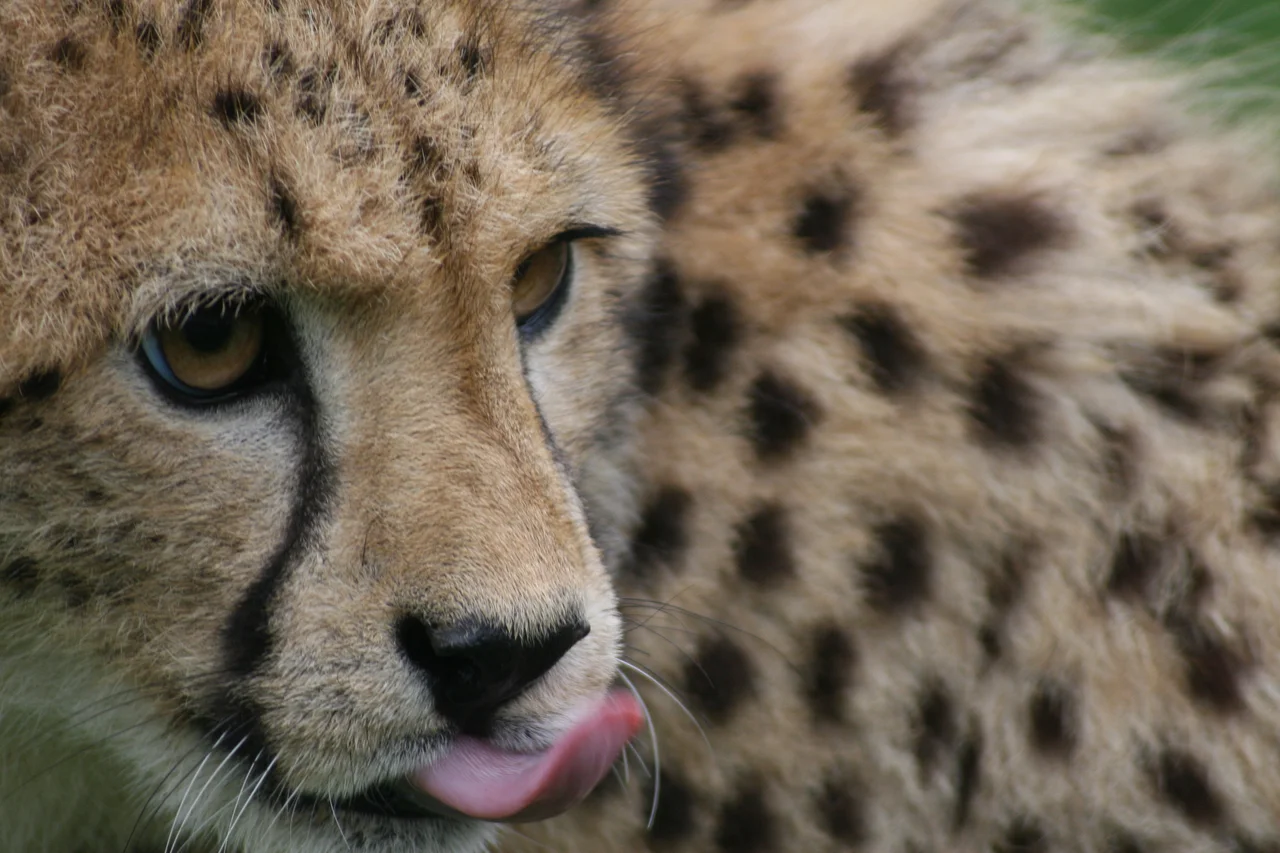
Many of Fota's residents are species under threat of extinction. The park runs the European Endangered Species Programme for the Sudan cheetah and the European Studbook for the Kafue lechwe and the Red lechwe. Animals bred at Fota travel to other zoos across Europe as part of carefully managed genetic networks designed to keep captive populations viable for the long term. The Asian Sanctuary, opened in 2015, expanded that work - 27 acres with habitats for Sumatran tigers, Indian rhinos, lion-tailed macaques and Asiatic lions, all critically threatened species. The Tropical House, opened in 2014, housed three reptile species, nine amphibians, 28 fish and 14 butterfly species among 340 tropical plants - a deliberately compact ecosystem that allowed visitors to walk through a slice of equatorial biodiversity in a cold-temperate climate.
A Documentary, an Award, a Million Visitors
Fota's 30th anniversary in 2013 prompted the Tropical House and Asian Sanctuary expansions. In November 2016 the park won the Customer Experience Insights (CXi) Experience Destination of the Year award. It has repeatedly taken Best Family Day Out for Munster and Cork, and it was in TripAdvisor's Top 25 Zoos and Animal Parks in Europe in 2015. The Virgin Media Television documentary Fota: Into the Wild, broadcast in early 2020, was filmed at the park over two years and also followed conservation work the park's staff carried out in Madagascar and Romania. In 2017 the park drew 455,559 visitors and ranked as the eleventh most popular paid attraction in the country - significant for a zoo in rural East Cork without the population catchment of a capital city.
Sea Eagles and Spider Monkeys
Walk the whole park and you encounter the kind of diversity that turns a child quiet. The Monkey Island wetlands have black howlers, Colombian spider monkeys, Siamang gibbons and lemurs, with penguins, Chilean flamingos and great white pelicans patrolling the water. The Asian Sanctuary's Visayan spotted deer and Visayan warty pig - two of the most endangered mammals from the Philippines - share their corner of the park with the lion-tailed macaques. A female white-tailed sea eagle has been one of the long-resident raptors. Cheetah cubs are born here regularly, the survival rate notably better than at many older European zoos. Fota does not pretend to be a wild place. It is the most carefully arranged piece of Cork Harbour, designed so that animals can do as much of what animals do as the limits of a hundred acres allow.
From the Air
Located at 51.89°N, 8.31°W on Fota Island in Cork Harbour, near Carrigtwohill. The park occupies roughly 100 acres of the 780-acre Fota estate, with the wooded arboretum and Fota House to one side and the open paddocks of the wildlife park to the other. From altitude the open grassland of the African Savannah paddock is the most obvious feature - a deliberately treeless expanse amid otherwise wooded ground. Cork Airport (EICK) is about 17 km south-west. The N25 dual carriageway passes just north of the island.
Nearby Stories
- St. Declan's Monastery 0.8 km away
- Aghavrin House 2.4 km away
- Mitchelstown Castle 7.4 km away
- Clonakilty 9.5 km away
- Inislounaght Abbey 16 km away
- Walter Siepmann 23 km away
- Newcastle West 33 km away
- SM U-27 110 km away