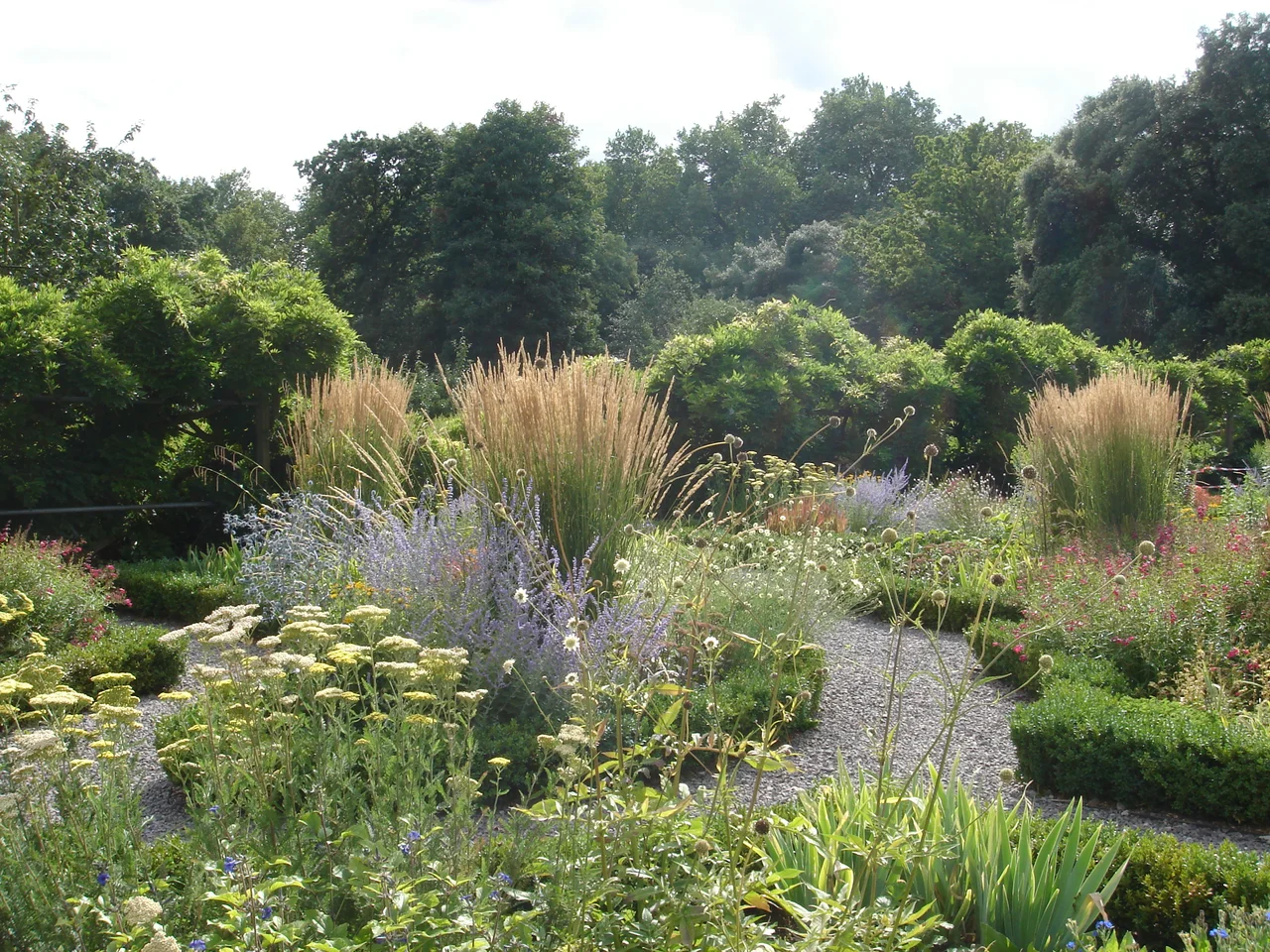

Fulham Palace
For something like 1,250 years, the same job description applied to whoever owned this riverside estate in west London: Bishop of London. From sometime in the 8th century until 1973, the bishops took possession of the Manor of Fulham as lords of the manor in unbroken succession, generation after generation, replacing the buildings, replanting the gardens, importing exotic trees from the Americas, surviving Henry VI's lavish visits, a German V1 flying bomb, and twelve centuries of England's weather. The current Tudor red-brick palace is the result. So is the moat that nobody knew was Britain's largest until they started excavating in the 1970s, and so is the holm oak that is now five hundred years old.
Older Than the Church
Long before any bishop arrived, this riverside meadow was an isolated eyot in the braided channels of the Thames. Archaeologists working since the early 1970s have found struck flint from the late Mesolithic and early Neolithic ages, evidence of a Bronze Age barrow, and traces of late Iron Age occupation. When the Romans came, a small agricultural community established itself on these banks; the recovered material is mostly domestic, suggesting a small villa or farmstead near what is now All Saints Church next door. By the early medieval period, when the See of London began consolidating its land holdings, the riverside site already had a long memory. The bishops simply moved in on top of it. King Henry VI brought his entire entourage here for a visit sometime between 1439 and 1440, and the household accounts record that it took four days afterward to clean the rooms.
Bishop Hill's Trees
Most of the surviving palace is Tudor. Dendrochronological analysis of the timbers in the Great Hall roof shows that the oak was felled in the spring of 1493, and the gate to the Tudor courtyard contains timber felled in the spring of 1495. The two-year gap fits a major building campaign, and the work was almost certainly begun by Bishop Richard Hill, who died in 1496 without ever seeing his new residence finished, then continued by Bishop Richard FitzJames (whose coat of arms still appears on the south side of the Tudor court buildings) between 1506 and 1522. After the Tudor courtyard came the Georgian east courtyard, the late-medieval Great Hall, an 18th-century Gothic extension on the east end, a 19th-century classicising of the east courtyard, and finally the 1867 Tait chapel in Gothic Revival style. The palace is a working anthology of English architecture.
The Bishop Who Grew Coffee
Bishop Henry Compton, who held London from 1675 to 1713, was the kind of cleric who would today be called a horticultural pioneer. He used the gardens at Fulham as a laboratory for the new world's botany. He introduced the American magnolia (Magnolia virginiana) and Liriodendron to England, planted the first American azalea (Rhododendron viscosum), and in his heated greenhouse stoves grew the first coffee tree on English soil. The diarist John Evelyn visited in 1681 and was already impressed. By 1686, William Penn's gardener was writing from the new colony of Pennsylvania, hoping to exchange exotic seedlings of American flora for cuttings from Compton's Fulham collection. A red horse chestnut, a hybrid of Aesculus hippocastanum and the American Aesculus pavia that Compton bred here, was still noted in the gardens as late as 1751. One of the holm oaks Compton planted, or one his predecessors planted before him, is now 500 years old and recognised as one of the Great Trees of London.
The Moat Underneath
Fulham Palace was once surrounded by the largest domestic moated site in medieval England. The first known reference to it appears in a 1392 document as magna fossa, the great ditch, but it is thought to be much older, possibly Danish in origin and possibly built as flood defence rather than military fortification. Its full length was nearly a mile. In the 1920s, Bishop Arthur Winnington-Ingram had the moat filled with debris, perhaps tired of maintaining it. The fill was unsentimental and total. Beneath the lawn it still exists, a complete underground circuit nobody walks on. Winnington-Ingram is the same bishop who, after the First World War, tried to give up the palace altogether, offering to live in just two rooms as he had during wartime, when much of the building had been requisitioned as part of Fulham military hospital and the grounds dug up for allotments. The Church refused to release the property to secular hands.
The Plymouth Manuscript
There is a quieter story about Fulham involving a single object. The lost manuscript of Of Plymouth Plantation, William Bradford's first-hand account of the Mayflower voyage and the founding of the Plymouth Colony in 1620, somehow ended up in the Bishop of London's library at Fulham. Nobody knows how. It was discovered there in 1855, published the next year, and in 1897 handed over to Thomas F. Bayard, the United States Ambassador to the United Kingdom, and repatriated to New England, where it remains. After many years of indecision, the bishops finally vacated Fulham Palace in 1973. Hammersmith Council leased it for 100 years starting in 1975, intending a museum and art gallery. After a period of neglect, the Fulham Palace Trust took over in 1990, restoring the east wing and Tudor courtyard in phases between 2006 and 2019, funded by the National Lottery Heritage Fund. Over 390,000 people visited in 2015 to 2016. The house and garden are open daily, free.
From the Air
Fulham Palace sits at 51.4704 N, 0.2161 W on the north bank of the Thames in west London, just south of Putney Bridge and adjacent to Bishops Park. From the air, the palace and its gardens are immediately recognisable as a green parkland bend in the river opposite Putney, with All Saints Church next door. Nearest airports: London Heathrow (EGLL) about 6 nm west (Heathrow's approach paths for runways 27L and 27R cross the area), London City (EGLC) about 11 nm east. Best viewed at 2,000 to 4,000 feet on final approach to Heathrow on a clear London day; the gardens stand out distinctly from the surrounding urban grid.
Nearby Stories
- Battle of Britain, Northfleet 1.1 km away
- Bayham Old Abbey 5.4 km away
- Catharine Macaulay 6.4 km away
- Hatfield rail crash 8.8 km away
- Chequers 8.9 km away
- Chelmsford Cathedral 10 km away
- Queen Victoria Hospital 13 km away
- Fishbourne Roman Palace 36 km away