
Garden Museum
In 1976, Rosemary Nicholson went looking for a grave. She had read that the 17th-century royal gardeners John Tradescant the Elder and the Younger, plant hunters who introduced the tulip tree and the spiderwort to England, were buried in a churchyard at Lambeth. When she found St Mary-at-Lambeth boarded up and scheduled for demolition, with the Tradescants' tomb crumbling in the weeds, she did not simply pay her respects. She set out to save the church, and in the process invented a museum that had never existed before: the world's first dedicated to the history of gardens.
The Tomb That Started a Movement
The Tradescant tomb is a strange, beautiful thing. Carved with crocodiles and broken columns, ruined temples and exotic shells, it reads like a stone inventory of the wonders the father-and-son gardeners had ferried back to England from Virginia, Algiers, and the Low Countries. They had collected so many curiosities that their Lambeth house became known as the Ark, the cabinet that eventually seeded the Ashmolean Museum at Oxford. By the time Rosemary Nicholson found their grave in the 1970s, the gardeners who had taught England to love the dahlia, the magnolia, and the Virginia creeper were almost forgotten. The present tomb, restored by public subscription in 1853, is the third on the site. Standing in the small front garden today, it feels less like a memorial than a seed.
A Church on the Thames
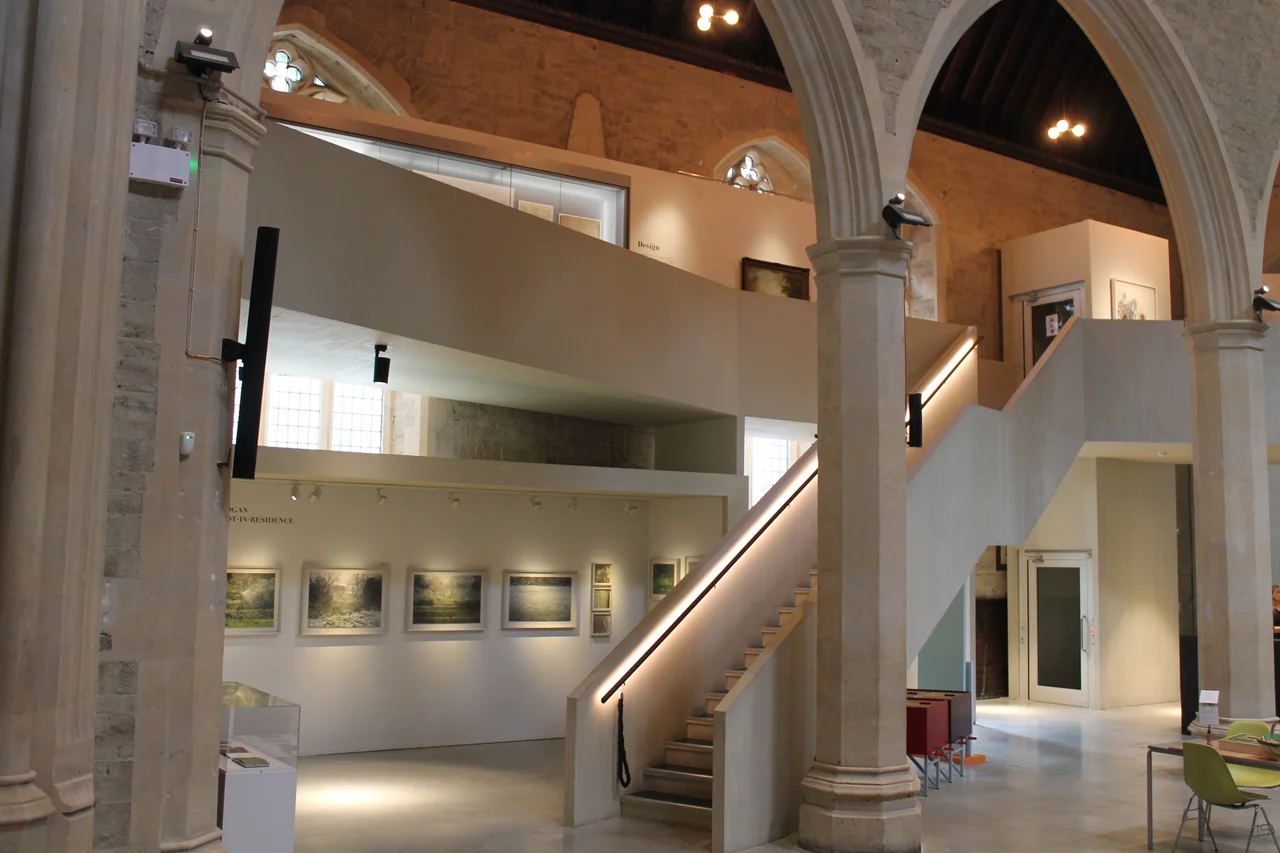
St Mary-at-Lambeth sits directly opposite the Palace of Westminster, tucked against the high brick wall of Lambeth Palace, where the Archbishops of Canterbury have lived for eight centuries. A church has stood here since before the Norman Conquest. By the 19th century the parish had outgrown itself: 15,900 people were buried here in the two decades after 1790 alone, and the churchyard was finally closed by Act of Parliament in 1854. The building was deconsecrated in 1972 and would have been levelled if not for the Nicholsons. The Garden Museum, opened on the saved site in 1977, kept the medieval tower, the Victorian nave, and the long line of the south wall where the river light comes in low over the Thames at dusk.
Captain Bligh and Other Neighbours
The Tradescants are not alone in the churchyard. Vice-Admiral William Bligh, the captain whose name is fastened forever to the mutiny on the Bounty, lies a few paces away beneath a tomb carved with a breadfruit. He had spent his career trying to ship breadfruit seedlings from Tahiti to the West Indies, and so a globe of stone fruit makes sense above his head. The soprano Nancy Storace, for whom Mozart wrote, is buried inside the church. So is Jeanne de Valois-Saint-Remy, the French adventuress whose theft of a diamond necklace helped destabilise the court of Marie Antoinette. The whole churchyard reads like a footnote to other people's better-known stories, which is part of its charm.
The Coffins Under the Floor
During the museum's 2016 redevelopment, workmen lifted a section of paving and discovered a vault no one had recorded. Inside lay thirty coffins, including five that belonged to Archbishops of Canterbury. Richard Bancroft, who oversaw the production of the King James Bible, was among them. So were John Moore, Frederick Cornwallis, Matthew Hutton, and Thomas Tenison, names from school history books, missing for centuries because no one had thought to write down where they went. The hidden vault was photographed and sealed again. Visitors today walk over it without knowing, which feels right for a building whose stories were always meant to be excavated by people who came looking.
Gardens and Galleries
The redevelopment that uncovered the archbishops also reshaped the museum itself. Galleries doubled, a viewing platform now caps the medieval tower, and Dan Pearson laid out the Sackler Garden in the courtyard, planting modern equivalents of the Tradescants' own discoveries. Christopher Bradley-Hole designed the front garden. The collection inside ranges from gnomic stone gardeners and Victorian seed packets to the country's first archive of garden and landscape design. A recreated Ark sits at the centre, on loan from the Ashmolean. The Garden Museum is not large, but it is one of the rare London museums that keeps its conscience: a place built by volunteers, with no government funding, to save a building no one else thought worth saving.
From the Air
51.495 N, 0.1202 W on the south bank of the Thames, immediately east of Lambeth Bridge and adjacent to Lambeth Palace. The medieval tower is visible from low-altitude routes following the river through central London. Nearest airport: London City (EGLC) 6 nm east; London Heathrow (EGLL) 13 nm west.
Nearby Stories
- Battle of Britain, Northfleet 1.1 km away
- Bayham Old Abbey 5.4 km away
- Catharine Macaulay 6.4 km away
- Hatfield rail crash 8.8 km away
- Chequers 8.9 km away
- Chelmsford Cathedral 10 km away
- Queen Victoria Hospital 13 km away
- Fishbourne Roman Palace 36 km away