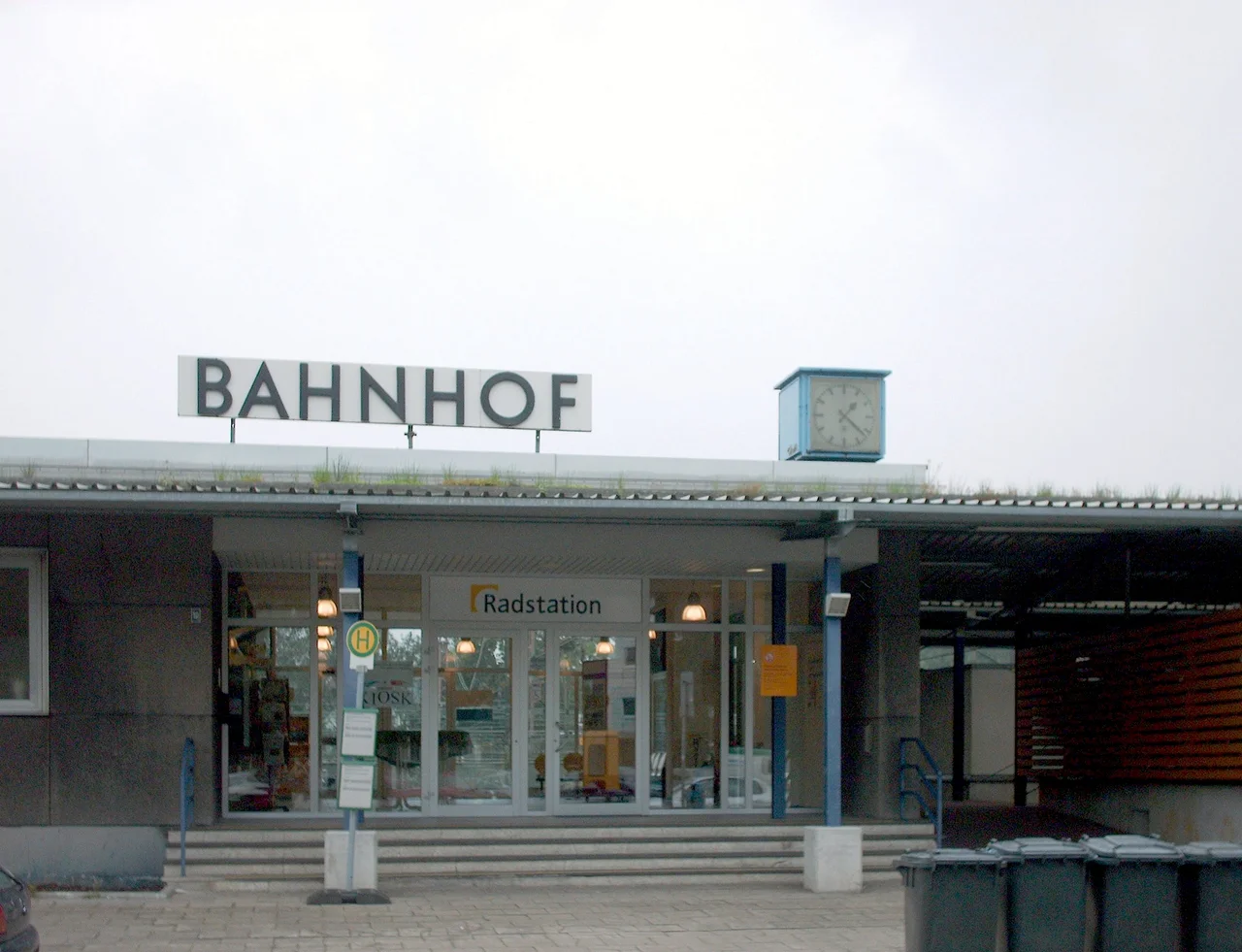

Gladbeck
There is the Gladbeck on the map - a 75,000-person town in the district of Recklinghausen, knotted into the northern Ruhr conurbation, surrounded by Bottrop and Gelsenkirchen and Dorsten. And then there is the Gladbeck that lives in German collective memory: the name attached to one of the most disturbing crime stories in the history of the Federal Republic, a 54-hour hostage crisis in August 1988 that ended in three deaths and a scandal about journalism that is still taught in German media-ethics seminars today. The town would like to be known for other things. It has, after all, been here in some form since at least the year 1020.
A Village Around a Cathedral
Archaeological finds put humans in this corner of the Emscher valley as early as 2000 BC. The settlement first appears in the documentary record in 1020, when it was called Gladbeki - a small village of perhaps 300 inhabitants arranged around the church of St. Lamberti. For more than six centuries, from 1180 to 1802, Gladbeck belonged to the Vest Recklinghausen and answered, ultimately, to the Archbishops of Cologne. Wittringen Castle, the moated castle that today houses the town's museum, was likely built around 1236 by a knight named Ludolfus de Wittering. The Thirty Years War wrecked the cornfields. The Black Death killed many of the people. The Congress of Vienna handed the area to Prussia in 1815. Three bad food crises hit between 1816 and 1847. None of it produced a town - just a stubborn village that had been here for almost nine hundred years.
The Coal Boom
Coal was found in the 1870s. The first coal was lifted out of Gladbeck in 1878, and that changed everything. People poured in to work the mines - from neighboring Westphalia, from the Rhine Province, from the eastern reaches of Prussia, many of them ethnic Poles whose native language was not German. The village's population had been around 11,000 in 1900. By 1916 it was over 48,000. By 1945 nearly 60,000. The peak came in 1969: 85,927 inhabitants, more people than the town has ever held before or since. Gladbeck was granted town rights on 21 July 1919, a young town with deep medieval roots. The hammer and beater on the city coat of arms are for the coal. The last coal mine in Gladbeck closed in 1971. The town has been adjusting to that ever since.
The 54 Hours of August 1988
On 16 August 1988, two career criminals - Hans-Juergen Roesner and Dieter Degowski - robbed a Deutsche Bank branch in Gladbeck and took two of the bank employees hostage. What followed over the next two days was unlike any criminal event West Germany had seen. The hostage-takers, joined by Roesner's girlfriend Marion Loeblich, hijacked a city bus in Bremen carrying 32 passengers. They drove through West Germany and the Netherlands with the bus, the hostages, and a growing trail of police. Three people died: a 14-year-old Italian boy named Emanuele De Giorgi shot inside the bus, a 31-year-old officer named Ingo Hage killed in a police chase, and 18-year-old hostage Silke Bischoff killed in the final shootout near Cologne. Their names matter. They were not abstractions. They were a teenager on a summer bus trip, a young officer, and a young woman who was given a gun to hold for a press conference and then shot less than an hour later.
The Press Scandal
What made Gladbeck a watchword in German journalism was not only the crime itself but the press behavior around it. Reporters from major German outlets gave the hostage-takers live interviews while the crisis was in progress. A journalist climbed into the hijacked car for a sit-down conversation with the kidnappers as Silke Bischoff sat between them. Cameras circled, broadcasts ran, the criminals played to the lenses. The Deutscher Presserat - Germany's press council - has used the Gladbeck case ever since as the central teaching example of journalistic boundaries that should never be crossed. The current code that governs German journalism owes much of its specificity about reporter conduct during active crimes to lessons learned from those 54 hours. The hostage-takers got life sentences. Roesner remains imprisoned to this day. Degowski was released on parole in 2018.
What Stays
Gladbeck has had to keep being a town with all of that in its history. The moated Wittringen Castle still stands in its park, the same fortress the medieval knights built, now housing the town museum with its bison skeleton, its Roman coins, its Bronze Age cemetery finds, and its collection of works by Joseph Beuys. The mayors have alternated SPD and CDU through every decade; Bettina Weist of the SPD has been mayor since 2020. The Catholic and Protestant communities each have a handful of churches. Three train stations connect the town to the rest of the Ruhr. The notable list includes the boxer Willy Kaiser, who won Olympic gold in 1936; the cabinetmaker Jean-Henri Riesener, who worked for the French royal household in the eighteenth century and has a grammar school named for him; and the footballer Julian Draxler, born in Gladbeck in 1993. The town is still here. The coal is gone. The name still carries weight it never asked to carry.
From the Air
Located at 51.5713 degrees north, 6.9827 degrees east, in the northern Ruhr conurbation in the district of Recklinghausen. Nearest airport is Duesseldorf International (EDDL), about 45 km southwest. Dortmund Airport (EDLW) is roughly 35 km east. The town is bordered by Bottrop to the west, Gelsenkirchen to the south, Dorsten to the north, and Essen to the south. From the air the town appears as a moderately dense residential and industrial area, with the green oval of Wittringen Park visible at the southern edge.
Nearby Stories
- Ratingen 3.2 km away
- German Air Force 9.2 km away
- Dortmund Hauptbahnhof 9.8 km away
- Doetinchem 13 km away
- Winterswijk 16 km away
- RAF Bruggen 20 km away
- Münster Cathedral 20 km away
- Altena Castle 21 km away