
Glensanda
There is no road to Glensanda. No rail line, no marked footpath - just granite mountain, peat bog, heather, and the cold water of Loch Linnhe. To reach this remote Highland estate you take a boat, the same way Vikings did when they named the place Glen of the Sandy River sometime before the 8th century. What changed in 1986 was that the boats stopped being small. They are now ocean-going bulk carriers, loading 6,000 tons of crushed granite an hour at a deep-water pier, bound for Houston, Hamburg, Świnoujście. The mountain above the pier is being dismantled, one explosion at a time, through a tunnel inside itself.
The Maclean Centuries
Before the quarry, this glen belonged to people. The 15th-century tower of Glensanda Castle - Caisteal Na Gruagaich, the Maiden's Castle - was built around 1450 by Ewen MacLean, 5th of Kingairloch, and served as the seat of the MacLeans of Kingairloch for the better part of three centuries. A community of around five hundred clansmen worked the glen, fished the loch, hunted the red deer. The Macleans backed the wrong side at Culloden in 1746, lost most of their estates to the Campbells, and in 1812 Sir Hector Maclean - the 7th Baronet of Morvern and 23rd Chief - made an extraordinary decision. He emigrated to Pictou, Nova Scotia, and took essentially the entire population of the glen with him. Five hundred people walked away from Glensanda. Sir Hector is buried in Pictou cemetery.
The Larder of Lorne
After the Macleans left, ownership passed through English landowners and Glasgow distillers. In 1902 the cotton tycoon George Herbert Strutt bought the estate; his son Arthur lived there until his death in 1977, though his body was not discovered for five years - a measure of how empty the glen had become. Arthur's widow Patricia Strutt was a celebrated stag hunter who reportedly shot around two thousand deer between 1930 and her death, more than any other woman in Great Britain. By the time she sold the estate in 1982, the last solitary resident had died decades earlier and Glensanda was a ruin: a broken castle tower, a few derelict cottages, a wrecked cattle shed. Poachers called it the Larder of Lorne for its red deer and its salmon.
The Glory Hole
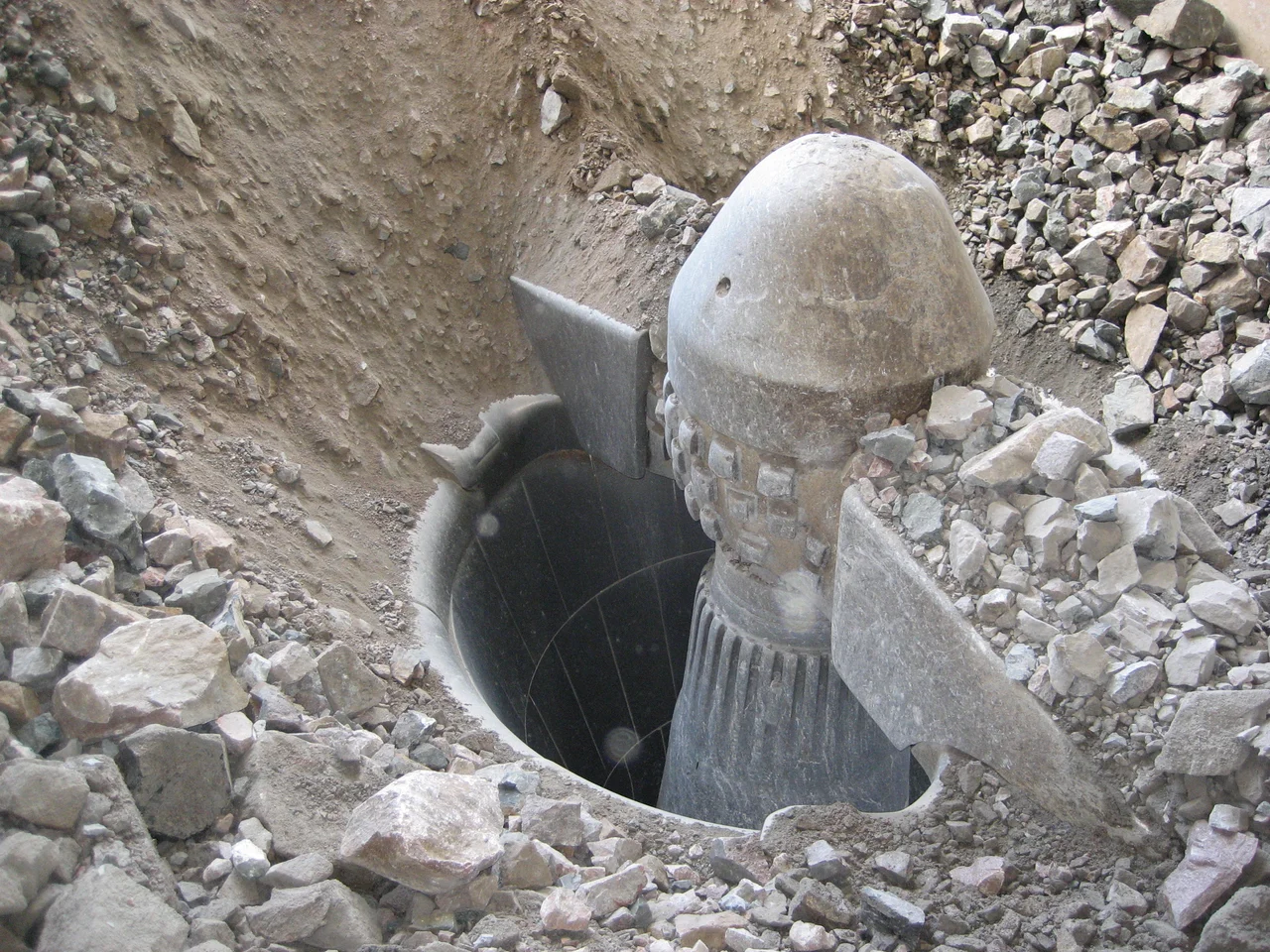
John and Angela Yeoman of Foster Yeoman bought Glensanda in 1982 with one calculation in mind: the mountain Meall na h-Easaiche was made of fine-grained granite, and the world wanted granite. The first shipload left for Houston in 1986. By June 1989 the operation had switched to its signature method - the glory hole. Each blast knocks loose around 70,000 tons of rock. Dump trucks haul it to a primary crusher that breaks it down to chunks no larger than nine inches. The chunks pour into a heap covering a vertical shaft a thousand feet deep and ten feet wide, kept permanently full of rocks. At the bottom of that shaft, deep inside the mountain, a horizontal conveyor carries the granite through a mile-long tunnel to a second crusher on the shore, where the ships are waiting.
Out Of Sight
The whole operation was designed to be nearly invisible. The pit sits a mile inland and cuts down into the mountain from 1,600 feet above sea level, which means yachts crossing Loch Linnhe see almost nothing of it. By 2100, when the granite reserves are expected to run out, the excavation will have created a new corrie - a fresh glacial bowl in the Scottish landscape, 400 feet deep, where a mountain used to be. Around 160 people work the site, most of them commuting in by boat from Barcaldine near Oban. The castle still stands at the river mouth, an empty 15th-century shell looking out over the same loch the Vikings used to reach this glen of the sandy river. Behind it, the mountain quietly disappears.
From the Air
Glensanda lies at 56.563 N, 5.543 W on the Morvern peninsula, on the south-west shore of Loch Linnhe. From cruising altitude the deep-water quarry pier and conveyor terminus on the coast are clearly visible, with the inland quarry tucked behind the ridgeline of Meall na h-Easaiche about a mile back from the shore. The ruined Glensanda Castle tower sits at the river mouth. Oban Airport (EGEO) is 12 nm south-south-west; Inverness (EGPE) lies 70 nm north-east. The hills of Mull rise to the west across Loch Linnhe, and the long bulk of Lismore island lies 4 nm south. Glensanda is one of the few large industrial sites in the western Highlands that you can pass directly over without seeing any visible roads connecting it to the outside world.
Nearby Stories
- Inner Hebrides 2.1 km away
- Arrochar Alps 6.7 km away
- Glenfinnan Monument 10 km away
- Slate Islands, Scotland 12 km away
- Lochaber Narrow Gauge Railway 13 km away
- 2009 Buachaille Etive Mòr Avalanche 15 km away
- Muck 18 km away
- Colonsay 25 km away