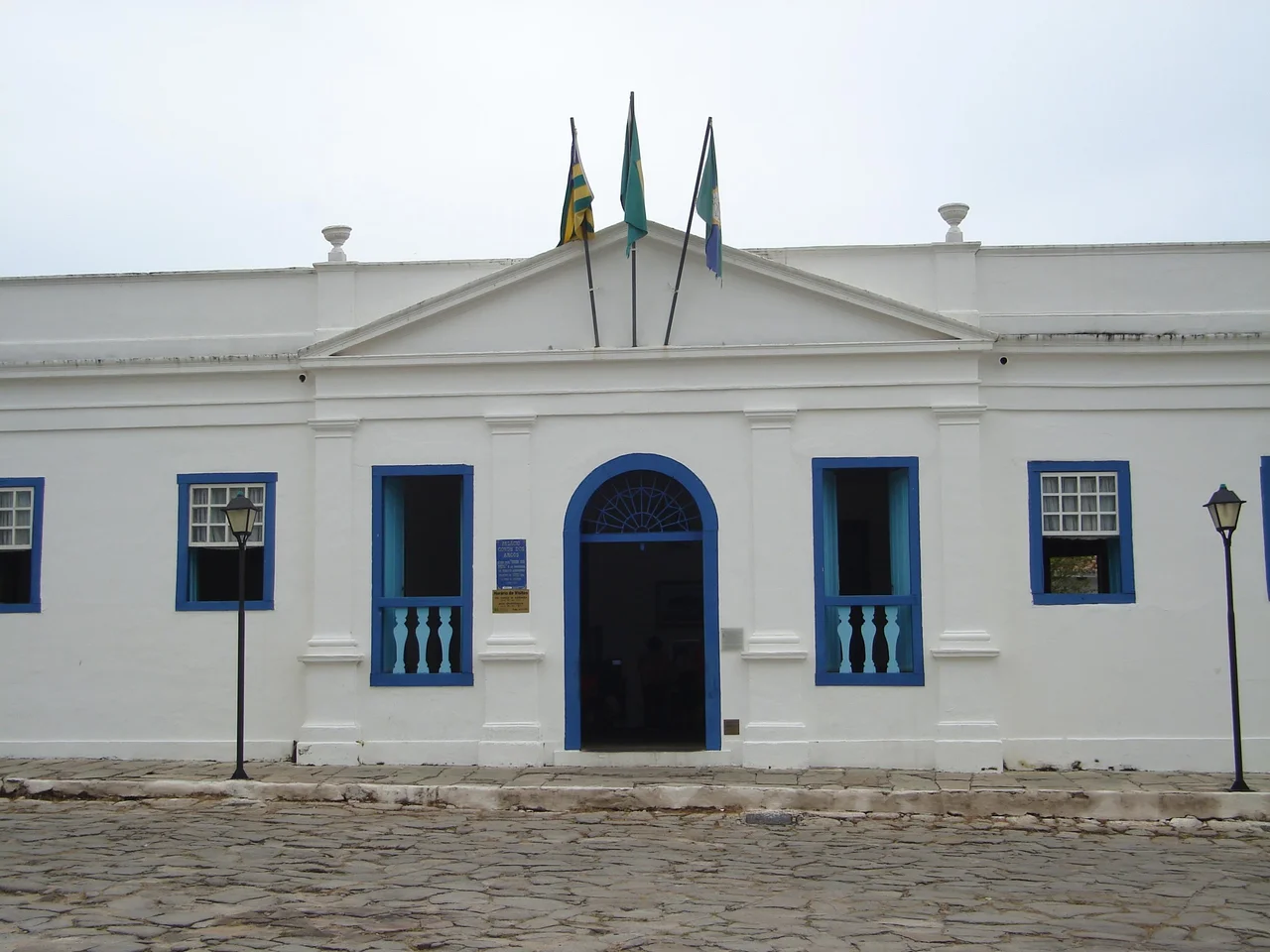

Goiás (city)
Bartolomeu Bueno da Silva got his nickname by setting a bowl of brandy on fire. It was 1727. He was hunting gold in the central Brazilian highlands, and he had encountered the Goyaz people, who knew exactly where the gold deposits were and refused to tell him. According to the legend, Bueno poured brandy into a bowl and struck a flame to it. The Goyaz, seeing a man command fire from liquid, shouted Anhanguera - Old Devil - and revealed the locations of the mines. Thus the Arraial de Sant'anna was founded at the foot of the Serra Dourada - the Golden Mountains - and thus Bueno became, for the rest of his life and for four centuries of history after it, the Anhanguera. The Arraial would become Vila Boa de Goyaz, then the state capital, then a UNESCO World Heritage site. And the Golden Mountains really were golden for a while.
Vila Boa de Goyaz
In 1737 the Arraial was elevated to village status and renamed Vila Boa de Goyaz - Good Village of Goyaz, in archaic Portuguese. In 1748 the Royal Charter created the Captaincy of Goyaz, and Vila Boa became its capital. The first governor was Don Marcos de Noronha, known as the Conde dos Arcos, and he built heavily: the Foundry House where gold was cast into official ingots, the Conde dos Arcos Palace as the seat of government, stone churches that are still standing. The gold came out of the Rio Vermelho and its tributaries. For roughly the rest of the 18th century Vila Boa was a prosperous mining town with all the infrastructure colonial Portuguese rule demanded - foundries, chapels, barracks, administrative offices, and the people required to run them, most of them enslaved Africans whose labor built the wealth everyone else spent.
The Gold Runs Out
By the early 19th century the placers were exhausted. The easy gold was gone, and no deep mines were developed to replace it. The city pivoted to agriculture - cattle on the Serra Dourada slopes, subsistence farming in the valleys - and its cultural life stagnated in a pleasant way, maintaining rhythms from a century earlier. Visitors in the late 1800s and early 1900s reported that the old Goias resembled Sao Paulo of 450 years before, which was partly a compliment and partly a description of economic sleepiness. The Procession of the Fogareu - fire procession - kept happening every Holy Week, just as it had since the 18th century. Torches in the night, men in medieval hoods running through the streets to drum beats, re-enacting the arrest of Christ. It drew curious travelers even then. Now it draws 10,000.
When the Capital Moved Away
In 1933, Governor Pedro Ludovico Teixeira decided the old Goias could not serve as a modern state capital. The streets were too narrow, the infrastructure nonexistent, the room to grow absent. He began building Goiania from scratch, 139 kilometers to the east. By 1937 the government had officially transferred. Many residents followed the civil service to the new capital, and the old Goias lost population. This was supposed to be a disaster. It turned out to be the best thing that ever happened to the historic center. Without pressure to modernize, without the need to tear down old buildings to make way for office blocks, the 18th-century architecture of Vila Boa survived almost entirely intact. In 2001 UNESCO added the city to the World Heritage list. Its current population is around 27,000, roughly what it was at the end of the gold era. Its streets are still too narrow for a car to be useful.
Fogareu at Midnight
If you come to Goias city once, come on the Wednesday of Holy Week. At midnight, a group of men called farricocos - dressed in long medieval robes and tall pointed hoods, faces hidden - walk out of the Museum of Sacred Art of Boa Morte carrying torches. Drums start. The farricocos break into a run, moving through the streets in formation, re-enacting the Roman soldiers' search for Jesus. The torchlight, the hooded figures, the hammering of bare feet on cobblestones - the effect is unlike anything in modern Brazil. Similar processions exist in Toledo and Sevilla. The tradition traveled from Portugal, lingered in a town that everyone else had forgotten about, and survived into the 21st century because nothing around it modernized fast enough to kill it. Locals still half-remember the superstition that devils walk the streets on that night, accompanied by a werewolf and a headless mule. It is a tourist event now, but on that specific night it remembers itself.
The Poet of the Candy House
Ana Lins dos Guimaraes Peixoto Bretas was born in Goias city in 1889 and lived most of her life there, in one of the oldest houses in town, built in 1782. She wrote poetry from the age of 14, but she did not publish her first book until she was 75. In the meantime she supported herself by making crystallized sweets - the candied fruits that Goiana housewives had made for generations. She wrote under the name Cora Coralina and became, in her old age, one of the most beloved Brazilian poets of the 20th century. The house is now a museum. Her furniture is there, her papers, her letters from Carlos Drummond de Andrade and Jorge Amado - two of the most important writers in Brazilian literature, both of whom had recognized in this small-town candymaker a poet of the first rank. Walk the historic streets at dawn when they are quiet, and you understand why she never left.
From the Air
Goias city sits at 15.92°S, 50.14°W in the Serra Dourada mountains of central-west Goias, about 148 km northwest of Goiania. There is no commercial airport in the city itself. Nearest airports are Santa Genoveva International (SBGO) in Goiania and Brasilia (SBBR, 307 km east). Access is via highways GO-070 through Goianira and Inhumas, connecting to BR-070 which runs west to Barra do Garcas, Mato Grosso. Cruise at 5,000-7,000 feet to see the hill country of Serra Dourada and the historic grid of colonial Goias nestled in a valley along the Rio Vermelho. The Serra Dourada State Park covers 26,626 hectares nearby. Climate is tropical with dry winters and wet summers - October-April is the rainy season with frequent thunderstorms.
Nearby Stories
- Itapuranga 18 km away
- Jussara 26 km away
- Jaraguá, Goiás 30 km away
- Anicuns 35 km away
- Nerópolis 46 km away
- Iporá 61 km away
- Aruanã 94 km away
- Uruaçu 133 km away