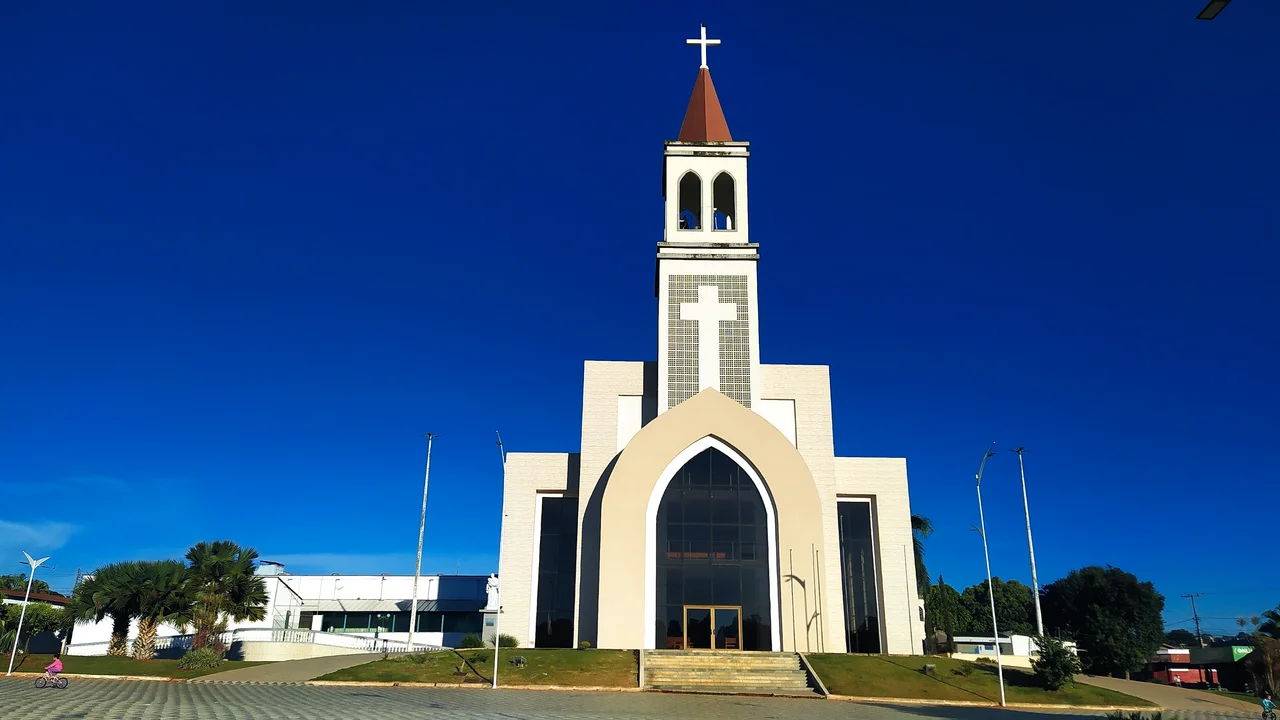

Nerópolis
The town was named for a politician who never delivered on his promise. In 1930 the settlement known as Cerrado was renamed Nerópolis in honor of Senator Nero Macedo, who had pledged to bring the railroad to this patch of central Goiás and then, like many early twentieth-century politicians in the Brazilian interior, failed to do so. The name stuck anyway. Nearly a century later Nerópolis sits twenty-five kilometers west of the Goiânia metropolitan area, on highways GO-080 and GO-222, known throughout Brazil for two things: garlic and sweets. The railroad never came.
The Taveira Family And Matinha
The official founder is Joaquim Taveira, who arrived with his family in 1894 to clear trees and plant crops. Other families followed, drawn by the fertile red soil that still defines this region of Goiás. The settlement they created went by Matinha dos Taveiras - the Taveira's little grove - until 1904, when residents shortened it to Campo Alegre. By 1918 it had become Cerrado, named for the dry scrubland that covers most of central Brazil. The Nerópolis rename came in 1930. Through all these name changes the community was still just a cluster of farms on the road north from Goiânia. Municipal status arrived in 1948, finally untangling Nerópolis from the jurisdiction of Pirenópolis and Anápolis to which it had previously belonged.
Garlic Capital
From the 1970s through the 1990s Nerópolis was one of Brazil's largest garlic producers. Then Chinese imports arrived. Prices collapsed. Production in and around the town fell off a cliff, and farmers who had built their livelihoods on bulbs in the ground had to find something else. What remained was the distribution infrastructure - the warehouses, the trucks, the relationships with buyers across Brazil - and so Nerópolis pivoted. Today the town remains one of the largest importers and distributors of garlic in the country, moving bulbs grown elsewhere through its existing trade routes. The identity persisted even after the underlying crop moved on. In Brazilian supermarket aisles, garlic still often passes through Nerópolis hands before reaching shoppers.
Quero And The Canned Corn Empire
The other economic anchor is Quero Indústrias Alimentícias, which employs 1,200 workers and holds national leadership in tomato paste, peas, and canned corn. Almost every Brazilian household has a Quero can in its pantry. The plant is part of why Nerópolis grew so fast - the population more than doubled between 1980 and 2007, from 9,368 to 19,392. Alongside Quero are brickworks, coffee growers, and an orchard economy that feeds the Goiânia market: bananas, figs, guavas, oranges, pineapples. The sweets industry - doces, the sugary confections that are a Goiás specialty - runs parallel to all of this. Sweet factories send boxes across Brazil from this unassuming town. Garlic, canned vegetables, sweets: three lanes of the pantry, all coming through Nerópolis.
The Park Nobody Visits
Nerópolis holds a share of the 2,132-hectare Altamiro de Moura Pacheco State Park, created in 1992. The park protects a fragment of cerrado - the savanna-like scrubland that once covered most of central Brazil and has been cleared across huge swaths for agriculture. The Altamiro de Moura Pacheco park is not famous. Tourists do not fly in to see it. But it matters because cerrado is among the most threatened biomes on Earth, and every preserved hectare holds fauna and flora that has nowhere else to go. Jaguars, giant anteaters, maned wolves - they all depend on patches like this surviving on the edges of Brazil's agricultural heartland.
A Functional Town
The numbers tell a practical story. Nerópolis has one hospital with 115 beds, fourteen schools with 6,398 students, and an adult literacy rate (87.7 percent in 2000) better than the national average. The Municipal Human Development Index of 0.785 ranks twentieth out of 242 municipalities in Goiás. The town works. It is neither picturesque nor dramatic, just a place that grows food and ships it, that educates its children at better than average rates, that sits in a region where the topsoil is still fertile. From the air you see the geometry of tomato fields and orange groves stretching toward the horizon, a cluster of warehouses near the highway, and the red earth that has supported all of it since the Taveiras first cleared it in 1894.
From the Air
Coordinates: 16.41 S, 49.22 W. Best viewing altitude: 3,000-5,000 feet AGL. Nearest airport: Goiânia Santa Genoveva (SBGO), 28 nautical miles south. The town sits on flat plateau typical of central Goiás with extensive agricultural patchwork visible below. Highway GO-080 runs through town as the primary landmark.
Nearby Stories
- Anicuns 5.1 km away
- Aparecida de Goiânia 21 km away
- Corumbá de Goiás 28 km away
- Mossâmedes 32 km away
- Silvânia 37 km away
- Jaraguá, Goiás 47 km away
- Orizona 71 km away
- Rio Verde, Goiás 162 km away