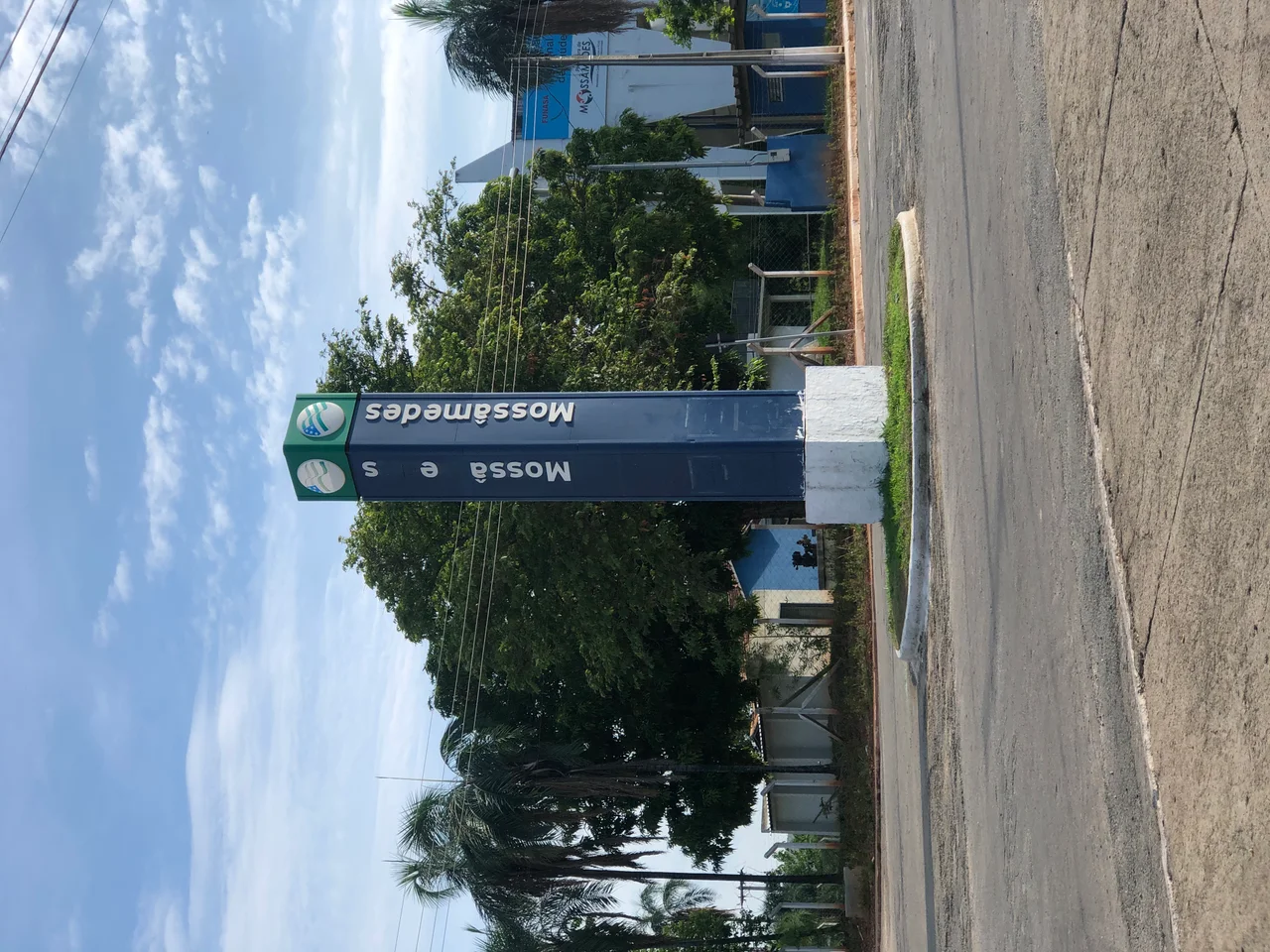

Mossâmedes
Damiana da Cunha was the granddaughter of a Kayapo chief. She was also the instrument by which the Portuguese Crown tried to save Sao Jose de Mossamedes, a 1755 mission village in what is now western Goias, from the failure its first two decades had seemed to guarantee. The village had been built to settle three indigenous peoples - the Naundos, Acroas, and Kayapo - and they had declined to be settled. They died, they left, they refused to farm on Portuguese terms. Between 1770 and 1774 the village went through a complete restructuring to keep it alive. Damiana, baptized Christian but fluent in Kayapo and trusted by both sides, traveled between the Portuguese authorities and her own people trying to broker what the empire called conversion and what her ancestors called survival.
A Portuguese Villa in the Cerrado
Mossamedes was named for a village in Portugal, hometown of Dom Jose de Almeida Soveral de Carvalho, Captain-General and Governor of the Capitania of Goias. He established the Goias mission in 1755 as part of a broader Portuguese strategy - concentrating indigenous peoples into settled Christian communities where they could be converted, counted, and where their labor could be directed into mining and agriculture. Mossamedes was one of several such aldeamentos in the Goias interior. The strategy struggled from the start. The Naundos, Acroas, and Kayapo had their own economies, their own mobility patterns, their own cosmologies. Being fenced into a village made them sick and restive. Many died of introduced diseases. Others simply walked back into the forest from which they had been coaxed.
Damiana's Diplomacy
Damiana da Cunha is one of the more remarkable figures of Brazilian colonial history. Born Kayapo, baptized Catholic, educated in the Portuguese system, she became a negotiator - the go-between who in the 1770s and afterward could convince groups of her own people to try the mission experiment, could translate Portuguese demands into terms that made sense in Kayapo, and could explain to colonial officials what the indigenous side would and would not accept. Her efforts kept Mossamedes alive through the 1770s. The village was re-founded; in 1780 it was designated a freguesia - a parish with some measure of administrative standing. In 1781 another 800 Javae and Karaja people were brought in from the Ilha do Bananal to refill the settlement that kept emptying. How much of this Damiana endorsed and how much she merely facilitated, historians still argue. What is clear is that without her, Mossamedes would have simply vanished.
From Freguesia to Municipality
The village persisted but its status shifted. In 1845 Mossamedes became a district of Itaberai, a larger town to the north. In 1890, after Brazil became a republic, it was re-administered as a district of the old colonial capital, Goias. Not until 1938, almost two centuries after its founding, was it finally raised to municipal status in its own right. The trajectory - mission, parish, district, district, municipality - is the slow administrative fossil record of a frontier place being slowly absorbed into the Brazilian state. The name stuck: Mossamedes, still named for a Portuguese village most of its current inhabitants have never heard of, honoring a governor nobody remembers.
Serra Dourada Above
The land around Mossamedes rises toward the Serra Dourada - the golden range - a ridge of cerrado and rock formations that now sits inside the 26,626-hectare Serra Dourada State Park, created in 2003. The park protects a landscape that includes rare plant communities, a mix of cerrado and highland vegetation, and excellent views across the western Goias plains. The municipality also contains the much smaller Professor Jose Angelo Rizzo Biological Reserve, a strictly protected 144-hectare unit created in 1969 and administered by the Federal University of Goias. These two conservation areas mean that a considerable portion of the old Kayapo country within Mossamedes municipal limits remains uncleared - though pressure from agriculture and settlement continues to test that protection.
The Slow Drain
The modern municipality is a quiet place. In 1980 Mossamedes had 12,208 people; by 2007 the population was less than half that. Most of the decline happened in the countryside - rural people leaving for larger towns and cities rather than moving into Mossamedes itself. The economy runs on cattle, poultry, small-scale farming, and government jobs. There are three banks, 44 retail units, a hospital with 20 beds, six schools. The Municipal Human Development Index of 0.751 places it 74th out of 242 Goias municipalities. No one would call it prosperous, but by the standards of the interior it does not struggle either. It is a place that keeps itself going. Walk through the central square and it is possible to forget that the town's name is Portuguese, its church Catholic, its grid colonial. The indigenous peoples who lived here before Dom Jose chose the site and Damiana tried to keep it alive are nearly invisible in the town today. The Serra Dourada keeps their ghost country.
From the Air
Located at 16.13 S, 50.22 W in western Goias, Brazil, 142 km northwest of state capital Goiania. The Serra Dourada State Park lies within the municipality, visible from the air as a higher ridge of cerrado terrain. The smaller Rizzo Biological Reserve also lies within municipal boundaries. Nearest major airport is Goiania (SBGO). Best viewed in dry-season clear conditions (May-September) when the cerrado turns pale gold.
Nearby Stories
- Anicuns 19 km away
- Jaraguá, Goiás 26 km away
- Itapuranga 33 km away
- Trindade, Goiás 35 km away
- Jussara 36 km away
- Nerópolis 52 km away
- Iporá 54 km away
- Aruanã 112 km away