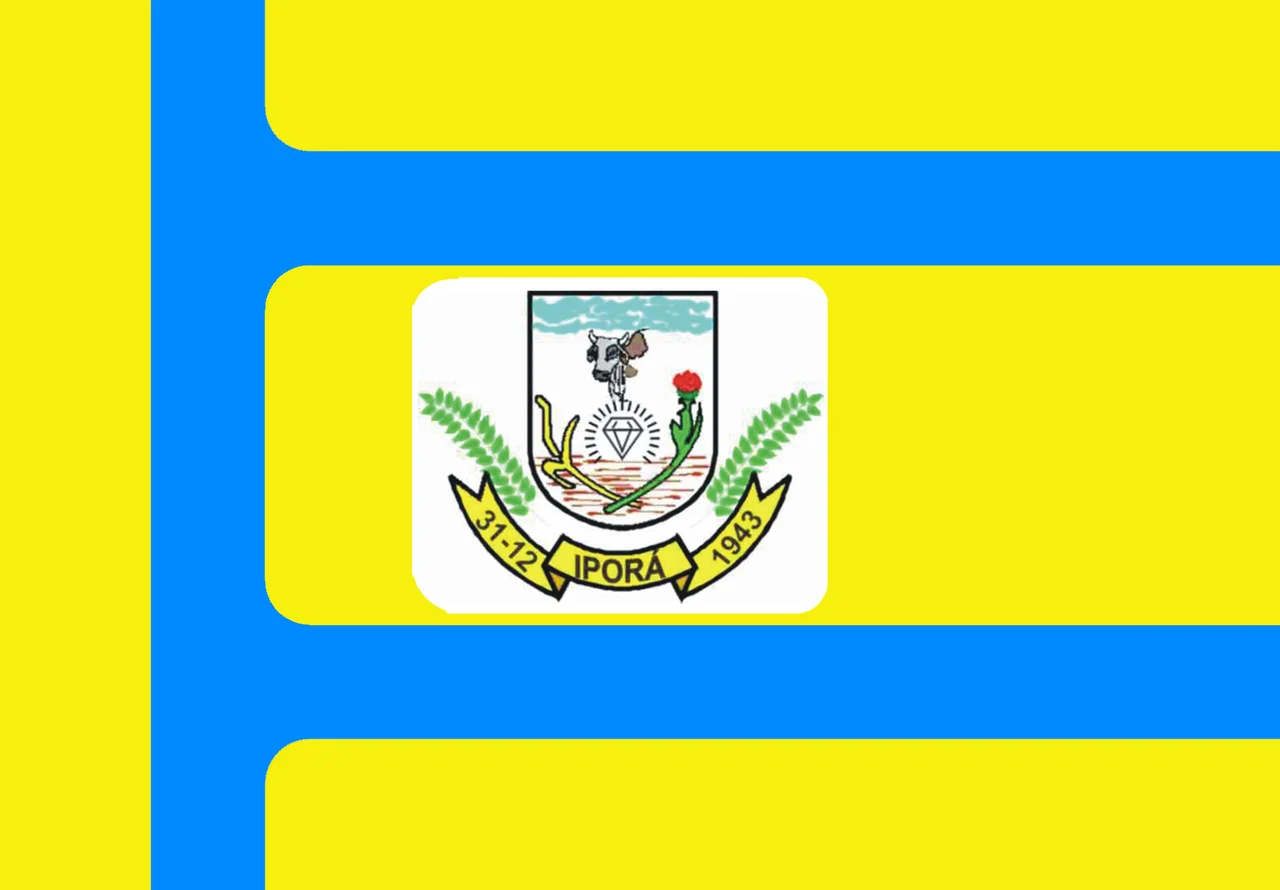

Iporá
They call it the City of Clear Waters. In a state where rivers define the political map, Iporá earned the name honestly: streams thread the municipality in every direction, fed by the low mountains that ring it - the Serra do Caiapó, Serra dos Pilões, Serra do Rio Claro, and the distinctive hump called Morro do Macaco, where geologists found nickel deposits in the folded ancient rock. The water runs all year, but it runs hardest in the rainy season from October to March, when the cerrado turns green and the roads into the fazendas become, in places, more river than road.
A Town in the Vale do Araguaia
Iporá anchors its own microregion in the west of Goiás, 225 kilometers from the state capital at Goiânia. To get there you string together a chain of smaller towns along GO-060 - Trindade, Turvânia, Firminópolis, Nazário, São Luís dos Montes Belos, Israelândia - each a stop in the slow rhythm of interior travel. The city borders Diorama, Jaupaci, and Israelândia to the north; Amorinópolis and Ivolândia to the south; Moiporá to the east; and Arenópolis to the west. By 2022 the population had climbed to 35,684, making it a real regional hub rather than just another cattle crossroads.
The Two Seasons
Goiás has weather measured in halves. The estação das águas - the season of the waters - starts in October and runs through March, bringing torrential spring and summer rains that the locals seem to welcome after the long dry. The seca arrives in April and lingers until September, when the grasses yellow and the cerrado trees shed leaves to conserve moisture. Temperatures swing comfortably between about 18°C on a cool morning and 31°C on a hot afternoon, with about 1,500 millimeters of rain a year. It's not tropical rainforest heat; the plateau softens the extremes. The air at the end of the dry season carries a fine dust that settles on everything, and then the first rain clears it all at once.
Cattle Country
The economy of Iporá is built on cattle and commerce. In the mid-2000s the municipality counted 92,000 head of cattle and 16,000 milking cows - the dairy industry is a serious business here, with three milk companies operating out of the city and a poultry industry of 70,000 birds layered on top. Soybeans, corn, manioc, rice, and bananas cover the cropped land, and the Distrito Agroindustrial gives the region's producers a place to concentrate processing. Over 458 retail enterprises do business in the city. Iporá doesn't have the glamour of Goiânia or the strategic weight of Brasília, but it has the steady self-sufficiency of a town that knows what it's good at.
Nickel in the Serras
The Morro do Macaco - the Monkey Hill - is the geological curiosity of the region, its rocks laced with nickel in concentrations worth noting. The Serra do Caiapó, a much larger ridge that carries the name across the Goiás-Mato Grosso border, rises southwest of town, a reminder that the flat interior of Brazil is not actually flat: it is a long succession of mesas and low ranges carved by millions of years of erosion. From the air you can pick out the dark vegetated ridges against the pale dry-season pasture, with Iporá sitting in the plains between them - a town that grew up in a bowl formed by old mountains.
What Keeps It Going
Iporá sustains three institutes of higher education, which is unusual for a city its size: UEG, the state university; IFGO, the federal institute; and FAI, the local Iporá College. Together they give the city something rarer than a cattle herd - a population of students and teachers who keep the town from aging out. Five hospitals with 203 beds handle regional health needs. Literacy sits above 87 percent. In the Human Development Index rankings of 2000, the city placed 32nd out of 442 Goiás municipalities - not rich, but far from poor. The nearby Araguaia basin draws visitors during the dry season when the riverbanks turn into temporary beaches, but most days Iporá is what it has always been: a working town in a watered country, quietly central to a corner of Goiás that doesn't make the news.
From the Air
Coordinates 16.44°S, 51.12°W, approximately 300 meters elevation in the Goiás plateau. The nearest significant airport is Goiânia (SBGO) about 225 km east. Flight toward Iporá from Goiânia follows a corridor of small agricultural towns along GO-060. From altitude, look for the Serra do Caiapó ridge to the southwest and the Morro do Macaco nearer the city. Dry season (April-September) offers clearer visibility; wet-season afternoons bring strong convective activity.
Nearby Stories
- São Luís de Montes Belos 29 km away
- Montes Claros de Goiás 32 km away
- Mossâmedes 44 km away
- Serra Azul State Park 69 km away
- Rio Verde, Goiás 125 km away
- Jataí 131 km away
- Araguainha Crater 144 km away
- Aparecida de Goiânia 148 km away