.jpg)
Goroka
Every September, the tribes come down from the mountains. Faces painted in ochre and white, headdresses of bird-of-paradise plumes towering over shoulders, shells strung across chests - warriors and dancers from the Eastern Highlands converge on a single grassy field in Goroka and perform the cultures that, for most of human history, outsiders never saw. The Goroka Show began in the 1950s as an administrative experiment and became something its organizers never quite planned: the largest cultural gathering in the Pacific, and a window onto one of the most linguistically diverse regions on Earth.
A City in the Clouds
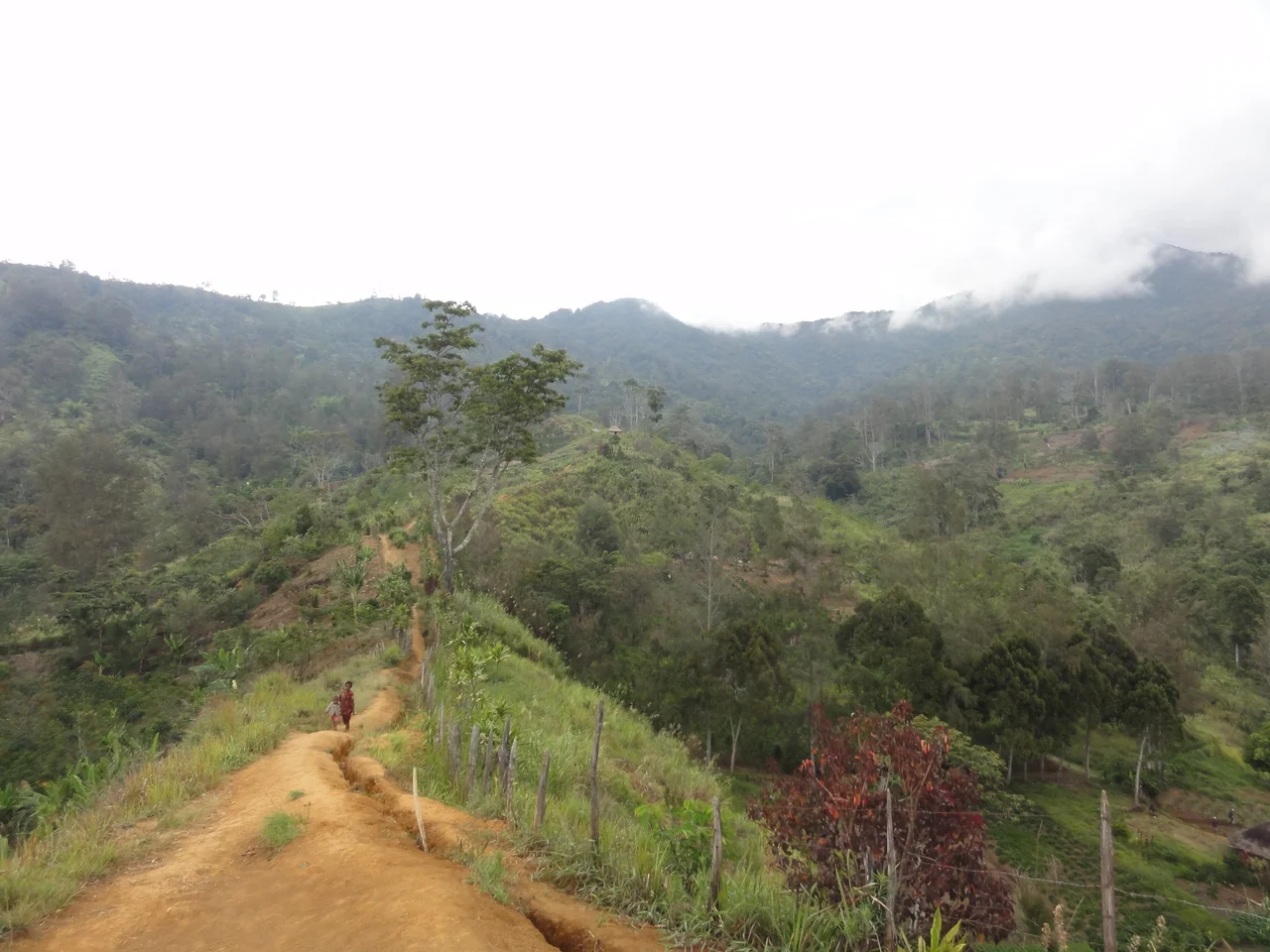
Goroka sits roughly 1,600 meters above sea level in the Asaro River valley, tucked into the folds of Papua New Guinea's central cordillera. The altitude does what altitude does: it pulls the tropics toward temperance. While the coast at Madang swelters, Goroka stays spring-like year-round, cool enough in the mornings for a jacket and warm enough by midday to sit outside with a coffee. About 20,000 people live here, making it the capital of Eastern Highlands Province and one of the larger towns in a country where most settlements remain villages. The airport sits in the middle of town - a practical arrangement that means you can check your bag, walk back for a drink, and stroll to the gate in time for boarding.
The Show That Became a Festival
Colonial administrators started the Goroka Show partly as a way to bring feuding highland groups together without violence. The logic was simple: if the clans competed through dance and display instead of combat, perhaps the rivalries could be survived. The experiment worked in ways nobody predicted. Sing-sing groups from across the country now travel for days to attend, each performing the songs, movements, and body decorations passed down by their specific communities. One group may wear mud masks and wield bows. Another appears wrapped in leaves with feathered crowns taller than a person. The performers are not dressing up for tourists. They are presenting, on a public stage, the visual grammar of their own people.
A Crossroads of Languages
Papua New Guinea is home to more than 800 languages - by one common count, the most linguistically diverse country on the planet. The highlands alone contain dozens of distinct tongues, many mutually unintelligible between villages separated by a single ridge. Goroka sits at a crossroads of this diversity. The Papua New Guinea Institute of Medical Research is headquartered here, and the town serves as a base for universities, NGOs, and the linguists who spend careers mapping languages that have never been written down. Just east lies Ukarumpa, where Wycliffe Bible Translators have worked since the 1950s to render Scripture into the hundreds of highland languages that still lack it.
The Highlands Highway
Goroka is tied to the coast by a single artery: the Highlands Highway, which runs from the port city of Lae up through Kainantu, on to Goroka, and west toward Mount Hagen. It is the lifeline for the entire highland region, the route by which coffee moves out and cargo moves in. It is also notoriously difficult. Landslides regularly close sections for days. Potholes can swallow a wheel. Armed holdups, called raskol attacks in local English, make nighttime travel genuinely dangerous. Most visitors fly in on PNG Air's twice-daily service from Port Moresby. From the air, the highway appears as a thin scratch winding between green ridges - a reminder of how hard-won connection is in a country this mountainous.
Gateway to Mount Wilhelm
To the northwest of Goroka rises Mount Wilhelm, 4,509 meters of rock and alpine grassland that is the highest summit in Papua New Guinea. Climbers use Goroka as a staging point, making the five-hour drive to the village of Keglsugl, where Betty's Lodge offers 37 beds and a starting elevation cold enough to remind you how close the tropics can come to sub-freezing. The climb itself is not technical, but the altitude is punishing and the summit weather merciless. Parties typically leave huts at midnight to reach the peak by dawn - a tradition born partly from ritual and partly from meteorology, because the clear skies of early morning usually close into cloud by mid-day.
From the Air
Goroka sits at 6.08 degrees south, 145.38 degrees east, in the Asaro Valley of Papua New Guinea's Eastern Highlands. Elevation around 1,600 meters. Goroka Airport (AYGA) is in the center of town with a single runway. Surrounding terrain rises sharply - expect mountain weather, afternoon cloud buildup, and limited emergency alternates. Mount Wilhelm (4,509 m) sits roughly 70 nautical miles to the northwest. Port Moresby (AYPY) is the nearest major airport with international connections.
Nearby Stories
- Ukarumpa 0.6 km away
- 1993 Finisterre Earthquakes 24 km away
- Mount Wilhelm 37 km away
- Highlands (Papua New Guinea) 48 km away
- Kuk Swamp 57 km away
- Purari River 66 km away
- Landing at Saidor 67 km away
- Landing at Nadzab 153 km away